- Search Cartoons
- Comic Archive
-
Payne
Store



 Henry Payne RSS

Articles
Against the odds: Detroit 3, foreign transplants play to strengths in COVID crisis
Posted by Talbot Payne on June 5, 2020
The challenging COVID-19 auto market has been a tale of two camps: the Detroit Three and foreign transplants.
Defying many predictions that consumer demand would collapse amid pandemic lockdowns, both have recorded better-than-expected sales in the months of April and May even as they have pursued different strategies playing to their strengths.
Detroit manufacturers have focused heavily on pickups, a market they dominate, to maintain profitability. Asian and European automakers have minimal presence in the uniquely American truck market. Instead, they have focused on sedan markets — largely vacated by Detroit makers — while also flooding SUV segments with more product.
Detroit Three pickup sales, for example, surged to five percent more than forecast pre-COVID, a remarkable achievement given that industry forecasts were for 80% industry sales declines at the beginning of March. So strong were pickup sales that the Detroit Three in April achieved 50% market share — a whopping 13% higher than average.
As a whole, industry retail sales were off only 12% as of June 1 compared to pre-COVID forecast — and a March 29 bottom of -59%. While tanking media markets like New York and California got the headlines, Hyundai actually gained year-over-year sales in 37 states.
“At the beginning of (April) we expected a doomsday scenario … that predicted the industry was going to be down roughly 80%,” said Hyundai North America sales chief Randy Parker. “The good news is the industry performed much better than we expected. We were only down 13% (total) in May. Take out fleet and our retail was actually flat.”
Like all automakers, Hyundai has seen fleet sales (down 79%) crater along with the travel industry: “We went to 84-month loans on our Tucson and Elantra models,” continued Parker. “We dialed that back a bit in May. Tucson’s a hot seller for us — crossovers and SUVs are selling very, very strong. We want to fish where the fish are — we wanted to make sure we got our fair share.”
Like other foreign automakers, Hyundai — which has hovered around 4.5% market share over the last decade — has flooded the U.S. market with SUVs. All-new Venue, Kona, and Palisade badges have been introduced in the last two years. Outside of pickups, the best-selling vehicles in America are the Toyota RAV4, Honda CR-V and Nissan Rogue SUVs.
Continuing pre-COVID trends, SUV share of the market is now at a record 55.3%. Next to pickups, the volume compact SUV segment showed the smallest decline — 11% — from pre-virus forecasts.
That is the common battleground in the U.S. market.
The Detroit Three — which invented the SUV going back to the Jeep Cherokee, Ford Explorer and Jeep Wrangler — try to defend their territory against surging foreign competitors. Toyota is dropping three new family vehicles this year and next alone: the Highlander and Venza SUVs as well as the Sienna minivan.
Hyundai’s Palisade SUV has drawn a bullseye around the Ford Explorer, long a midsize sales leader, and the Palisade has been one of the hottest-selling vehicles this year. Its cause was helped by the fact that its production in South Korea only shut down for a few days, allowing continued shipments to the U.S. while competitor plants sat idle.
“Palisade production coming from South Korea (had) no hiccups,” said Parker. “One of the advantages of Palisade is plants have been up and running.”
Volkswagen, once synonymous with cars like the Beetle and Golf, also thrived with such new SUV entries in the U.S. market as its Atlas and Atlas Cross Sport.
“Demand in April was stronger than expected, and we’re seeing that trend continue in May,” said Duncan Movassaghi, VW executive VP of sales. “Our share of sales from SUVs has grown from 15% in 2016 to more than 50% now. We’ve had strong deals in the market, so it’s been a good time to buy.”
But while foreign makers shy from taking on Detroit’s Big Four of Ford F-150/Chevy Silverado/GMC Sierra/Ram in the pickup aisle, so has Detroit ceded the sedan market to foreign makers.
Smelling opportunity to bring in new buyers and gain market share, all foreign makers have new compact and mid-size sedans in U.S. showrooms. For Hyundai’s part, it has been aggressive during COVID with its Elantra compact and midsize Sonata.
“We gained share in both segments. Those are our bread and butter. We are gaining share in segments where consumers still want to buy passenger cars,” said sales chief Parker.
As diverse as their segment strategies are, both domestic and foreign automakers pursued similar, heavy incentive pricing and online programs to keep inventory moving. Zero percent financing on 84-month loan deals hit record levels for the last two months with incentive levels per vehicle hitting a record $5,000 in early May.
As states began to open in late May and factories got back up to speed, manufacturers began to pull back on incentive deals which analysts say could cool sales into the usually hot summer months.
“Reduced incentives are being driven by lower inventories but pose a threat to the sales recovery,” said J.D Power data analyst Tyson Jominy. “We may see much tougher month of June compared to May.”
But carmakers are also eyeing consumer shifts forced by the unprecedented COVID crisis that may benefit their business in the long run.
“I think his pandemic is reminding people of the value of individual mobility,” said VW sales chief Movassaghi. “The appeal of getting into a crowded subway train or the back of someone else’s Uber is diminished for the time being. A car has always been a sanctuary, and I think we’re seeing a resurgence of that.”
Payne: Turning back the clock in a ’64 VW Beetle
Posted by Talbot Payne on June 5, 2020
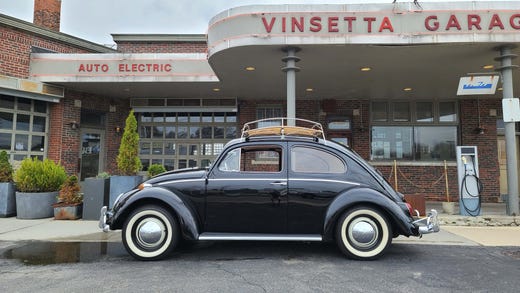
The 1964 VW Bug’s distinctive profile in front of the classic Vinsetta Garage on Woodward Avenue, Royal Oak.
The year 1964 seems like yesterday. And a lifetime ago.
Its highlights still reverberate through our culture today. The Beatles first tour of America. The release of Mary Poppins, just remade in 2018. The 1964 Civil Rights Act. Carroll Shelby’s triumph over Ferrari at LeMans, setting in motion the war that would be Ford v Ferrari. The debut of the Ford Mustang.
Yet, I just drove a ’64 Volkswagen Beetle, and 1964 couldn’t seem more remote. The automobile has been utterly transformed in the last six decades.
Chugging across Oakland County’s twisty roads, the Bug felt heavy despite weighing only 1,728 pounds, about 1,200 pounds lighter than its modern successor, the Jetta. The Bug didn’t have power steering, now a standard item. That’s not the only thing.
A lot of that absent weight is lack of safety equipment and sound insulation, and my Beetle was LOUD. Its signature 40-horsepower, 1.2-liter flat-4 cylinder engine may be behind the rear wheels, but its warble was ever-present in the cockpit. I rowed all four gears with a stick shift as long as an oar protruding from the floorboards as I merged onto I-75. If you owned a Beetle in 1964, you learned to drive a manual — no automatic available.
No tachometer either — you had to shift by sound. Man, we have it easy today.
After what seemed an eternity I reached the Beetle’s top speed of … 72. Just above the speed limit. I kept to the right lane as traffic whizzed by me at 80 mph, the Bug wandering unsteadily in its lane, the bubble roof buffeted by crosswinds.
But it wasn’t nearly as tall as the vehicles around me, most of them Detroit Three pickups … and something called SUVs, the best-selling vehicles in Michigan. You couldn’t find the term SUV in a ’64 dictionary. Webster’s didn’t adopt the term until 1986.
The first Beetles arrived for sale in the U.S. market in 1949. Two were sold. From those humble beginnings, the Bug would become on of the world’s all-time bestsellers and lay the foundation for what is today the world’s biggest-selling automaker, Volkswagen AG.
By 1964, six of 10 foreign cars sold in the United States were a Bug. Mine sold for $1,563, the equivalent of 13 grand in today’s greenbacks. Try to find a new car for that price.
But the entry-level Bug — competing against the likes of the Chevy Corvair (also featuring a flat-cylinder, rear-engine design) — was hardly the best-selling vehicle in America. That crown belonged to the Chevy Impala, which sold nearly 900,000 models that year. In 1965, the Impala would set an all-time, single-year sales record of 1,074,925 units.
As I steered the Bug onto Woodward Avenue, I saw few Impalas. The nameplate expires this year. The top-selling non-pickup in the U.S. now is the Toyota RAV4 SUV, and the Impala’s production plant is being converted to make electric vehicles to compete against EV-maker Tesla Inc.
Parked in my garage next to the black Beetle was a black Tesla Model 3, which has made the term “frunk” fashionable for the 21st century. The term is derived from “front truck” — an added storage convenience made possible by EVs opening the front engine bay by storing their electric motor/battery drivetrain in the floor. Original Beetle owners know what a frunk is.
That dashboard is the most obvious difference between the ’64 Bug and today’s chariots. And I’m not just talking about the Tesla’s radical, tablet-dominated interior. Modern compacts are stuffed with electronics from Sirius XM to auto climate controls to Apple CarPlay and Android Auto navigation apps.
The Beetle’s dash was still innovative. The Bug featured sidentical glovebox cut-outs at each end of the dash so the steering wheel could be located on either side for sale abroad.
Glovebox aside, my ’64 Bug had a radio to hear the Beatles. Period. No traction control button. No head up display. No climate controls. Want to heat the cabin? A valve on the floor let in hot air from the engine bay. My ride had a sunroof option introduced for 1964.
My racing buddy Jim grew up in a ’62 Bug in New Hampshire. His family took it to the ski slopes in the wintertime — ski rack (now a collector’s item) mounted on the back while the weight of its engine over the rear wheels helped it gain traction through the snow.
That rear-wheel drive also made the Bug a surprisingly fun car to drive. With a well-engineered unibody chassis and rear-drive, I could naturally drift it around tight corners. I set up a mock autocross course in an Oakland County parking lot and had a blast (to the limits of my sliding around in the un-bolstered couch seat). Still, the car’s upright aerodynamics never made it a natural performance car despite its Herbie the Love Bug movie racing legend.
I grew up racing a 1966 Porsche 906 — with a comically giant steering wheel just like the Bug’s — from the same era. Like the Bug, the ’60s cemented Porsche’s international reputation as supreme engineering made it the brand to beat in 24-hour racing. Porsche still references its ’60s icons to sell today’s production cars.
There’s gold in these 1964 legends. One of the Shelby Daytona Le Mans cars that took it to Ferrari in ’64 has sold for $7.25 million at auction. 1964 was the last year of production for the Ferrari 250 GTO, a model that fetched $32 million at auction last decade.
My ’64 V-dub might become a collector’s item as well.
Though the Bug was re-introduced in 1998 as a Jetta-based, front-engine “New Beetle” with modern amenities, the rear-drive original will forever be the brand’s touchstone. My Beetle was one of three meticulously restored to star as “Max” in VW’s 2009 “Das Auto” commercials. Speaking with a German accent into a microphone, Max the Beetle introduced the brand’s all-new Tiguan SUV to the U.S .market.
With its big peepers and beetle shape, everybody loves the Beetle. I got regular waves from passersby. Maybe the Beatles’ 1964 smash hit, “Can’t Buy Me Love,” had it wrong.
1964 Volkswagen Bug
Vehicle type: Rear-engine, rear-wheel drive, 5-passenger coupe
Price: $1,563 in 1964 ($13,000 in 2020 dollars)
Powerplant: 1.2-liter, “boxer” flat 4-cylinder
Power: 40 horsepower, 56 pound-feet of torque
Transmission: 4-speed manual
Performance: 0-60 mph, an eternity
Weight: 1,728 pounds (curb weight)
Fuel economy: 31.5 mpg
Report card
Highs: Adorable; rear-drive handling
Lows: Zero-60 in eternity; where’s the infotainment system?
Overall: 4 stars (I’m a sentimental fool)
Out of Ohio, remade Acura TLX challenges Cadillac, BMW performance
Posted by Talbot Payne on June 5, 2020

The 2021 Acura TLX brings back Acura’s Type S performance model equipped with a high-powered turbo-V6. (Photo: Acura, Acura)
The Cadillac CT4 and CT5 aren’t the only important luxury sedans being built in the Great Lakes states this year.
Acura has introduced its all-new, 2021 Acura TLX, one of only two Asian luxury sedans made in the USA (Lexus’ ES sedan is Kentucky-produced). The TLX will be bolted together in Marysville, Ohio — just down the road from the Performance Manufacturing Center which produces the Acura NSX, the only mid-engine supercar made in the U.S. in addition to the Corvette C8.
Though SUVs dominate the American market, the athletic TLX — like the Lansing-made Cadillacs — is key to defining its brand’s performance aspirations. With all-new, turbocharged 4- and-6-cylinder engines, dramatic styling and a BMW M-fighting Type S badge, the TLX completes Acura’s return to performance prominence.
“It’s one of the most important pieces for us as we rebuild the brand for the future of Acura,” said Acura North America chief Jon Ikeda.
Once an enthusiast brand with such icons as the Integra and free-revving RSX Type S, Acura lost its way in the early 21st century. With the NSX supercar introduced in 2016, Acura began its return to performance under a new brand mantra — Precision Crafted Performance — and a new leader, Ikeda, who came to the company as a designer in 1989 inspired by its performance cred.
To underline its renewed focus, Acura partnered with Troy-based Penske Corp. to race in the IMSA Weathertech sports car series.
The Acura Precision Concept car, introduced at the 2016 Detroit auto show, and Acura Precision Interior Concept defined the brand’s new design direction. The TLX sedan — along with the popular RDX SUV introduced in 2019 — are the first manifestations of those concepts.
The TLX is longer (by 3.7 inches) and wider (by 2.2) than the outgoing model with signature “Jewel Eye” headlights staring out from under a long, low hood. Body panels are deeply sculpted with the car sitting back on wide haunches like a predator ready to pounce. The 113-inch wheelbase now exceeds the BMW 3-series though it is shy of the Cadillac CT5’s class-leading 116 inches.
“We doubled down on the things that sports sedans do best: styling, performance, emotion,” said global development boss Max Ernst.
The interior takes cues from the NSX with “trigger”-style gear and drive mode selector anchoring the console. A tablet infotainment screen, recessed in the dash, is controlled by a touch pad. The pad has received mixed reviews in the similarly equipped RDX, which Acura hopes to alleviate with a hand-rest pad located at its base.
But the key to the TLX’s transformation lies under the skin. The chassis has been stiffened by 50 percent, and a race car-like double wishbone suspension added to the front end for better handling.
“The new TLX platform shares nothing with its predecessors, and not with anything else in our model lineup,” said Ernst, referencing past Acuras that shared the same bones as Hondas. “It’s an Acura-exclusive sports sedan.”
Despite its makeover, TLX remains a front-wheel-drive biased car with transverse-mounted engines, putting it at a disadvantage to class rear-wheel-drive athletes like the Caddy, Bimmer, Genesis G70 and Alfa Romeo Giulia. But the new suspension should help — as will its highly regarded, optional SH-AWD (super-handling all-wheel-drive) system.
SH-AWD is standard on the much-anticipated Type S performance model. This hottie — dressed in 20-inch wheels, Brembo brakes, and huge, corner front air intakes — also introduces an all-new turbocharged, 3.0-liter V-6 engine so the Acura can run with the big dogs. The base turbo-4 engine is no slouch either, boasting a best-in-class 272 horsepower for 4-cylinder engines (a whopping 66 more horsepower than the last gen’s 2.4-liter 4-banger).
Targeted at the U.S. market, the TLX has deep American roots. Its body was styled in California and engineered in Ohio. It will be manufactured exclusively in Marysville with its engines coming from Anna, Ohio, and its 10-speed automatic transmission from Tallapoosa, Georgia.
For all its performance ambitions, the TLX will retain Acura’s claim as one of the best values in class. Its RDX SUV sibling comes standard with AcuraWatch, which offers such safety goodies as adaptive cruise control and blind-spot assist for thousands of dollars less than competitors. AcuraWatch will be standard on TLX also.
The TLX will also offer 27 programmable, interior light themes, 16-way leather seats and four drive modes.
Expect the TLX to arrive this fall with a starting price around $35,000 — thousands less than BMW and Cadillac competitors and competitive with Korea-made Genesis. The Type S model will follow in spring 2021.
Ford Mustang brings back iconic Mach 1 alongside electric Mach-E
Posted by Talbot Payne on June 3, 2020
Ford Motor Co. is reviving the storied Mustang Mach 1 badge for 2021, just in time to go on sale next to the futuristic Mach E electric SUV.
The fire-breathing, V8-powered Mach 1 will be the old-school bookend to Ford’s performance lineup as it introduces its stealthy, high-torque Mach-E — which Ford says is the battery-powered future of the company. The Mach-E is the first electric SUV ever produced by Mustang as it expands the legendary pony car beyond its two-door sports car roots.
Ford says the Mach 1 will be Mustang’s most track-focused coupe. It will replace the Bullitt badge as a limited-edition, V-8 performance model slotted between the $36,725 GT and top-of-the-line, supercharged $71,495 GT500. Mustang is the world’s most popular sports car with over 100,000 copies sold globally each year.
“Mach 1 has a special place in Mustang history,” said Dave Pericak, director of Ford icons. “Like the original, the all-new Mustang Mach 1 will be true to its heritage, delivering great looks and as the most track-capable 5.0-liter Mustang ever.”
Just as the iconic, fastback Mach 1 helped define the 1960s muscle car era when it was introduced in ’69, so does Ford hope the Mach-E will define the emerging electric car era of the 2020s.
“The timing is undeniable with the introduction of the Mach-E,” said Karl Brauer, auto analyst, muscle car enthusiast and executive publisher of Kelley Blue Book. “The heritage of the Mach I invokes a sense of speed, and the Mach-E brings a distinctive name to the electric space with that heritage behind it.”
Badging aside, the Mach 1 and Mach-E couldn’t be more different. The iconic fastback coupe that debuted during the ’60s golden era of muscle cars returns as Mustang’s ultimate, naturally-aspirated, 5.0-liter V8 beast. When it debuted in 1969, the Mach 1 set design cues that would carry through three generations of the Mach 1. The last Mach 1 was produced from 2003-2004.
The original Mach 1 featured quad headlights with the inner pair inset in the grille. Camouflaged shots of the 2021 Mach 1 released by Ford show round air intakes in the grille reminiscent of the ’69 car’s lights. The inlets might take the place of the Mach 1’s traditional hood scoop in order to cool the 5.0-liter V-8 beast within.
The Mach 1 traditionally features a hood scoop and a “shaker” option (a hood scoop that sticks through a hole in the hood), though Ford gave no indication of the latter. Rear photos do indicate that the 2021 Mach 1 will, however, continue the traditional rear wing and bazooka-sized quad tailpipes. Expect the new Mach 1 to also feature a signature matte black hood stripe and front spoiler.
By contrast, the battery-powered Mach-E will not exhale through rear tailpipes because it will be powered by either one or two electric motors. The latter version will get the performance GT moniker and boast 459 horsepower and 612-pound feet of torque — competitive with the Mach 1’s power stats which should be similar to the Bullitt’s 480 horsepower and 420-pound feet of torque. The Mach 1 will have to hustle to stay with the EV’s sub-4 second zero-60 time.
Expect dramatically different interiors as the Mach 1 will feature Mustang’s familiar dash and instrument displays with round, aviation-style air vents, while the Mach-E EV interior will be spartan with a big tablet center screen like its chief Tesla Model Y competitor.
In an indication of the expense of electric cars versus their gas-powered cousins, the Mach-E will start at $44,995 ($61,600 for the GT) while the Mach 1 will likely start at a price similar to the $48,905 Bullitt it replaces.
With the Mustang Bullitt and GT350 models slated for the chopping block at the end of the 2020 model year, the 2021 Mustang Mach 1 should take its traditional place as the most capable, normally-aspirated V-8 Mustang in the showroom.
“Starting in 1969, the Mach 1 was the best-known, highest-volume, highest profile performance version of the Mustang,” said KBB’s Brauer.
The first generation Mach 1 was re-imagined in 1974 as a hatchback version — a body style that the Mach-E EV will revive in SUV form. The Mach 1 badge returned for a third generation in 2003-2004 with a more athletic suspension and performance Brembo brakes. Photos indicate the new Mach 1 will also feature Brembos.
“Mach 1 has always been that bridge between base Mustangs and the Shelby models,” said Ted Ryan, heritage brand manager, Ford Archives. Now, Ford hopes it will help build a bridge to a new electric era of the performance automobile.
Payne: To Hell and back in Honda Civic Type R hellion
Posted by Talbot Payne on May 28, 2020
The 2020 Honda Civic Type R has 306 horsepower, four doors, a hatchback, red seats, insane handling, the latest electronics and a rear wing the size of the Sopwith Camel. Sounds like heaven to me.
So I took it to Hell.
I’ve spent a lot of time traveling back and forth to Michigan’s devilish burg during the coronavirus clampdown. With the state’s best roads and unlikely name, Hell has always been a fun diversion. The North American Car of the Year jury used to hold our annual test there before we outgrew local facilities. Lunch meeting in Ann Arbor? I’ll detour on the way back to test a car’s limits.
But with national vehicle test programs grounded by COVID-19, Hell has become my test loop to push a performance vehicle’s envelope. Is it comfortable on the two-hour round trip? Does it get good gas mileage? Have modern safety features like adaptive cruise-control? Does it inspire confidence on roller-coaster roads?
Hell’s a fabulous all-around test. And a showcase for the $37,950 Civic Type R’s impressive all-around game of affordable speed, comfort and utility.
At the end of a good workout this spring, I found but one weakness: With a healthy $3,175 price jump since it was introduced as a 2018 model, Type R has ceded ground to the $37,884 Subaru WRX STI and $30,675 Hyundai Veloster N for pocket-rocket affordability.
Nail the imperturbable R over Hankerd Road’s heaving high-speed blind turns and you’ll swear it’s Velcroed to the pavement, so flat is its chassis. The only limit to the sports car’s speed was my fear of cresting a brow to find one of Michigan’s finest in a squad car (their presence ubiquitous in these COVID times).
But before I get too deep into Hell’s twisties, a quick primer on the Type R.
When Honda took the 10th-generation $20,806 2015 Civic to Germany’s Nurburgring race track to benchmark against the Audi A3, the Type R was the ultimate goal. King Civic offers top-of-class room, features and handling across a vast lineup that includes sedan, Sport hatchback, Si performance coupe — and then peaks at the Type R. It’s like watching the evolution of Michael Jordan from high school star to six-time NBA champion.
New for 2020, the Type R brings significant upgrades like standard Honda Sensing (adaptive cruise-control, lane-keep assist, emergency braking), which helps explain the price hike. And it adds minor tweaks like a new front spoiler, suede steering wheel and body-colored fascia gills.
They were minor tweaks because the Type R is hardly modest. The body is smeared with goth makeup: black grille, black wheels, black window trim.
My black ’n’ Championship White menace looked like it had been assembled from a drawer-full of knives. Sharp angles were everywhere from its front splitter fangs to its rocker panels to the twin shark-fin endplates that held the rear wing. Type R telegraphs its road-carving abilities.
Open the door and the red bolstered seats warn this thing is devil’s spawn. Yet as I set out on my journey to Hell, the Type R felt more Civic than R-rated. Despite a hungry bark at startup that exhales through a trio of center-mounted exhaust pipes, the Type R is quite civilized to drive in Comfort mode. (I’ll get to other, more aggressive modes in a bit). Adaptive cruise is standard, even with a manual transmission.
At stoplights I had to blip the engine a couple of times to make sure the engine hadn’t stalled, so quiet is the idle. And while the ride is expectedly firm, Mrs. Payne found the R’s roomy, thoughtful interior a laudable travel companion (even as she feared how quickly it could turn, Hyde-like, into a highway heathen).
Civic’s infotainment commands trail recent segment entries like the Nissan Sentra and Subaru Impreza, but standard Apple CarPlay and Android Auto neutralize that advantage in a jiffy. I plugged in my phone and told Google Assistant to take me to Hell. Who needs a fancy-pants premium navigation system?
The hatchback’s utility is self-explanatory (a big reason SUVs are so popular today), but Civic goes a step further. It adds sub-cargo storage and a pull-across shade to conceal items in the cargo bay that makes the common snap-on shade seem needlessly complicated. That thoughtfulness is matched up front by a configurable console of sliding cupholders and cubbies.
My first hot-hatch was a cramped two-door VW GTI. But the Type R rocket ship has 1.5 inches more rear legroom than a midsize Acura TLX luxury sedan, for goodness sake, while weighing 500 pounds less with 16 more horsepower.
The Type R’s lightweight 3,121 pounds was evident as I assaulted the Exit 148A clover leaf upon exiting I-96 for U.S. 23 South.
Despite roads slicked by spring rain, Type R danced around the 180-degree downhill turn, its chassis flat as a pancake. As I dialed in more throttle, the front-wheel drive system predictably pushed. But when the road surface unexpectedly changed from concrete to greasy asphalt — briefly causing the R to skitter laterally — there was no nervous tail wag like a rear-wheel drive car.
Flattening the throttle onto Route 23, the heretofore quiet cabin erupted. I had dialed the mode-select switch to Race (what did you think R stood for?) and the 2.0-liter turbo-4 roared with hunger. Its 295-pound feet of torque might have ripped the front tires out of their fenders were it not for modern electronics and clever suspension engineering.
Exiting slippery turns in second gear, I could easily get wheelspin, but R never felt out of sorts. The notchy, manual box is the best thing this side of a Porsche, and the tranny automatically rev-matched on downshifts so I didn’t fuss with heel-and-toe.
All this capability in a $38,000 package. Sure you want a smaller 306-horse Audi S3 for $10,000 more? Subaru STI, however, will match Type R’s price, while also packing impressive standard features. With all-wheel drive (a $2,000 value), the Subie puts the power down better in slick conditions while offering similar horsepower and interior room. As the ’Ru moves toward a 2022 model with an estimated 400 horsepower, the Type R will be challenged.
For now, though, there’s no beating a hot hatch for convenience. It makes a trip to Hell heavenly.
2020 Honda Civic Type R
Vehicle type: Front-engine, front-wheel drive, 5-passenger hatchback
Price: $37,950, including $955 destination charge
Powerplant: 2.0-liter, turbocharged inline 4-cylinder
Transmission: 6-speed manual
Weight: 3,121 pounds
Price: $37,950
Power: 306 horsepower, 295 pound-feet torque
Performance: 0-60 mph, 5.0 seconds (Car and Driver); top speed, 170 mph
Fuel economy: EPA est. mpg: 22 city/28 highway/25 combined
Report card
Highs: Insane grip for a FWD car; modern amenities for daily driving
Lows: Boy-racer styling not for everyone; price up from $34,800 in 2018
Overall: ★★★★
Self-proclaimed mayor revved to reopen Mich. joyriding, canoeing hotspot
Posted by Talbot Payne on May 28, 2020
The mayor of Hell has seen worse than the COVID-19 crisis.
John Colone was mistakenly pronounced dead and zipped into a body bag after taking fire in Vietnam. But he returned to his native Hell, Michigan, to become a successful businessman and booster for one of the state’s most cherished getaway spots for sports car joyriding.
His businesses — Hellhole Bar, Screams Ice Cream, Hell Mini-Golf, Hell Wedding Chapel and Hell Canoe & Kayak Rental — have been shut down for months now, and he knows Michiganians are getting antsy. But he can wait a little while longer.
“We’re getting a lot of calls,” said the self-proclaimed mayor in this unincorporated town as the songbirds — and revving engines — of spring lit up Hell’s hills and twisty roads 45 minutes west of Detroit in Livingston County. “We’re cleaning and anxious to get back open, but we’re following the governor’s orders.”
As springtime warms Hell’s roads, Colone thrills at the sight of auto enthusiasts — “People love the roads and the curves and the corners” — bringing their wheels to Hell’s legendary country roads to stretch their legs.
“There were a couple of Porsches out here earlier today when I came out,” he said. “Some guys came out here last week with a radar and clocked a Corvette at 123 mph. Why come to Hell? People need to have something to do in this crisis.”
Hell, population 72, is a uniquely Michigan town. At its heart is a man who has seen the world but whose heart belongs here.
Colone was born 74 years ago with oil in his blood.
“I’ve always been a car guy. My first real car … was a ’59 Plymouth. Mine was called Abaddon — everyone had a name for their car back then. In the Old Testament, Abaddon was the angel from Hell. That stuff always came with me — I’ve always had love for this little town.”
He’s owned a variety of hot rods over the years including a ground-shaking Dodge Viper and currently tools around town in a ’36 Dodge two-door sedan with the license plate “4HellMI.”
Colone returned to Hell after his own crisis in Vietnam in 1968.
He was a squad leader for the 101st Airborne. “My goal is to live until I’m 101,” said Colone.
His battalion was on patrol in Kim Lien, the birthplace of revolutionary Ho Chi Minh, when a firefight broke out.
“I was shot three times on Feb. 19,” remembers Colone, who was shot in the leg, arm and neck and zipped into a body bag, toe tag and all. “We were crossing over a river when all of a sudden everything broke loose. We lost 17 guys in a battalion of 23.”
A guy named Dan Marshall helped him. “Then he got shot, and I remember him saying he wasn’t going to make it. He told me to tell his mom he loved her.”
He found her in Hawaii 30 years later and delivered the message.
After returning to the United States to heal, he worked for auto dealers and learned the craft of selling cars. He returned to Livingston Country in 1977 to buy Pinckney Chrysler-Dodge.
Over 22 years, he built a successful dealership known for selling Vipers and shutting down the streets of Hell every year with the “Hell of a Cruise,” a fundraiser for the Livingston County United Way that brought out 1,700 cars at its peak.
“There were 63 places to have burnouts,” he said of the cruise that started in Pinckney, ran through Gregory and Unadilla, and ended up on Patterson Lake Road through Hell. “It took us probably three hours to get through Hell with everyone doing burnouts.”
After selling the dealership in 1999, Colone got bored and set about growing his group of Hell businesses.
He’s not the first character to put Hell on the map. The town was settled in 1838 by George Reese, his wife, and five children. Reese built a mill and a general store on the banks of Hell Creek. He ground the local farmers’ abundance of grain into flour and ran a whiskey still.
“So that first seven to 10 bushels of grain became moonshine,” recounts Colone. “And a lot of times horses would come home without riders — and wagons without drivers — and somebody would ask the wife: ‘Where’s your husband?’ The reply was always: ‘He’s gone to Hell.’”
According to local legend, when the state came by in 1841 and asked George what he was going to name his town, he said, “Call it Hell for all I care. Everyone else does.“
The town has officially been Hell since 1841. And today, it’s a destination for kayakers and canoeists who want to paddle from Bruin Lake to Hell Creek. Or flog a sports car over the twisties of Patterson Lake Road.
Enter Screams Ice Cream. When it reopens, Colone will sell you a coffee mug emblazoned with the acronym HUGS — short for the Hell, Unadilla, Gregory and Stockbridge roads where motorheads like to play.
“Anytime you go into a store or restaurant, you’ll get a free mug of coffee and a hug,” said Colone as a Lotus Esprit raced by.
Although for now, social distancing is putting brakes on the hugs.
Payne: Mazda’s sporty MX-5 Miata is a great escape
Posted by Talbot Payne on May 28, 2020

Two months into the COVID-19 shutdown, Michigan motorheads were taking to their sports cars for some therapeutic social-distancing. Metro Detroit’s Woodward Avenue, suburban twisties and country roads were suddenly full of spring songbirds: the sharp call of the Porsche flat-six, the gurgling growl of the Mustang V-8, the throaty bark of the Corvette.
One of my favorite getaway rides is the 2020 Mazda MX-5 Miata roadster.
That’s assuming you can still fit in it, of course. Living within a few feet of my refrigerator in lockdown for weeks with limited access to my usual sports routines had me concerned when the MX-5 arrived in my driveway in late April.
I’m 6-foot-5 and probably that wide by now. Could I still fold into the wee Mazda’s cabin? It wasn’t easy. The Miata should come with a giant shoehorn — if it had more than 4.6 cubic feet of cargo space to put it in. I wedged in sideways between the steering wheel and seatback, then yanked the manual bar to pull the seat all the way back.
It was already back. I always underestimate just how tiny this mouse is.
I rotated my giant frame, stuffing my head into the roof, both knees in the dash, then adjusting the steering column in my lap. Watching my friend John — a fellow ex-basketball player with another inch on me — perform the same feat was like watching toothpaste being stuffed back into its tube.
How tiny is the MX-5 cabin? It doesn’t have room for cupholders. Instead, clip-on cupholders are provided that hang off the center console into the passenger seat. How tiny? There isn’t room for a glovebox under the dash so it’s located in the firewall behind the driver.
The cabin might have less shoulder room than Delta coach class. You can smell what your passenger had for breakfast. I recommend driving with intimate acquaintances, so I took Mrs. Payne for an afternoon outing.
First things first. I popped the cloth roof, then — in one motion — buried it in the boot. Click and it’s done, as easy as storing a blanket in a dresser drawer. The spring air was invigorating and my cranium relieved. My wife eyed my head sticking above the windshield nervously — is it now the car’s roll bar? — but her worries were fleeting as the wind swept her hair back and the pleasure of a topless sports car washed over us.
Once stuffed into the wee Mazda, it is pure joy. You don’t so much sit in a Miata as wear it. Like hand in glove, the car is an extension of me.
The Miata is Mazda’s halo vehicle, its sporty DNA infecting everything in the Japanese maker’s lineup including its three-row CX-9 SUV. For 30 years MX-5 has stayed true to its purpose: serving fun in an affordable package.
While other performance cars have grown (looking at you, Mini Cooper) the 2020 MX-5 is remarkably similar in size to the 1989 original. The fourth-generation model tips the scales at 2,339 pound, just 119 heavier than Gen One. The MX-5 has been a lot more disciplined in its diet over the years than I have.
“Mazda is dedicated to the purity of the MX-5 Miata,” says Mazda in its press materials. “The Guinness World Record holder for the best-selling two-seater sports car.” Here’s to purity.
As important, the Miata has actually gotten cheaper over time, costing about $200 less in inflation-adjusted dollars today than 1989 despite gaining 50 more horsepower, the latest safety features and a suite of modern electronics.
New for 2020, for example, MX-5 sports standard features like blind-spot assist, rear-traffic alert, lane-departure warning and 7-inch tablet touchscreen. Step up to the Club and Grand Touring models (like my $32,790 tester) and you get Android Auto and Apple CarPlay, too.
The latter is my wife’s favorite feature, and she immediately plugged in her iPhone and we set course for Zingerman’s Deli in Ann Arbor for lunch. Satisfied that I could still fit in the MX-5, I figured a Reuben sandwich wouldn’t hurt.
With our Google guide leading the way, heated leather seats and the automatic climate-control cranked to 75 degrees, the Miata’s open cabin was surprisingly comfortable on a 60-degree spring day. My wife and I could even converse above the wind noise given our close proximity.
The discomfort comes in proximity to other vehicles. On I-696, I was acutely aware of how small the Miata was compared to the rest of the auto kingdom. My mouse was surrounded by herds of SUV wildebeests and towering semi-truck elephants. On two occasions, SUVs cut across my nose, oblivious to my presence. So good is the roadster’s visibility, however, that I could see all four corners of my steed at all times.
After lunch, we headed to Huron River Road in Washtenaw County, its berms busy with boaters and hikers escaping from another COVID-induced Groundhog Day.
Despite the traffic, there was still room to play. The Huron River is a delightfully twisted, natural Miata habitat. The roadster’s light weight means a healthy power-to-weight ratio, and I rowed the 2.0-liter four-banger hard over dips and turns. My Grand Touring model amped up the sportiness with Bilstein dampers for a firmer ride, but the MX-5 is never harsh.
True to its wee ’60s English sports car forefathers, MX-5 still comes with a manual transmission and I recommend it highly. Its shifts are precise and the car’s pedal placement perfect for easy heel-and-toe downshifts — even in my size 15s.
The Miata may give up storage space to its affordable Subaru BRZ/Toyota 86 competitors, but its engine is more responsive. And unlike muscular, high-horsepower Corvette and Mustang convertibles that need more acreage to stretch their V-8 legs, Miata can be flung around on small rural roads with plenty of room to spare.
Perhaps the MX-5’s most underrated feature is its styling. Mazda took a big gamble in its Gen 4 upgrade by ditching its retro-Lotus styling for a more 21st-century Mazda design. It’s stunning, and the MX-5’s athletic lines and lean face are always easy on the eyes.
It might inspire me to lose a few pounds myself after this COVID thing is over.
2020 Mazda MX-5 Miata
Vehicle type: Front-engine, rear-wheel drive, 2-passenger sports car
Price: $27,500, including $920 destination charge ($32,790 Grand Touring model as tested)
Powerplant: 2.0-liter four-cylinder
Power: 181 horsepower, 151 pound-feet of torque
Transmission: 6-speed manual (as tested); 6-speed automatic
Performance: 0-60 mph, 5.7 seconds (Car and Driver); top speed, 140 mph
Weight: 2,339 pounds
Fuel economy: EPA 26 city/ 34 highway/ 29 combined (manual); 26 city/ 35 highway/ 30 combined (automatic)
Report card
Highs: Throwback purist’s sports car; modern electronics
Lows: Tight fit for 6-footers; limited storage space
Overall: 4 stars
GM working on semi-autonomous Ultra Cruise to operate on all roads
Posted by Talbot Payne on May 28, 2020
General Motors Co. is working on a comprehensive Tesla-fighting Ultra Cruise semi-autonomous system for its passenger cars. And its fully autonomous Cruise Origin vehicle may moonlight delivering packages in addition to delivering people to their destinations.
The revelations came from global product development chief Doug Parks, as he promised that GM’s vision for self-driving transportation is on track during the COVID crisis.
“There (have been) no changes over last two months except some slight austerity,” Parks said Tuesday during a conference call for the Citi 2020 Car of the Future Symposium. “We absolutely still believe in this future. We think it will dramatically change the way people and packages move around.”
GM’s Super Cruise and Tesla’s Autopilot have been market leaders in bringing driver-assist, so-called Level 2 driving to passenger cars. On fully autonomous Level 4-5 vehicles, they have diverged: Tesla is pursuing a future which owners would be able to share their cars as part of a broader robotaxi fleet called the Tesla Network. GM, by contrast, is developing its Origin robotaxi under a separate Cruise entity in San Francisco.
On the passenger-car side, GM’s Super Cruise and Tesla’s Navigate on Autopilot are “geo-fenced” systems designed for hands-free driving as long as vehicles are on divided, limited-access highways such as interstates.
First introduced on the Cadillac CT6 sedan in 2017, Super Cruise uses a more comprehensive suite of hardware — including lidar along with infrared sensors to monitor driver attention — to navigate and automatically change lanes. Tesla’s camera-and-radar-based system offers similar capability, but also allows self-driving on secondary roads.
Parks says Ultra Cruise — an internal GM name for now — aims to expand Super Cruise’s highway autonomy to all roads.
“Super Cruise is about all highways all the time and increased capability. The downside is when you get off the (highway) you don’t have it,” Park told the symposium. “What Ultra Cruise (is) trying to do is take that same capability off the highway. So Ultra Cruise would be all the Super Cruise plus neighborhoods, cities, subdivisions. We’re not saying Ultra Cruise will be fully autonomous 100% of the time, although that could be one of the end games.”
Tesla’s pioneering Autopilot system, available on all its vehicles, recently received an over-the-air update that automatically stops for red lights and stop signs. The system, however, requires constant attention by the driver. Though Parks didn’t go into more detail, Ultra Cruise would presumably work similarly, but alloa the driver to remain hands-free for longer.
Guidehouse Insight auto analyst Sam Abuelsamid expects GM to be more conservative in rolling out Ultra Cruise than Tesla.
“GM will do a lot more development before delivery,” said Abuelsamid. “GM has targeted 2023 when their systems can work in conjunction with, say, city V2X infrastructure where cars communicates with roadside sensors.”
Parks said it’s important to keep costs down on passenger cars. “We’re focused on how can we give drivers additional capability above and beyond the highway at a priceable level. How can we continue to add self-assist capability to people’s cars without tens of thousands of dollars?”
GM sees more expensive equipment like lidar as essential for Origin, the bread-loaf shaped people mover that GM’s Cruise division introduced in San Francisco this January. Jointly developed with Honda, Origin AV has no steering wheel, and is built on the same battery-powered “skateboard platform” that supports the Hummer EV and Cadillac Lyric SUV.
Parks acknowledged that coronavirus may bring new challenges in a world in where passengers may balk at ride-sharing shoulder-to-shoulder.
“The thing that maybe it is changing, potentially, is the whole social distancing. Will everyone want to be packed in one of those? Maybe, maybe not,” said the GM executive. “So we’re still happy to take one or two people in the vehicle, so maybe it’s not completely packed.”
But he said other opportunities might open like package delivery, a service that Origin (and other vehicles like Rivian trucks under contract with Amazon) was also designed for.
“You could almost argue on the other side of COVID, there is more package delivery, not less. So if we can reconfigure and deliver packages off-peak and then deliver people on-peak, that’s still very much within our operating window.”
Sons of Prius: Toyota Sienna minivan and Venza SUV go hybrid-only
Posted by Talbot Payne on May 19, 2020
The Toyota Prius is now the proud father of a minivan and SUV.
Toyota unveiled Monday the hybrid-powered 2021 Sienna minivan and mid-size Venza crossover, the first vehicles outside the iconic Prius compact to be powered by hybrid-electric drivetrains only.
Toyota’s new products come as the industry is rapidly moving to electrify its vehicle lineup to satisfy strict government emission mandates around the world. Cadillac, for example, promises that 100% of its lineup will be battery-powered by 2030, while Honda says 80% of its global product will be electrified by then.
“With the addition of the Sienna and Venza we are taking two giant steps closer to two very important goals: electrification across 100% of our lineup, and hybrid model comprising 25% of our sales – all by 2025,” said Toyota North America auto operations chief Bob Carter.
The Sienna and Venza were introduced via a virtual news conference with Carter unveiling the minivan from Toyota’s North American headquarters in Plano, Texas. Vice President for Toyota North America Jack Hollis took the wraps off the Venza from his home in Dallas. Both vehicles are based on Toyota’s TNGK global platform with the Sienna assembled in Princeton, Kentucky, and the Venza in Japan.
The presentation featured a cameo from the Prius ( which means “to go before”) which Carter hailed as “that funny-looking car (that) arrived in America and forever changed this industry.” Embraced by green activists and Hollywood celebrities 20 years ago, the Prius was the first battery-powered car to sell more than 100,000 units in the U.S. —though those numbers have crashed in the SUV era.
The hybrid mantle has been taken up by Toyota’s best-selling compact RAV4; its affordable, $30,000 hybrid version now outselling Prius. The RAV4 has been joined by similar hybrids including the Ford Escape and Honda CR-V.
The Sienna and Venza, however, are major hybrid leaps in family segments that have traditionally offered standard gas-powered V-6 engines. The new Toyotas will use a similar hybrid system to the RAV4 with a 2.5-liter 4-cylinder engine assisted by two electric motors.
Carter promised best-in-class, budget-friendly 33 mpg – well clear of the current Sienna’s 22 mpg. The Toyota will also comes loaded with standard, “Toyota Safety Sense 2.0” safety features like adaptive cruise-control and blind-spot assist. Standard electronic goodies include Apple CarPlay and kick-open sliding side doors. All-wheel drive, a vacuum cleaner, second-row ottoman and a refrigerator will also be available.
The Sienna, its front end inspired by the Shinkansen Japanese Bullet Train, takes a page from the Pacifica’s book with a sleek “anti-minivan” design. The body style echoes the 2020 Highlander SUV right down to the racy Supra-like rear fenders. The minivan will offer a sporty XSE model with blacked-out trim to look cool when picking up the kiddies from school.
Toyota is resuscitating the Venza after it exited the market in 2015. Slotted between the RAV4 and Highlander, the Venza aims to capture empty-nesters who like the roominess of the Highlander but don’t need the third-row seat.
The mid-size SUV wars have heated up in recent years as crossovers have become the dominant mode of transportation. The segment has seen stylish new additions including the Chevy Blazer, Volkswagen Atlas Cross Sport and Honda Passport.
The reborn Venza aims to compete with a strong value play including standard all-wheel drive and 40 mpg. The Venza also revamps its styling and offers a “Star Gaze” panoramic roof that can be electronically switched between transparent glass and “frosted” pane that only lets in light.
The Venza comes standard with lots of tech including adaptive cruise and blind-spot assist like the Sienna. Expect to see it in showrooms this summer.
Payne: Cruisin’ away the COVID-19 blues on Woodward and beyond
Posted by Talbot Payne on May 19, 2020
Birmingham — The Woodward Dream Cruise may look a little different this August as communities cancel events over COVID-19 virus concerns and corporate sponsors keep their distance. But the cruisers will come anyway.
Michigan motorheads are already hitting the streets this May as a cure for months of cabin fever.
Woodward Avenue — nicknamed “The COVID 500” by local residents — has been busy as spring weather brought out everything from classic sedans to modified hot rods to modern muscle cars. The Michigan Car Cruise Calendar Facebook page is teeming with posts as members share car gatherings and personal car updates.
In Rochester Hills last Wednesday a group of enthusiasts organized the “Afternoon Cruise” which attracted some 100 cars for a leisurely mid-day drive up and down Hamlin Street. Well, mostly leisurely. Some participants couldn’t resist the occasional tire-squealing burnout.
“We thought is was a cool idea, so quite a few of our staff members participated,” explained Kim Zeile, founder of Trans-Am racing engine maker Prefix Corp., who helped organize the event. “The area is slowly beginning to open back up, and this was a safe and fun way to get some cool vehicles out and interact with fellow car enthusiasts.”
Enthusiasts gathered over a typical smorgasbord of dream rides — Porsche 911s, Jeeps, jacked-up pickups, Ford Focus pocket rockets, ol’ ’50s jalopies — in the Prefix parking lot before cruising. Prefix provided a food truck for attendees to grab a quick lunch, and Mother Nature cooperated with a beautiful afternoon.
“It meant a little taste of feeling back to normal,” said participant Jhan Dolphin. “After all, not much can compare to the freedom of rolling down the windows and going for a drive in your favorite ride.”
Woodward Avenue is Michigan’s cruising main street and recent weekends have been busy. Growling street rods have been doing patented loops around the traditional, 16-mile parade route that runs from Ferndale to Pontiac. Others have gathered in Woodward parking lots — hoods propped open to display sparkling engines underneath — as owners swap stories and urge on passing classics.
The activity starts a slow build to the official, 26th annual Dream Cruise on Saturday, Aug. 15 this year. The cruise reportedly attracts up to 1.5 million people.
Those numbers may be down this year as enthusiasts — especially older demographics — weigh the risks of COVID-19 and as authorities pressure organizers to social distance. Organizers have declined comment to date, citing the virus situation as too fluid to make plans three months out from the Cruise.
An announcement is expected in early June. Insiders say there will be changes, with participants urged to stay in their cars while communities cancel most official events.
Woodward Dream Cruise Parking, which helps cruisers find spots on the crowded route, posted on its Facebook page this week that the “Woodward Dream Cruise is going to happen this year … however, you will see big changes. Most of the organized community events will be canceled, including entertainment, concerts, car shows, vendors, Emergency Vehicle show, kid zone, etc., to keep large crowd gatherings to a minimum.”
The Dream Cruise has always been controversial among some local residents who object to the noise and odors that the rolling traffic jam brings each summer. With added concerns over COVID-19, nerves are more on edge this year.
Paul Canvasser, a resident of Poppleton Park in Birmingham, recently wrote on Next Door that “I am fed up with the noise and racing that has overtaken Woodward. It is even more annoying since I have been isolated at home for several weeks. Everything else is shut down, but the cruising is the first thing to come back. It is time to alter this situation!”
The post received 310 community responses.
More gatherings are scheduled this weekend from Rochester to Woodward as the weather warms to 70 degrees. But critics may get their wish for a respite from the COVID 500 on Sunday. The chance of rain is 100 percent.
Payne: That’s a Camry? Wicked TRD trim transforms Toyota’s family sedan
Posted by Talbot Payne on May 14, 2020
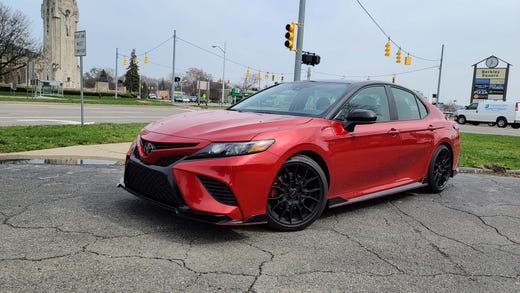
The 2020 Toyota Camry TRD is so wicked looking you’ll be tempted to get in over your head.
I sauntered on to Woodward Avenue one recent Sunday at the wheel of the hottest Camry ever. Growly V-6. Massive black trunk wing. Torch red paint. Black roof, side skirts, front splitter and rear diffuser. Lowered 0.6 inches. Black locomotive cow catcher grille. Wheel wells engorged with huge, 19-inch rims — black, of course.
A hearse-black, 396-horsepower, all-wheel-drive Mercedes-AMG E 43 rolled up next to me at a stoplight. I looked at him. He looked at me. The light turned green.
The German rocket ship was gone before my front tires had stopped chirping from wheel spin. The global auto hierarchy is still intact.
But the point is that the Mercedes King of Beasts felt the need to assert its authority over … a Camry. Take a bow, Toyota. Next time, maybe the engineers will give you an engine upgrade to fight back with.
The mid-size Camry TRD is a sexy beast, but, to be honest, I would have preferred a pocket rocket.
Something to compete against the compact Honda Civic Type R hot hatch, VW Golf GTI and Subaru WRX. Toyota had that chance with the wee Corolla XSE that I tested last year. Painted in eye-searing Blue Flame with hot wheels and a boomerang grille, the hatchback had all the elements to be a contender — except a driveline.
Toyota was content to make the XSE a head-turning trim version of the volume-selling compact with the same 168-horse hamster wheel underneath. A manual made it fun to drive, but it’s hardly in the league of a Golf GTI.
Like XSE, Camry TRD also uses standard Camry equipment rather than stepping up to a unique driveline the way the Civic Type R does with its 306-horse turbocharged-4 or GTI’s wonderful 220-horse turbo-4. At least Toyota stuffed Camry with the model’s more powerful option — the 3.5-liter V-6 and not the standard 2.5-liter, 4-cylinder sewing machine.
The TRD may not belch flames — but with 301 ponies under the hood and an exterior that rivals the Subaru WRX STI for outrageousness, it’ll have to do.
After picking up my pride — and restoring the Camry’s doors that had been blown off by the Merc-AMG — I continued down Woodward, but with more humility. A 550-horsepower, 2011 Mustang GT500 sauntered by. I didn’t even try to provoke him. Then a 365-horse BMW M2. No mas.
But then a 300-horse, 2007 Subaru WRX STI blew by me. I took the bait.
This was more in the TRD’s wheelhouse. Sure, the third-generation, compact-class Subie had all-wheel drive and was lighter by 200 pounds, but the mid-size Camry is 13 years newer with a modern, 8-speed automatic transmission and more tire. Oh, it was on.
The rowdy ’Ru properly led me into a Michigan turn. We rolled northbound on Woodward. He slowed so I could tuck under his rear bumper. Then we floored it.
The rolling start helped me put the power down through the front wheels in order to keep up with the instant grip of his AWD. As he rowed his stick shift, I kept my foot buried as the smooth-shifting, auto 8-speed did its thing. Nearly a dead heat with the Subaru pulling away at 60. A later check of car specs confirmed the STI does 0-60 mph in 5.2 seconds versus my TRD’s 5.6.
The Camry is vanilla no more. Make mine cherry red with hot fudge sauce on top.
That sweetness carried into the twisties of northern Oakland County which I explored later that day. When the current-gen Camry debuted in 2018 it was noticeably tighter than its predecessor. TRD turns that inherent goodness up a notch. While there were no Subies to harass, the sporty Camry was surprisingly good through the curves.
Seems that Dr. Akio Frankenstein dragged the Camry into his basement lab and swapped in stiffer springs, updated shocks and larger-diameter anti-roll bars for an increase in TRD’s resistance to body roll by 44% in front, 67% in back. The gym-training didn’t stop there.
The TRD adds stiffer underbody braces and a V-brace behind the rear seats to keep that butt firm. Heck, even the custom-to-TRD, matte-black, 19-inch hoofs are three pounds lighter than the standard 19-inchers.
That’s a lot of engineering effort not to add a more capable engine — though I’m not sure there are more capable V-6s in Toyota’s stable. The twin-turbo, 354-horse, twin-motor hybrid unit out of the Lexus LS would be pricey and the wonderful, 335-horse inline-6 in the Supra is, well, a BMW product.
So Toyota makes the Camry TRD attractive the old-fashioned way: affordability.
My tester was $32,950. That’s right, just $33K.
That’s the same price as a much smaller 220-horse GTI, for example. Honey, I grew the pocket rocket. Which comes with certain advantages like more rear seat room. Typical of Asian automakers these days, Camry TRD also comes stuffed with standard features to complement its bodacious exterior: auto high beams, auto pre-collision braking, auto lane assist, adaptive cruise control.
The real thing — not the cheap adaptive cruise I had in a recent $67,000 Sequoia that turned off under 30 mph. Whoa, bessy! Toyota is learning fast, and that includes standard Apple CarPlay and Android Auto navigation which you’d have to pay extra for on an Alfa Guilia Quadrifoglio costing twice a much.
Speaking of twice as much, I parked the Camry next to a $60,000 Dodge Challenger SRT Hellcat in Birmingham and the owner came out of his store to check it out. “What is that?” he said. If Camry is getting the attention of Hellcat owners, it’s doing something right. Naturally, he wanted to know what was under the hood.
I fired up the Camry with a rumble and he gave a thumbs up. But I didn’t challenge him to a drag race.
2020 Toyota Camry TRD
Vehicle type: Front-engine, front-wheel drive, 5-passenger sedan
Price: $31,995, including $955 destination charge ($32,950 as tested)
Powerplant: 3.5-liter V-6
Power: 301 horsepower, 267 pound-feet of torque
Transmission: 8-speed automatic
Performance: 0-60 mph, 5.8 seconds (Car and Driver); top speed, 135 mph
Weight: 3,572 pounds
Fuel economy: EPA 22 city/ 31 highway/ 25 combined
Report card
Highs: Cool black trim; pocket rocket specs with mid-size roominess
Lows: Polarizing front grille; more power, please
Overall: 3 stars
Payne: As California battle rages, Tesla celebrates Michigan win with its first store
Posted by Talbot Payne on May 14, 2020
Clarkston — The Tesla Inc. big top is open for business in Michigan.
The Silicon Valley automaker has opened its first service center in Michigan since the state overturned its ban on Tesla sales and service in January. The Tesla service center is located off Interstate 75 on Dixie Highway just west of downtown Clarkston in a former Chrysler-Jeep dealership.
Tesla’s raised profile in Michigan comes at a time when the company has been front and center in the COVID-19 shutdown wars for defying California’s Alameda County and re-opening its manufacturing facility there in Fremont. Long a darling of the green left for its embrace of environmentally-friendly electric cars, Tesla’s defiant stance on the Michigan and California fronts has made it a hero to free-marketers on the right as well.
Noted Lansing economic consulting firm, the Anderson Economic Group, has found itself on both sides of the barbed wire against Tesla in recent months. After arguing on behalf of dealer bodies that Tesla could not sell directly to customers in states like Michigan, AEG provided crucial fodder this week for Tesla’s California reopening. They found Alameda County COVID cases were substantially lower than those in similar auto manufacturing areas where plants have been authorized to reopen.
Tesla’s Clarkston location offers Michigan Tesla owners their first service location in the state. Previously, Tesla owners had to take their car to Toledo, Cleveland, or Chicago where Tesla was approved under state law. Customers also had the option of scheduling Tesla mobile units to come to their homes which can often take weeks.
Tesla Clarkston will also eventually open a showroom — windows are festooned with signs reading “COMING SOON” — so customers can browse Tesla’s lineup of Model 3 and S sedans and X and Y SUVs.
Under Michigan’s previous Tesla ban, enacted by Gov. Rick Snyder in 2014, Tesla employees were prohibited from assisting in any sale of a vehicle. Now employees will be able to assist in test drives, price discussions, and other sales activities. However, purchased cars must still be sold outside the state and delivered to customers who can then transfer the title in state.
Michigan had been one of 16 states to bar Tesla sales and service under dealer pressure. But Tesla has endeared itself to green politicians over the years, including the Obama administration which provided a crucial $465 million loan to the electric automaker during the depths of the Great Recession to keep it afloat.
That green cred appealed to incoming Democratic Gov. Gretchen Whitmer and state Attorney General Dana Nessel who, in their settlement allowing Tesla stores, applauded the company’s “stated mission of accelerating the world’s transition to electric vehicles for the good of the environment.”
Free marketers also applauded the sales ban lift, and Musk’s defiance of Alameda County’s shutdown order has warmed conservatives’ heart, too. In this month’s earnings call with investors, he condemned California’s shutdown orders as “fascist” and said “it’s breaking people’s freedoms in ways that are horrible and wrong and not why they came to America or built this country.”
The conservative Wall Street Journal editorial page applauded Tesla’s move this week: “You can understand Mr. Musk’s frustration when Alameda County officials have allowed pot shops to stay open while shuttering his Tesla plant though the company has developed protocols to protect workers. Other governors including Michigan’s Gretchen Whitmer have given the green light to auto plants run by Tesla’s competitors.”
Musk’s resistance has inspired businesses across the country in the shutdown reports the Associated Press. A “Stand with Tesla Freedom Rally” was organized for Fremont, California, Wednesday.
There were no signs of resistance at the Clarkston service center, however, as service members diligently worked through their caseload of EVs.
Tesla’s California pushback — and push into Michigan — come at a crucial time for the company: it has just begun production of its Model Y crossover which is sure to top its popular Model 3 sedan as the brand’s best-selling model.
Payne: Experts say Tesla has turned the corner on quality
Posted by Talbot Payne on May 14, 2020

Auburn Hills-based Munro & Associates took a 2020 Tesla Model Y into their shop and disassembled it piece by piece in order to assess technology and quality.
It seems that Tesla Inc. quality is catching up to its technology.
Quality issues have dogged the Silicon Valley automaker even as it has become one of the most coveted brands in the luxury market. Under the microscope as the new kid on the block, its fit and finish issues have lagged its foreign and domestic peers.
But as its all-new, $50,000, 2020 Model Y compact crossover comes to market, the electric automaker is not only getting familiar praise for its performance — it’s getting strange new respect from some of its loudest quality control critics.
More: Payne: Tesla Model Y charges luxury SUV market with roomy SUV version of its Model 3
Credit a culture of innovation and a deep bench of some of America’s best engineers, said Sandy Munro, CEO of Auburn Hills-based Munro & Associates, who has watched Tesla grow with a critical eye. He said the automaker’s investment in top talent cast off by Detroit and NASA during the Great Recession of 2008-2009 has paid dividends.
They have had good people for a long time,” said Munro, who runs one of the world’s premier industrial benchmarking companies. Tesla CEO Elon Musk “hired the cream of the crop and brought them back (to California) and listened to what they had to say. Under the skin was done really well … by these geniuses they picked up from NASA and the Detroit area. They don’t just have Silicon Valley guys — they cherry-picked the world.”
And now the skin is getting attention, too.
After dis-assembling a Model 3 in 2018, Munro declared that the electric sedan had “flaws we would see on a Kia in the ’90s” — a pointed reference to the cheap quality of early Korean entries in the U.S. market.
After taking apart a Model Y this spring, Munro has changed his tune. “It’s a well-designed car,” he said in an interview. “It’s so much better than the Model 3 — no comparison in fit and finish. They are miles apart.”
An auto manufacturing veteran and leading expert in integrated product development, Munro says Tesla still lags in some areas. But it has made a quantum leap from Kia ‘90s standard to the 21st century.
“Fit and finish right now is not the best — but is not the worst either,” he said. His engineering team will ultimately give the car a full grading. “My guess is it’ll will come out a 7-7 ½, something like that. Whereas a Bentley would be classified as a 9-9 1/2. So, you’re looking at something that’s now right in the middle.”
Quality issues have plagued Tesla over the last decade as its Fremont, California, plant sought to be innovative at the same time it rushed to bring cars to market to meet overwhelming demand. Tales of yawning panel gaps, blank screens and failed doors dogged its Model S, X, and 3 creations.
Consumer Reports — widely referenced for its reliability ratings — has given Tesla mixed reviews over the years. The Model 3, for example, has been on and off its recommended reliability list. For 2020, the customer guide rates the model 4th best in class out of 11 cars with only Lexus, Genesis and Audi superior. The Lexus IS topped the list at 84% reliability rating, Tesla came in at 59% while the BMW 3-Series and Alfa Romeo Giulia lagged last at 20% and 13% respectively.
Its critics have been fierce — and high profile.
The sentiment began to change last summer when ex-General Motors product guru Bob Lutz, a frequent critic of Tesla who has declared the company “doomed,” spied a Model 3 in an Ann Arbor parking lot.
“I was eager to see the oft-reported sloppy assembly work, the poor-fitting doors, blotchy paint, and other manifestations of … Musk’s ‘production hell,’” he wrote in Road and Track magazine. Lutz was pleasantly surprised at the 2019 model.
“Not only was the paint without any discernible flaw, but the various panels formed a body of precision that was beyond reproach. Gaps from hood to fenders, doors to frame, and all the others appeared to be perfectly even. This Model 3 measured up.”
The improvements in the Model 3 seemed a bridge to the Model Y, which — though containing the same fundamental chassis, battery and electronics as the tech-savvy Model 3 — has made significant changes to its architecture.
In an exhaustive, 37-part series of videos on the “Munro Live” YouTube channel, Munro and his engineering team tore down the Model Y module-by-panel. While Munro marvels at the state-of-the-art electronics and electric motor (largely unchanged from the Model 3) that he says are generations ahead of the industry, he meticulously cataloged Tesla’s quality upgrades.
Among the advances was consistent riveting, modular door construction, and trunk aluminum casting — efficient manufacturing processes Munro recommends.
“When I saw the Tesla 3 I was really, really unhappy with the way they did the back end,” said Munro on YouTube. “I saw hundreds of parts that shouldn’t have been there.”
The Model Y has reduced that construction monstrosity — Munro estimates it required 100 parts -— to two essential aluminum castings totaling about 30 parts when assembled: “They have done a phenomenal job,” he said, “and I love it.”
Tesla hasn’t solved all its issues. In late 2018, as Tesla tried to fill hundreds of thousands of orders for its popular, $40,000 Model 3, The Detroit News learned that about 20,000 models with a variety of paint blemishes piled up outside its Fremont factory. So flawed was the paint process that an outside company was brought in to buff sand the clear-coat while Tesla fixed its plant.
The plant has been reconditioned, but Munro says the paint finish still needs work. “Paint is still crap. I really don’t like it,” he said. “They really need to do something about that.”
Tesla declined to comment. Still, such details haven’t deterred consumers who have made Tesla the fourth best-selling luxury maker in the U.S. with 9.8% market share despite only offering three models. Its fourth, the Model Y, is expected to be its top seller. By comparison, BMW tops the market with 14.3% share selling 16 models.
Dick Amacher is a former GM engineer who worked in the late 1990s on then-General Motors Corp.’s first, 1990s electric car, the EV1 — a precursor to today’s Chevy Bolt EV. But when it came to buying his first electric car, he chose a Model 3. Impressed, he has also purchased a Model Y SUV.
“I had absolutely no problems with Model 3,” he said in an interview, but had a coolant leak in his Model Y from a new heat pump not used in the sedan. “It’s a new design and has certain amount of innovation in it.”
Pickup truck sales rebound to pre-pandemic levels
Posted by Talbot Payne on May 8, 2020
The coronavirus outbreak may have thrown millions onto unemployment rolls and shut down businesses across the nation, but people still need pickup trucks for their jobs. Sales of trucks in the United States have bounced back to pre-pandemic levels.
Ford, Chevrolet, GMC and Ram dominate the U.S. truck market, and pickups have led a broad recovery of autos since the sales trough in late March. After falling by one-fourth the week of March 29, truck sales rebounded quickly. About 24,500 trucks were sold last week — just 1% off pre-virus forecasts.
That boost has helped defy predictions that overall vehicle sales would crater by 80%. According to J.D. Power, overall retail sales have been on the upswing for five straight weeks, with sales off only 38% last week from predicted, pre-virus levels.
But the demand has eaten into truck inventory levels, which are now half their normal levels with production idled across North America. When plants of Detroit automakers begin reopening May 18, automakers say their first priority is to rebuild supplies of those trucks that have been so beneficial to their bottom lines.
“While there is considerable uncertainty around future demand for new vehicles, one certainty is that manufacturers need to replenish heavily depleted stocks of large pickup trucks,” said Thomas King, J.D. Power’s president of data and analytics. “Pickup truck production will be a focus for all manufacturers because of their depleted inventories and the major contribution that pickups make to manufacturer revenues and profit.”
To accelerate truck sales, manufacturers have offered 0% percent financing, seven-year loan terms and record incentives — $5,000 per sale on average — to move their best-selling, most-profitable products. With sales approaching normal levels, Ram has been the first to dial back truck incentives.
Park Cities Ford in Dallas reopened its showroom in late April with social-distancing measures in place. Unlike Michigan, Texas dealerships never shut down completely and maintained sales through appointments and online. Truck sales are strong and the dealership is carefully monitoring declining inventories that are down to two months versus the usual three to four months.
“Inventories haven’t hit red-alert yet,” said Park Cities General Manager Greg Tomlin. “But if plants don’t open back up soon it will be a real problem for us. We stock a lot of pickups, but it’s also Explorer and Escape inventories that have us concerned.”
Truck sales have boosted average transaction prices to a near-record $35,700. And they pushed the market share of Detroit automakers to 43% compared to 37% before the pandemic.
The stampede for pickups has depleted once-healthy inventories. According to J.D.l Power, truck inventory levels normally average 103 days; they are expected to be down to 68 days by the end of this month and remain there for most of the summer.
“I’ve reviewed the inventory across all of our regions at the end of April. I have not seen inventory levels that low for — well, I can’t remember when,” Fiat Chrysler CEO Mike Manley said on a Tuesday earnings call. “When you get down to that level of inventory… you’re bound to be running short of certain high-volume truck configurations. But what it does mean is that we bring our plants up with a much higher level of dealer orders than people maybe expect.”
To meet demand, automakers will be prioritizing truck production as their plants come back on line.
“Dealers have done an exceptionally good job of selling from a low inventory base. But I would say that as we open back up here, prioritizing trucks and getting them out remains our priority among other vehicle lines,” General Motors Co. CFO Dhivya Suryadevara said in an earnings call Wednesday. “That’s what we’re going to prioritize.”
Ford’s F-series pickups are perennially the best-selling vehicles in America. Four Ford plants, supported by 2,000-plus U.S. suppliers, are devoted to pickup manufacturing that employs 19,000 workers.
“The F-series,” said Ford Motor Co. Chief Operating Officer Jim Farley, “will be critical in rebuilding our economy.”
Payne: Tesla charges luxury SUV market with nimble, roomy crossover version of its Model 3
Posted by Talbot Payne on May 7, 2020

The Tesla Model Y began making deliveries to customers before California’s government shut down its Fremont manufacturing facilities. This Model Y is one of the first in Michigan. (Photo: Henry Payne, The Detroit News)
If the Tesla Model Y were a movie it would be called “Honey, I Blew Up the Model 3.”
I managed to get my hands on one of the first Model Y crossovers in Michigan: It’s cool. It’s nimble. It’s a tall Model 3 with a hatchback.
It was also one of the first models to roll off Tesla’s Fremont assembly line before California’s government shut it down as a non-essential business in the COVID-19 economy. No wonder Tesla CEO Elon Musk is pointing fingers at “fascist” Gov. Gavin Newsom for keeping his manufacturing line shut down. The Model Y should be Tesla’s most popular vehicle yet.
I’ve owned two Tesla Model 3s, and the Model Y should put to rest any question as to why people crave SUVs. It’s not because they want to load their camping gear and ford streams for a weekend of camping. It’s because they want a higher seating position, easier ingress and egress, all-wheel drive for Michigan’s endless winters and a hatchback to load lotsa stuff into a big cargo bay.
The Model Y sits 6.6 inches off the ground — just an inch higher than my Model 3. But slide into the Model Y and the difference is apparent. The leather seats (apparently identical to the 3) sit on 6-inch thrones, raising the driver hip point to 24 inches above the road, compared to the Model 3’s 18 inches.
That added height is not only easier for cabin entry, it also makes for a more comfortable seating position. Your 6-foot-5 reviewer sat with his knees at a 90-degree angle to the pedals instead of a more bent 45 degrees in the Model 3. Other height proportions follow with the Y’s roof 7.2 inches taller than the Model 3.
Being an unreconstructed motorhead, I prefer sitting on the floor of a sedan for closer proximity to the road surface and lower center of gravity. But battery-powered cars have an inherent advantage over their gas-powered peers: The battery weight is all in the bottom of the car.
As a result, the Model Y still manages a very low center of gravity despite its taller stature. Clever beast.
That dynamic was immediately apparent when I flung the Model Y into an I-75 cloverleaf. With less head toss than even my handling-standard Mazda CX-5 SUV, the Model Y stuck like glue through the long, 180-degree arc. Like the Model 3, the Y’s steering is pleasingly planted, allowing me to feel the road and explore the ute’s envelope.
At the limit — tires chirping — the Model Y’s taller head and added 344 pounds of weight become apparent, but an SUV has no business handling like this. My long-suffering wife says I should warn passengers before such neck-wrenching maneuvers, but otherwise I can assure you they will be quite comfortable.
True to its SUV mission, the Model Y is bigger in every dimension than the 3. Indeed, its dimensions are bigger than anything else in class. Its cavernous, 68 cubic-feet of cargo room (with rear seats flattened) dwarfs class leaders like the Mercedes GLC (56 cubic feet) and Cadillac XT5 (63 cubes).
More rear improvements over the Model 3 include a whopping 5.3-inch bump in legroom (also best in class) and a more robust carpet for sliding in luggage. Lift the cargo floor and — voila! — a sub-trunk storage cavity mirroring the forward “frunk.” Will that be a footwell for a rear-facing, kid-friendly third-row seat in 2021 models?
That clever packing is thanks in part to manufacturing advances over the Model 3, including a rear aluminum casting. Tesla still trails industry standards in areas like body panel gaps, paint quality and heat-pump noise. But ask owners if they care.
The retired GM engineer played a key role in some of the General’s most ambitious endeavors, including its IndyCar engine program and its first EV1 electric vehicle. True to his roots, he first looked at buying a Chevy Bolt EV before being blown away by Tesla’s superior technology and charging infrastructure.
He was one of the first in line for the Model Y, ordering online after Musk took the wraps off a year ago. While Amacher awaited delivery he bought a Model 3.
He compares the Tesla ownership experience to an iPhone: It’s unlike anything else on the market. Sure enough, my Model Y tester had just received the latest over-the-air update from the mothership that enables its Autopilot self-driving system to see — and stop for — traffic lights.
That wow factor is not lost on the next generation as we shot pictures on Oakland University’s campus. A car full of college kids rolled by, cheering Silicon Valley’s latest. They knew exactly what it was.
The beta-test autonomous system is in keeping with Tesla’s pact with customers: If you’re nervous about pushing the limits of tech, mobile repair and charging infrastructure, then this isn’t the brand for you.
Different as Tesla is from its peers, it is similar on one respect: Its SUVs come with a price premium over its sedans. In the Model Y’s case, the added sheet metal and hatch add $3,000 compared to the Model 3.
It’s all packaged under Tesla’s signature tinted, panoramic roof. Integrated into the body structure, the roof has helped earn the Model 3 the government’s top safety rating. Inside, the Apple-simple interior design carries over from the Model 3. The console is dominated by a 15-inch touchscreen controlling most functions save for two multi-purpose buttons on the steering wheel. They govern everything from self-driving to voice commands. Tesla has the best voice-recognition system in the game, so I rarely touched the screen.
I won’t be trading in my Model 3 Performance for a Y. I like the lower seating position, the better rear visibility, the ludicrous 3.2 second zero-60 versus the Model Y’s insane 3.5-second acceleration.
But if you’re an SUV buyer, the Y is the 3 for you.
2020 Tesla Model Y
Vehicle type: Battery-powered, all-wheel-drive, 5-passenger SUV
Price: $50,115, including $1,125 destination charge ($68,700 Performance model as tested)
Powerplant: Dual-motor AWD with lithium-ion battery pack
Power: 473 horsepower, 471 pound-feet torque (Performance est. as tested)
Transmission: 1-speed direct drive
Performance: 0-60 mph, 3.5 seconds (mfr.); top speed, 145 mph
Weight: 4,417 pounds
Range: 280-315 miles
Report card
Highs: Best-in-class interior room; unique user experience
Lows: Tesla reliability; unpredictable EV range in cold/heat and high interstate speeds
Overall: 4 stars
Payne: Affordable Nissan Sentra makes your pulse accelerate, until you hit the gas pedal
Posted by Talbot Payne on April 30, 2020
COVID-19 times are lean times. Toilet paper is priceless. Attorneys general are on the lookout for price-gouging.
They won’t need to waste their time at the Nissan dealership.
The loaded all-new compact Nissan Sentra SR Premium that I tested is $25,325. I’m not making that up. That includes sunroof, 18-inch alloy wheels, chrome grille, LED everything, floating black roof. Heated six-way automatic seats, heated steering wheel, automatic box, leatherette seats, Apple CarPlay and Android Auto, adaptive cruise-control, blind-spot assist, automatic emergency-braking, stitched dash with Mercedes-style rotary air vents and tablet screen.
Just $25,000. I’m still not making this up.
I had the Sentra in my driveway next to a $63,000 2020 Audi S4 rocket ship. I couldn’t believe these two cars were $38,000 apart. The Audi was flirting with the Sentra, it was so hot. Maybe because Hollywood starlet Brie Larson pilots a Sentra in its new ad campaign — but there’s more to it than that.
The interior is so nice I don’t know what it’s doing in a mainstream compact. When Mercedes debuted its sexy new CLA sedan a few years back — the German luxury brand’s first $30,000 entry-level sedan — we auto reviewers asked: Where are the savings? It didn’t take us long to figure it out. The interior was subpar with ill-fitting panels and a tablet screen tacked to the dash.
Not the Sentra. The attention to detail here is remarkable, from the aforementioned orange stitching to the subtle carbon-fiber trim around the instrument display to the graceful dash lines that seamlessly cups the tablet screen. No gouging here, Attorney General Nessel.
Nissan has long been a value leader in automotive, but style? It’s never been my first choice.
Sure, the Japanese brand has had its moments. I’ve been a Nissan Z sports car fan since it was called the Datsun 240Z. I was just a West Virginia boy in the early ’70s when the Datsun hottie started showing up at the local autocrosses my father competed in. With a lusty shape modeled after the legendary Ferrari GTO and a growly, inline-six engine to match, I was entranced.
The 240Z eventually evolved into the equally sexy 1990 Nissan 300Z. And then there was the 2004 Maxima, Nissan’s full-size sedan hot-rod that combined Cadillac good looks with V-6 voom.
But like Nicolas Cage’s acting career, the Nissan highlights have been few and far between.
With buyers eyeballing boxy, utilitarian, subcompact crossovers, however, Nissan has turned the designers loose on its car lineup. If the midsize Altima doesn’t flip your switch you need to get your switch checked, and the Sentra is better looking than the Altima. The purpose of this is not just to make pretty things, but because of the chance to hook entry-level buyers in a market abandoned by Detroit automakers.
The Mazda 3 is a $25,000 sculpted masterpiece that just beat out the $150,000 Porsche Taycan for World Car Design of the Year. The Mazda adds Michigan-friendly all-wheel drive to match the Subaru Impreza, which also has stepped up its style game. The always handsome Volkswagen Jetta has added value to its lineup with a new model that promises standard features just like Japanese automakers. Even Toyota’s Corolla has become easy on the eyes.
And watch out for Hyundai’s new Elantra. Though its spectacular Los Angeles debut was overshadowed by the coronavirus pandemic, the little Korean is a rolling wonder with more angles than a Frank Gehry building.
But the big dog in the compact segment is the Honda Civic. Honda’s best-selling retail compact offers a dizzying array of models, not to mention important features like a configurable center console and sporty ride. The latter is courtesy of the entry-level car being designed with top-end performance badges like the Type R and Si in mind — hellions that will make you consider moving to Hell, Michigan, just so you have Michigan’s best roads at your doorstep.
To compete with the Civic, the formerly homely Sentra had to rely on rental fleets to find sales. But with its new bod, the Sentra deserves a look at the dealer as well. It’s so good looking it almost made me forget that the Sentra is not offered in hatchback form, my favorite dress for compact hatches.
If you’re looking for a hatchback, the Civic Sport, Mazda 3 and VW Golf are where you should be shopping. But if sedans are your thing, the Sentra now is in the hunt for more reasons than just price.
True to its value roots, the Sentra comes in a whopping $1,600 cheaper than a new Civic LS even as it offers standard goodies like that 7-inch infotainment screen, blind-spot assist and automatic high-beams.
The question is whether you’ll want to come back to the Sentra drivetrain day after day.
In my driveway, this was where the Audi started to snicker — and not because the S4 had 200 more horsepower than the Sentra’s meager 149.
Mated to a continuously variable transmission, the Sentra’s 2.0-liter four-cylinder is uninspired. The Sentra’s all-new chassis is ready and willing, but the engine shouted as if in protest whenever I floored it out of corners. Compare that to the Civic’s 174-horse 1.5-liter turbo, which — though also mated to a CVT — is always ready to play with punchy, 162 pound-feet of low-end torque.
Sentra’s four-banger doesn’t even allow you to claim virtue while putting up with its lack of excitement. Despite giving up 15% horsepower to the Civic, it lags by 12% in fuel economy: 32 mpg versus 36.
Highway cruising is more in Sentra’s wheelhouse, where I could engage adaptive cruise, settle back into the leatherette seats and contemplate the $1,000 I was saving in the Nissan’s luxurious confines. That inner sanctum includes a back seat that matches the Civic’s once class-leading 37.4 inches. That’s two more inches than the $63,000 Audi S4.
Who’s snickering now?
2020 Nissan Sentra
Vehicle type: Front-engine, front-wheel drive, 5-passenger sedan
Price: $20,015, including $925 destination charge ($25,325 SR Premium model as tested)
Powerplant: 2.0-liter four-cylinder
Power: 149 horsepower, 146 pound-feet of torque
Transmission: CVT
Performance: 0-60 mph, 9.2 seconds (Car and Driver)
Weight: 3,084 pounds as tested
Fuel economy: EPA 28 city/ 37 highway/ 32 combined (SR as tested)
Report card
Highs: Hot looks; bargain price
Lows: Needs more power, oh, that CVT drone
Overall: 3 stars
Rochester Hills’ Prefix Corp. retools from race engines to face shields
Posted by Talbot Payne on April 30, 2020
Before the COVID-19 crisis, Rochester Hills-based Prefix Corp. was looking forward to making race engines this spring for the Detroit Grand Prix Trans Am support races.
Instead, it’s making medical devices for first responders, hospitals and other businesses.
The 40-year-old firm is evidence that America’s massive “Arsenal of Health” mobilization to fight World War C has swept up Metro Detroit firms big and small. In addition to automotive giants like General Motors Co. and Ford Motor Co., pandemic demand has transformed Prefix’s plants in Rochester Hills and Auburn Hills from making engines and auto prototypes into assembly lines for face shields and face masks. It’s even making “foot pulls” that allow doors to be opened hands-free, thereby eliminating the necessity to touch potentially contaminated door hardware.
“We’ve always been considered a solutions company,” Prefix Vice President Jhan Dolphin said. “We’ve prided ourselves in being able to meet unusual challenges with often very unrealistic deadlines. So when the world changed rapidly as this COVID-19 issue happened, we had people within the organization that said, ‘Hey, I’m not going home. What can we do to make a difference?’”
Innovation and quick turnarounds for years have made Prefix a go-to company for automakers and performance customers. That ability — and its access to materials, suppliers and technology — allowed it to turn pivot quickly.
Prefix retooled to make critical devices in March, and by April 12 had already delivered 50,000 face shields.
“We’re the company that OEMs come to, whether it’s automotive or aviation or other industries when they want that first design — that new product to be built for the first time,” said Dolphin. “It’s a very unique operation, there are very few companies in the world that do what we do.”
The nimble capabilities have been seen across the auto manufacturing world among household names including GM, which has transformed its Warren Transmission plant to make face masks, and its Kokomo operations in Indiana to make ventilators. In Mexico, Volkswagen has partnered with supplier Faurecia to produce hundreds of masks and gowns for hard-hit communities like New York City. And in England, Mercedes-Benz’s high-performance AMG division is delivering CPAP devices to British patients.
Prefix may not be a household name to consumers. But Prefix’s big Auburn Hills paint facility paints the Ford GT supercar. Before Dodge discontinued its Dodge Viper, the Prefix plant painted it as well.
So speedy has the Arsenal of Health been in ramping up a mass medical device production that Prefix has struggled to find needed materials. With deliveries by April 25 topping 90,000, the company has been ordering thousands of pounds of plastics and other materials.
“It’s starting to get tough to get certain materials,” said Dolphin. “Elastic, for example, has become somewhat scarce. But our team won’t be told no.”
In addition to supplying critical protective gear for hospitals in Michigan, Illinois and Ohio, as well as sheriff departments, dentist offices and funeral homes, Prefix’s contribution to the COVID-19 battle has also been an elixir for Prefix’s employees.
“It’s important for them mentally to say ‘I’m doing something every day to make a difference,’” said Dolphin. “(They’re) doing something positive to help others. It’s cool to see.”
Working on the lines has been a voluntary decision. Prefix has made sure its work spaces are safe. Task have been spread across its four facilities.
“(We’ve) been able to set up small production facilities and make sure the distancing and cleanliness is kept,” said Dolphin. “People are showing up with ambulances and we’re filling them with face shields so they can be delivered around the area.”
Prefix is disappointed that the Detroit Grand Prix has been canceled for 2020. This year the Trans Am series was set to play a significant supporting role to the IndyCar main event – both with professional TA2 races as well as vintage races featuring Trans Am classics driven by legends like Lyn St. James.
In addition to providing the engines for the Chevy, Ford and Dodge muscle cars in the TA2 field, Prefix sponsors the No. 40 Dodge Challenger that won the TA2 title last year with Michigan racer Mark Miller behind the wheel.
“(It’s) a punch in the gut that we can’t do that this year. Being involved with Trans Am has been a big source of pride for us,” said Doplhin. “A lot of us are racers at Prefix. We are big fans of go-fast machines.”
Suiting its quick-turn prototyping ability, Prefix has expanded its performance division to so-called restomods: classic cars gutted and updated with modern technology and engines.
Some of that work continues as Prefix engineers work from home. But the same processes — tooling, stamping, water-jet cutting, CAD computers, 3D printing — necessary to build the wheels, interiors and electronics for, say, a concept car are now suited to staying open as an essential business making medical equipment and foot pulls for doors.
As Prefix’s regular clients reopen across the country, Dolphin said everybody is ready to get back to its usual work.
“It’s obviously going to take some time,” he said. “I have every bit of confidence that it will come back strong.”
Payne: Corvette C8 to get three high-performance trims — but expect delays
Posted by Talbot Payne on April 28, 2020
The mid-engine Chevy Corvette C8 is the most capable ‘Vette ever. You ain’t seen nothing yet.
General Motors Co. is planning to introduce three high-performance cyborgs in the next few years, according to insiders familiar with the plans who weren’t authorized to speak and a GM note to suppliers that was obtained by The Detroit News.
Those performance variants include a 1,000-horsepower, all-wheel drive, hybrid hypercar expected to be designated Zora. The model is named after Zora Arkus-Duntov, the legendary “godfather of the Corvette” who developed the first mid-engine Corvette prototype back in 1960. That’s in addition to the Z06 and ZR1 variants featured on past front-engine models.
Each car will introduce Corvette’s first-ever dual-overhead cam, flat-plane crank engines, the 5.5-liter LT6 and LT7. Compared to the traditional push-rod small-block V-8 in the standard C8 — and the previous, front-engine generation — the new design allows the engine to breathe better and spin to higher revs. The technology is found in some Ferraris supercars.
The LT6 scheduled for the Z06 is normally aspirated, according to industry sources. The LT7 variant for the ZR1 gains twin turbochargers for more horsepower, they say. The engines are similar to the high-revving V-8 found in the Corvette C8.R race cars that debuted at Daytona last January.

The mid-mounted LT7 is expected be mated with an electric motor up front in the Zora hypercar to give it an extra boost totaling up to 1,000 horsepower that’s channeled through all-wheel drive, industry sources say.
That’s the good news. The bad news is that, according to GM’s note to suppliers, the performance models will be indefinitely delayed due to the coronavirus crisis. The Z06 was originally scheduled for model year 2022, the ZR1 for 2024, and the Zora for 2025. The delay has also impacted other GM vehicle programs including refreshes on pickups, Chevrolet SUVs, Cadillac V-series Blackwing models and the electric Chevy Bolt hatchback.
A GM spokesperson had no comment on the company’s Corvette plans. On production delays, a statement from the automaker said: “As you would expect under these unprecedented circumstances, all of our development teams are looking for opportunities to conserve resources. We are not canceling any programs, but we are making some adjustments.”

Corvette Z06
The 5.5-liter LT6 engine that debuts in the Z06 will be distinguished by its Ferrari-like shriek thanks to that new dual-overhead cam, flat-plane crank powerplant that’s expected to spin at up to 8,000 rpms. That shriek was heard at the Rolex 24 Hours of Daytona in January aboard the C8.R race cars that finished fourth and seventh. The LT6 is similar to the 5.5-liter engine in the C8.R that is restricted to 500 horsepower by IMSA sports-car racing rules.
Those rules require that the race engine appear in a production car, which News sources say are the performance variants. One source expects the Z06 engine to make about 650 horsepower and 600 pound-feet of torque.
The modern LT6 is an advance forward for a badge that has heretofore used push-rod engine technology shared with V-8 Chevy trucks. The standard 490-horsepower C8 on sale now is equipped with an updated version of the push-rod V-8 called the LT2.
The last-generation front-engine Corvette C7 drew its power from a 6.2-liter LT1 V-8 that developed 460 horsepower and 465 pound-feet of torque. The Z06 and ZR1 versions of the C7 were powered by LT4 and LT5 engines making 650 and 755 horsepower respectively.
The 2020 Corvette stickers for $59,995 and has sold out until the 2021 model year. In addition to the high-performance Z06, ZR1, and Zora models, the standard C8 is due for a track-focused, 2023 Grand Sport model with a similar LT2 engine.
The last-generation front-engine Z06 started at $81,775.
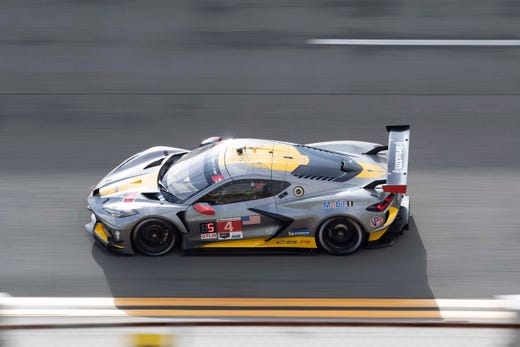
Corvette ZR1
Originally due in model-year 2024 before delays, the ZR1 will be stuffed with the LT7 V-8 which adds twin turbochargers to the 5.5-liter LT6 for more power, industry sources say. The LT7 puts to rest rumors that a variant of Cadillac’s 4.2-liter V-8 Blackwing engine — orphaned by the Cadillac CT6-V, which has ceased production — would find its way into the Corvette.
The LT7 is expected to put out about 850 horsepower and 825 pound-feet of torque. It will be mated to the same dual-clutch Tremec automatic transmission found in the standard C8 and the Z06, according to the supplier note. The Tremec is Corvette’s first quick-shifting dual-clutch transmission.
The previous front-engine ZR-1 achieved its 755 horses with a supercharger.
Zora
The long-rumored hypercar is real according to sources, and was initially scheduled for 2025 before delays. When the News broke news of a mid-engine Corvette in 2016, sources said electrification was a key factor in moving the engine rearward so the sports car could take advantage of rapidly evolving hybrid-electric capabilities found in European supercars.
Meant to honor the engineer whose mid-engine dream was finally realized 70 years after it was first conceived, the Zora is expected to dial in an estimated 1,000 horsepower and 975 pound-feet of torque, according to one source. The twin-turbo LT7 will achieve its added power thanks to the electric motor mounted up front.
In concert with an all-wheel drive system to better maintain traction, the combination should make for under face-flattening zero-60 launches.
The 900-horsepower club is rare air, occupied by limited-production, million-dollar-plus hybrid hypercars like the Ferrari LaFerrari, McLaren P1 and Koenigsegg Regera.
In line with the C8’s “affordable supercar” mantra, expect the Zora to match its European competition with similar performance and state-of-the-art interior technology for a much lower price.
Electric Mustang Cobra Jet dragster fries the quarter-mile
Posted by Talbot Payne on April 24, 2020
Run silent, run fast.
Ford introduced its first-ever electric dragster Friday, the Mustang Cobra Jet 1400 prototype, as the pony sub-brand expands its cred in the battery-powered world. The 1,400-horsepower Cobra Jet will stealthily shred a quarter-mile drag strip in just over 8 seconds, said Ford, while hitting a top speed of 170 mph.
Similar to Chevrolet’s eCOPO Camaro electric dragster, the Cobra Jet 1400 is expected to do exhibition runs this fall at National Hot Rod Association drag meets. The eCOPO has clocked a 9.8-second quarter-mile. Electric dragsters are an anomaly in NHRA where fans congregate to see ground-shaking, flame-throwing gas beasts do battle.
The Cobra Jet 1400 comes in a year when Mustang will deliver its first-ever electric production vehicle, the Mach E, as it goes head-to-head with the Tesla Model Y in the compact SUV space.
“Ford has always used motorsport to demonstrate innovation,” said Ford icons global chief Dave Pericak. “Electric powertrains give us a completely new kind of performance and the all-electric Cobra Jet 1400 is one example of pushing new technology to the absolute limit.”
Cobra Jet is a familiar name to drag-racing fans as Ford’s customer offering in the NHRA Factory Stock class since 1968. Most recently, Ford introduced the 5.2-liter, 1,000-plus horsepower 2018 Mustang Cobra Jet to honor the car’s 50th anniversary. The gas-powered Jet competes against other fossil-fueled beasts like cross-town rivals Chevrolet Camaro COPO and Dodge Challenger Drag Pack.
Notably, the Cobra Jet EVs specs are close to its gas sister which holds the NHRA Factory stock quarter-mile record of 7.7 seconds at 176 mph.
Credit the electric dragster’s eye-popping 1,100-plus pound feet of electric torque. The production Tesla Model S is notorious for causing dizziness under acceleration, so immediate is its 723-torque launches. The Cobra Jet is sure to cause more brain pain.
“This project was a challenge for all of us at Ford Performance, but a challenge we loved jumping into,” said Ford Performance Motorsports director Mark Rushbrook. “We saw the Cobra Jet 1400 project as an opportunity to start developing electric powertrains in a race car package that we already had a lot of experience with, so we had performance benchmarks we wanted to match and beat right now.”
The electric dragster is sure to give onlookers a break from the ear-drum rattling noise of gas rocket ships. That is, if it can find an open drag strip this fall. The NHRA season is currently under COVID-19 shutdown and local Michigan drag strips like Milan have locked their gates to racing.
When the ‘Stang does hit the strip, it will have its sights on the Camaro eCOPO that Chevy introduced in 2018. Chevy, too, is determined to advance its electric bona fides with the Chevy Bolt EV.
The eCOPO’s battery drivetrain boasts more than 700 horsepower and 600 pound-feet of torque. Chevrolet posted a 9.8-second quarter-mile last year. If the new Mustang performs as well as Ford says it does, it could break the National Electric Drag Racing Association (separate from the NHRA) stock record set by drag racer Patrick McCue, whose modified “Shock and Awe” dragster broke the tape at 8.3 seconds at 166 mph.
For now the Cobra Jet 1400 is a one-off exhibition car with no plans for customer deliveries like the $130,000 gas-powered Cobra Jet.
Ahead of the Cobra Jet 1400’s dragstrip debut this fall, fans can catch a sneak peek April 26 on MotorTrend On Demand’s “Hard Cell,” a showcase for innovative EVs.
2020 Detroit Grand Prix poster contest winner honors a race-less year
Posted by Talbot Payne on April 23, 2020
There won’t be a Chevrolet Detroit Grand Prix presented by Lear in 2020, but there will be a Grand Prix poster.
The annual poster has been a collector’s item since 1982 when the Grand Prix began as a Formula One race through the streets of Detroit and has continued as the event moved to Belle Isle under the IndyCar banner. For the eighth year, the winner was selected in a Grand Prix contest from designs created by students at the College for Creative Studies in Detroit.
Everett Robinson II, a 20-year-old Detroiter studying Illustration, designed this year’s winning entry. It’s a keeper.
In an explosive rendering, Robinson’s winning entry features multi-colored race cars screaming toward the viewer leaving a blur of green trees and red-and-white curbing in their wake.
“It’s odd that we’re not going to have a Grand Prix this year,” said the soft-spoken artist who remembers first visiting Belle Isle with his father for driving lessons. “I hope the poster can be a distraction from what is going on at the moment. It’s a bit of escapism. It tries to imagine what the Grand Prix drivers feel when they go at the speeds they do.”
More: ‘We have to be careful’: Grand Prix’s ‘Dr. D’ sees COVID-19 on front lines at Detroit Receiving
In a historic year in which coronavirus has impacted every major sporting event, the poster is proof the Detroit GP – and its charitable ambitions – won’t be forgotten.
Robinson’s artwork will be refined over the next few days for publication and then produced in a limited run of official 2020 posters. They will be available in May for purchase for $25 online via the Grand Prix’s official merchandise partner, Made in Detroit, as well as the event’s official website, DetroitGP.com.
Proceeds from the sale of the posters will be dedicated to COVID-19 relief efforts, continuing the Grand Prix’s charitable traditions that have brought millions of dollars to Belle Isle.
“The tentacles that the Grand Prix reaches run very wide and deep,” said Detroit GP chairman Bud Denker. “First, the impact to Belle Isle. Having the Grand Prix on (there) has allowed us to invest over $13.5 million in the Belle Isle Park the last 12 years. Having the Grand Prix allows us to give the Belle Isle Conservancy almost $6 million.
“That’s not going to happen this year. That money goes away.”
But the poster will do its part. The proceeds will be distributed via the United Way for Southeastern Michigan COVID-19 Community Response Fund, which provides pandemic relief in numerous ways – including food distribution to students affected by shuttered schools and assistance for health and human service agencies.
Robinson will be the recipient of a scholarship award – as will the second- and third-place winners: Josh Rose and Zijao Liu, both juniors in the CCS illustration program. Andrea Slomczenski and Ashley Neagle rounded out the five finalists chosen from the CCS Digital Illustration class entries.
In keeping with the state’s shelter-in-place order, the judging for this year’s contest was conducted online via a Zoom meeting. The students submitted their designs before April 6, when the decision was announced to cancel this year’s Grand Prix, originally scheduled for May 29-31.
Th eight-person judging panel included Denker, Grand Prix president Michael Montri, GM industrial design manager Stuart Cooper, Lear senior marketing specialist Claudette Kaado, WDIV-TV sports reporter/anchor Jamie Edmonds, Detroit Free Press assistant sports editor Ryan Ford, CCS Illustration Department chair Don Kilpatrick, and the author of this article. Detroit Grand Prix fans also weighed in by voting their choice via social media.
“The poster competition with the talented students at CCS has become one of our favorite traditions of the Chevrolet Detroit Grand Prix,” said Denker. “Even though we aren’t able to host the Grand Prix weekend on Belle Isle this year, we felt it important to carry on this tradition.”
The 2021 Grand Prix has already been confirmed when, if all goes well, race cars will again be streaking across Belle Isles landscape.
“We hope there is pent-up demand for it in 2021 when we bring it back bigger than ever,” said Denker.