- Search Cartoons
- Comic Archive
-
Payne
Store



 Henry Payne RSS

Articles
Rugged Toyota concept challenges Jeep’s Wrangler
Posted by hpayne on December 1, 2017

Los Angeles – Jeep isn’t the only manufacturer that wants to take you to the Outback. Toyota wants a piece of the action, too.
Just a day after Jeep’s all-new rock-climbing Wrangler rocked the Los Angeles Auto Show, Japan’s biggest automaker rolled out a four-door Wrangler clone called the FT-AC (short for “Future Toyota Adventure Concept”).
The FT-AC’s off-road playbook reads like Wrangler 101: fore and aft skidplates, knobby tires, detachable fog lights, all-wheel drive, lockable four-wheel drive … a proposed hybrid drivetrain like the Wrangler’s first-ever, 2.0-liter hybrid turbo-4.
It’s easy to understand Toyota’s interest. The Wrangler has sold some 5 million copies worldwide in its lifetime and established Jeep as the alternative for a youthful, outdoors-conscious demographic. In a ute-crazed world, the Wrangler icon attracts buyers to the SUV brand as first-time buyers, then feeds them up the product pipeline to more expensive offerings like the Cherokee and Grand Cherokee as they age.
Toyota isn’t alone in Wrangler envy. Ford wowed the Detroit auto show earlier this year with news that it would bring back the rugged Bronco as a 2020 model.
Like Ford’s iconic Bronco, Toyota hopes to resurrect brand heritage. The FJ Cruiser (its FJ reminiscent of the Jeep CJ that inspired the Wrangler) was a truck-based, off-road rhino built by Toyota from 2006-2014. The well-received FJ enjoyed peak sales of more than 50,000 units a year before getting chewed up in the Great Recession.
“FT-AC reminds adventurers of all skill levels how remarkable the trip — not just the destination — can be,” goes the pitch from the Toyota publicity machine. “Going for a paddle on the river. Climbing a favorite rock face. Hitting a trail on a mountain bike. FT-AC is experience-centric. It compels.”
The FT wraps its Wrangler-esque ambitions in a Toyota wardrobe. The bold face is similar to the Toyota Tacoma that has dominated mid-size pickup sales for the last decade. The concept’s off-pavement capabilities suggest it might also be built on the Ridgeline’s body-on-frame skeleton.
The Adventure Concept packs versatility with LED fog lights that can be plucked from their pods and used as portable lights — or on a bicycle for night rides. Infrared cameras in the side mirrors can also be used to film vehicle — or personal — adventures. The beast sits high above 20-inch wheels, its body clad in extra armor for canyon adventures. Above is a safari-style roof rack to haul baggage and below are twin hooks if the driver gets too deep into treacherous terrain. Like any proper 21stcentury machine, the FT comes with GPS-location and WiFi.
Although Toyota calls it a concept vehicle, it likely will go into production.
“It’s no coincidence then that FT-AC makes its debut at the Los Angeles Auto Show, in a city where much of the population escapes to the hills, deserts, or beaches for their much-needed weekend recharges after a long week of work,” Toyota said.
It’s also no coincidence the Toyota boasts of its alternative powertrain here, too. California is the most heavily regulated state for battery-powered vehicles and Toyota teases that the FT could have a “no compromise,” next-generation hybrid powertrain that blends fuel efficiency with rugged all-wheel-drive grunt.
Payne: Lincoln Navigator, luxury suite on wheels
Posted by hpayne on December 1, 2017

The Lincoln Navigator is a rolling condo. Big enough to comfortably seat six and sleep four, with lush interior trimmings, Wi-Fi connectivity and 30-way seats that make BarcaLoungers feel like lawn chairs, it shames most second homes.
I have one criticism: Where’s the fridge?
An icebox is about the only feature that is missing from this 181/2-foot long, 61/2-foot-high, $95,000 masterpiece of luxury. It needs to be. As Lincoln charts its premium comeback, it needs home runs like the Navigator to navigate the treacherous shores of six-figure luxury. An impressive navy of hulking battle ships sail these waters, including the Cadillac Escalade, Land Rover HSR, Mercedes GLS and Infiniti QX80.
Lincoln does not shy from the fight. It brings the big guns:
1. Big power from the same twin-turbo, 3.5-liter V-6 engine that beats at the heart of the Ford F-150 Raptor, the baddest truck ever built. Stomp the Navi’s gas, and its roars like King Kong at dinner time. Call it the Lincoln Raptor.
2. Biggest towing capacity (8,700 pounds) in its class, courtesy of the same bones as the F-series, the most capable pickup hauler on the planet.
3. Biggest heads-up display.
4. Biggest seating capacity.
5. Biggest moonroof.
6. Biggest fuel economy numbers thanks to that turbocharged six — and Lincoln’s first application of a 10-speed tranny (co-engineered with Ford and GM) that drives other rear-wheel drive performance powerhouses like the Camaro ZL1 and Raptor.
But if you think all this brawn makes the Navigator look like a sumo wrestler on steroids, you’d be wrong. Because the remarkable thing about this land yacht is how elegant it is from stem to stern.
The grille is 10 stories high, but modeled after the same Jaguar-esque sculpture that first graced the Lincoln Continental and MKZ sedans. It’s a piece of art (replacing the split-wing grille that always looked awkward on big utes — like wings on a rhino) with little Lincoln logos knitted into a honeycomb pattern. Anchored by a centered, giant Lincoln logo, the grille begins a theatrical welcome — “Embrace,” it’s called — when you approach the big ute.
The logo glows, lighting a path from the LEDs in the headlights, to the lighted door handles, and finally, Lincoln’s signature, horizontal rear lights. Big, illuminated running boards unfold from beneath the car to meet you. To complete the introduction, the mirrors sport LED lights that project the Lincoln logo on the pavement — think of it as a welcome mat. It’s a dazzling display that stopped passersby in their tracks one night in the lot where I parked.
It’s the best show this side of the Tesla Model X’s automatic-driver system and falcon-wing doors. I pined for the original Navigator concept that dropped jaws at the 2016 New York Auto Show with its own gull-wing doors and cascading, fold-out, three-tier steps.
Given that Tesla’s complicated falcon doors delayed production almost two years, it’s probably best that Navigator left the gull-wings in the attic.
The “turbine wheels” on my top-trim, Black Label $96,570 Navigator tester (hey, condos ain’t cheap) are worth the added price. These pinwheels are a nice complement to the ute’s long, horizontal lines. The English accent is unmistakable — from the Jag grille to the Range Rover floating roof and blacked-out C pillar.
But the exterior gift wrap is for the real treat inside. Lincoln has been resolute in following its own premium path. While other luxury brands chase Teutonic athleticism (Caddy, Alfa and Acura), Lincoln claims “quiet luxury.”
You won’t find YouTube videos of camo-wrapped Lincoln’s chasing Nurburgring lap records or jetting down drag strips posting ludicrous zero-60 times. Instead, Lincoln wants to sink you into a recliner, turn up the stereo and deliver you to your destination on a flying carpet. It works.
Easing into the Lincoln’s interior is less like driving and more like settling into a wealthy pal’s basement infotainment man cave. The 30-way thrones are exquisite with automatic, door-mounted adjustments for the head, upper and lower back — even each thigh. Only an ottoman is missing, though the Navigator’s pedal adjusters are close enough. After you’ve tweaked everything to your liking, the console screen will create a “Personal Profile” that recognizes you (and two other drivers) each time you arrive at the club — er, SUV — and adjusts the cabin accordingly.
The front “floating console” should be on display at Art Van. My tester console was laser-cut out of a maroon khaya wood; the mahogany’s continuous grain runs across the cupholder and smartphone (recharging) compartments courtesy of Yamaha piano makers’ laser-etching technique. I’m not making this up. Speaking of piano keys, Lincoln’s push-button, electronic tranny has been replaced by more workable “piano keys” — an elegant touch, though I find GMC’s similar “trigger” transmission even better.
In the middle of acres of stitched, wooded dashboard, an elegant, silver-rimmed tablet rises above the console — though the Lincoln’s superb, steering wheel/voice control-operated, digital instrument display meant I rarely had to take my eyes off the road to poke at its touch screen. Even the console-mounted drive modes — Conserve, Normal, Normal 4×4, Slippery, Sport, Ocean Liner (making that last one up) — are introduced with colorful, digital graphics that might have come out of Lucas Studios.
Speaking of technology, the Navigator can park itself. Using hands-free, self-driving software pioneered on Ford’s Escape, this ocean liner will parallel-park and perpendicular-park into the tightest of spaces. All you have to do is control the brake. Meanwhile, second- and third-row passengers can kick back in living-room comfort. Like the F-150, Navigator saves 600 pounds with an aluminum skin — but the Navigator has plowed its weight-savings into interior quiet and independent rear suspension for effortless motoring.
Both rows get USB ports and Wi-Fi connectivity (up to eight devices). Second-row passengers can also control the radio. Or occupants can just flatten the rear rows, go horizontal (at 6-foot-5 I fit easily), under the biggest moonroof in autodom, and stargaze. Mrs. Payne and I did.
Navigator chief program engineer Andrew Kernahan is a British ex-pat and says he’d like to see Queen Elizabeth park her Land Rovers and try a Lincoln Navigator for a change.
If she did it would be a national scandal. But she would also be treating herself to an SUV worthy of the crown.
Henry Payne is auto critic for The Detroit News. Find him at hpayne@detroitnews.com or Twitter @HenryEPayne. Catch “Car Radio with Henry Payne” from noon-1 p.m. Saturdays on 910 AM Superstation.
2018 Lincoln Navigator
|
VEHICLE TYPE |
FRONT-ENGINE, REAR- OR ALL-WHEEL DRIVE, SEVEN- OR EIGHT-PASSENGER SUV |
|
Powerplant |
3.5-liter twin-turbocharged V-6 |
|
Transmission |
10-speed automatic |
|
Weight |
5,685-6,056 pounds (5,855 Navigator AWD as tested) |
|
Price |
$73,250 base ($96,570 — Black Label as tested) |
|
Power |
450 horsepower, 510 pound-feet torque |
|
Performance |
0-60 mph, 5.2 sec. (Car and Driver est.); 8,700-pound towing capacity |
|
Fuel economy |
EPA mpg est. 16 city/23 hwy/19 mpg combined (4×2); EPA mpg est. 16 city/21 hwy/18 mpg combined (4×4) |
Report card ★★★
|
HIGHS |
STYLISH CONDO ON WHEELS; SELF-PARK FEATURE |
|
Lows |
Can a Lincoln command $90K?; piano shifter even better if it used “trigger” keys |
Overall: ★★★★
Grading scale
GM’s Mark Reuss is revved about the new Corvette ZR1
Posted by hpayne on December 1, 2017

Los Angeles – Two weeks before the Chevy Corvette ZR1 supercar was to debut at the Los Angeles Auto Show, General Motors product chief Mark Reuss had hip surgery.
Yet. when the 755-horsepower ’Vette debuted before a packed house Tuesday night, there was Reuss, standing on stage and leading the ceremonies.
“If that doesn’t get your heart racing, then nothing will,” he said as coupe and convertible versions of the ZR1 revved onstage through a cloud of smoke and pulsating music.
Reuss wouldn’t want to be anywhere else.
A Corvette owner himself, the 34-year GM veteran has put his heart into the seventh-generation Corvette’s development. Rare among top executives, Reuss not only presides over product development, he rigorously tests every vehicle GM makes, frequently joining engineers at the company’s Milford Proving Grounds to put vehicles through the paces on and off the track.
His passion, along with the aggressive leadership of fellow top execs Mary Barra and Dan Amman, is considered a key reason that GM is leading a Detroit product renaissance that has put the General at the forefront of everything from super sports cars to electrified, autonomous vehicles.
Determined to make vehicles like the Corvette and Camaro coupe world-class performance cars, Reuss is a Nurburgring-licensed driver who can take the 212-mph ZR1, for example, to the world-famous 140-turn race track and push the car’s envelope alongside the program’s hired hot-shoes.
It’s no coincidence that Reuss’ twin hip replacements allow him to more easily fold into low-slung sports cars.
“Whether it’s a Chevy Traverse SUV or a Corvette, I want to drive the car and see where the limits are,” said Reuss in an interview just feet from the ZR1 that he has put countless laps on.
“But it’s also important to drive them 4-5 hours off-property on roads that aren’t perfect. To be able to that, you have to be able to read a car. And reading a car means having to drive a car to its capability.”
Chevy last made a ZR1 in 2008, on the old C6 Corvette platform. A lot has changed since then as GM has emerged from the Great Recession and painful bankruptcy.
This is not only a new-generation Corvette, it’s a company for the next generation. Key to the change is how much Chevy’s bandwidth has grown. This is no longer a truck and horsepower brand. It is a technology brand reaching new buyers.
“You can see the agility of the company. Today we’re talking about a 755-horsepower Corvette, tomorrow I’m going to talk about autonomous vehicles and electrification in San Francisco with Mary (Barra) and Dan (Amman) to investors,” Reuss says.
“Look at the demographic of people who are buying our electrified vehicles, and 85 percent of people coming into our brands and our EVs — Volt and Bolt — haven’t shopped GM before. Return buyers of Volt are just about higher than anywhere else. There’s a real good pattern there.”
This month, GM will sell more EVs than any other automaker in California, a startling metric metric for a Detroit automaker that once struggled to make in-roads on the coast.
Kelley Blue Book analyst Karl Brauer credits GM’s product turnaround to a Barra-Amman-Reuss executive team “more aligned in their vision than ever before in GM.”
He applauds Reuss’ ability to be a passionate car guy and a prudent businessman at the same time.
“Reuss is the Bob Lutz of a new generation,” says Brauer, referencing the Detroit legend responsible for the Dodge Viper and Volt. “They are both car guys who have an intrinsic passion that they can translate into successful business models. Reuss can get a ZR1 supercar built but also see the future for Bolt electrification.”
As a result of its more diverse product lineup, “Like Toyota, GM is prepared no matter what the cultural moment,” says Brauer. “No matter what is ‘in,’ GM has an answer.”
He says the Corvette will continue to push the limits because it offers a halo for the brand but also inspires GM team members. “A lot of what you see on (the ZR1) — the materials, the drivetrains — will make their way into our other cars and trucks. It’s a source of pride (in) the company.”
Looking at the Hulk-like ZR1 — its muscular tires and V-8 supercharger straining the limits of its front-engine wardrobe — Reuss is asked whether this is the ZR1’s last hurrah before Chevy introduces a mid-engine Corvette to keep up with other mid-engine hybrid-electric competitors. Mid-engine Corvette mules have been seen in camouflage around Metro Detroit.
“This is the fastest C7 you will see,” he says, taking a seat to rest his healing hip. “That’s all I can say.”
NACTOY finalists announced at LA Auto Show
Posted by hpayne on December 1, 2017

Los Angeles — Finalists for the 2018 North American Car, Truck and Utility of the Year were announced at the Los Angeles Auto Show on Wednesday. Car and SUV nominees pit new and old faces against one another, while Detroit automakers have a lock on Truck of the Year.
Battling for Car of the Year will be the mid-size sedan titans Honda Accord and Toyota Camry. Seeking to knock these perennial best-sellers off their perch will be the upstart Kia Stinger, the Korean brand’s new performance halo sedan. For the first time in the award’s history, no Detroit cars were eligible.
American is over the moon for utes, and three strong entrants will vie for the crown: the Alfa Stelvio, the first luxury SUV from the Italian brand, resurgent Volvo’s XC60 and the Honda Odyssey minivan.
Detroit iron dominates the Truck of the Year category. Finalists are the Chevrolet Colorado ZR2, Ford Expedition and Lincoln Navigator. The latter plus-size SUVs are eligible because they are based on truck platforms.
The NACTOY winners will be announced at the Detroit auto show in January.
LA Show: Super ’Vette ZR1 goes topless
Posted by hpayne on December 1, 2017

Los Angeles – The Corvette ZR1 blew the roof off the Los Angeles Auto Show. Literally.
For the first time since it was introduced to the Corvette lineup in 1970, the top-trim, performance icon has gone topless. Shaking the stage with its 6.2-liter, supercharged V-8, the ZR1 convertible made its debut Tuesday night, emerging from a cloud of dry ice to take its place alongside the coupe -which was introduced to the world earlier this month in Dubai.
Designed from the ground up to be a drop-top, the ZR1 convertible is uncompromised from the coupe for chassis rigidity. The only structural changes made are for the folding top and repositioned seat-belt mounts. The power top can be operated remotely, or while driving up to 30 mph. Weaponized with the same features as the winged 755-horsepower, 715 pound-feet of torque, supercharged V-8 coupe, the convertible adds a mere 60 pounds — and $4,000 — over its stablemate.
With two available rear wings and 105 more horsepower than the already legendary Corvette Z06, the ZR1 coupe offers staggering performance numbers.
“I called the Z06 the ‘Big Nasty’ when it was introduced in 2014,” said GM product chief Mark Reuss on stage next to the blood orange ZR1 convertible. “So I call the ZR1 a VERY Big Nasty.”
With a base “low wing,” the coupe will top out at 212 mph. That beats the 205 mph registered by the last-generation ZR1 produced from 2009 to 2013. Put down another $2,995 for the ZTK performance package, and the ZR1 sprouts an adjustable “high wing” and carbon-fiber front splitter that sucks the ZR1 to the ground with a race car-like 950 pounds of down-force. Top speed will suffer a bit but still crest 200 mph.
“The new Corvette ZR1 convertible is a supercar in all respects,” said Reuss. “Few others can challenge the ZR1 convertible’s power and speed while offering the exhilaration of top-down motoring.
The ZR1 coupe will carry a suggested retail price of $119,995, while the convertible will start at $123,995.
The fearsome new Corvette is expected to be the end of an era: It marks the swan song of the front-engine icon as Chevrolet prepares to debut a mid-engine Corvette, perhaps as early as January’s Detroit auto show.
While GM company policy prohibits testing convertibles to their top speed, Chevy estimates the drop top’s numbers to vary little from the coupe that makes its North American debut here in Los Angeles.
That means convertible passengers can fully enjoy the ZR1’s unique, quad-piped stereo at absurd speeds. Corvette chief engineer Tadge Juechter and his team designed a special spring-loaded passive valve that acts as a sort of truck-exhaust flap in Track mode. At full throttle the system will roar like King Kong and shoot flames out the back. Don’t follow this beast too closely.
Car and Driver estimates that the ZR1 will be the fastest production car ever — eclipsing even the $900,000 Porsche 918 hybrid supercar — at its annual “Lightning Lap” competition around “America’s Nurburgring,” Virginia International Raceway.
As for the real Nurburgring, the fearsome 140-turn track in Germany, Juechter predicts the car could lap below the magic 7-minute mark, a time rarely achieved. The lap would be academic, however, as Chevrolet will not sell the ZR1 in Europe since its huge supercharger — 2.9 inches taller than the already tall supercharger on the Z06 — will not meet European pedestrian safety standards that specify minimum crush zones for the hood.
Other ZR1 bits will be familiar to Z06 buyers, including a sumptuous interior and available 7-speed manual and quick-shifting 8-speed automatic. Chevy estimates the automatic-equipped Supervette will hit 60 mph below 3 seconds, and the quarter-mile in the high 10-second range.
That should be a thrill for the ears with the top down. The ZL1 arrives in showrooms in the spring of 2018.
Carmakers look to future at LA Auto Show
Posted by hpayne on December 1, 2017
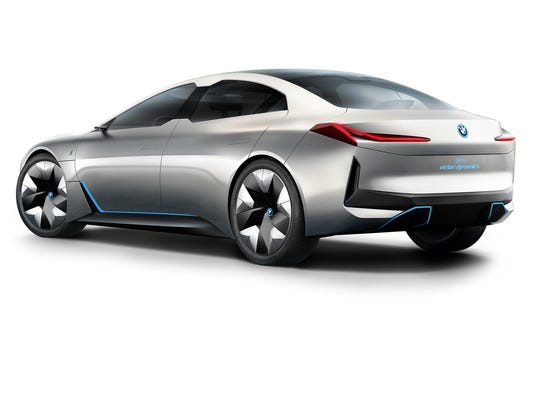
Los Angeles – The 21st-century U.S. auto industry is performing a skilled juggling act, and that performance is on stage this week at the Los Angeles Auto Show.
Automakers are serving multiple masters. They are investing billions in self-driving technologies that many predict are the future of ride-sharing services and daily commutes. Yet, they must also maintain full-line product portfolios for driving customers on course to buy 17 million new vehicles for the third year in a row. The vast majority of those vehicles will be powered by cheap gas, yet carmakers must also meet the demands of governments like California that are forcing carmakers into a regulated future of battery-powered vehicles.
This week, automakers will serve the future. Things get started Tuesday at the Los Angeles Convention Center with the AutoMobility LA conference that brings together automakers, designers, computer engineers, academics, investors and others to share their visions of an autonomous future.
Executives from Panasonic, BMW and Waymo will speak on topics like “Redefining Mobility in a Connected World” and “Roadside Ransomware: Fact or Fiction?”
Their visions are hardly hypothetical. Automakers are already building self-driving chariots. Uber has announced a partnership with Volvo to put 24,000 Uber-bots on the road starting in 2019. The agreement puts the company on a “path toward mass-produced self-driving vehicles at scale,” says Jeff Miller, Uber’s chief of auto alliances. Google-owned Waymo and Lyft have also entered into partnerships with Chrysler (the Pacifica minivan) and Chevrolet (Bolt EV).
On the convention center’s floor, automakers will roll out their visions for an electric-car future beginning Wednesday. Using California’s clout as the largest auto market in the U.S., regulators here have set hard EV sales quotas — and state politicians are soon expected to follow the lead of European governments including France and Britain to eliminate the gas engine within the next two decades.
Luxury automakers like BMW and Mercedes will display new, EV-focused product lines here — the i-line and EQ-line, respectively — as they try meeting government requirements and compete with California electric start-up Tesla. Even retro-brand Mini Cooper will debut an EV concept.
Yet, Tesla’s inability to make a profit despite an average transaction price of $100,000 on its Model S and Model X electrics speaks to the difficulty of the industry’s challenge.
In California, rich with EV incentives and a battery-friendly weather, hybrid-electric/plug-in electric/pure electric vehicles make up just 9 percent of the market. Automakers aren’t ignoring the other 91 percent of customers and the profit-generating vehicles they covet.
Beginning Friday, the doors will open to the automakers’ consumer masters and they will have plenty of good ol’, driver-focused, gas-guzzling toys to ogle.
Detroit automakers will roll out new versions of some of the most iconic vehicles ever made: the 755-horsepower ZR1 and off-road star Jeep Wrangler. Lincoln will showcase its Navigator land yacht on the LA stage for the first time.
And automakers will slake the appetite of ute-hungry America. The hulking, three-row BMW X7 concept and Subaru Ascent will be the largest vehicles their respective brands have ever introduced. Volvo, Hyundai, Land Rover and Lexus will unveil all-new SUVs. Even struggling Mitsubishi will try to resurrect itself in the US market with a new ute.
Sitting in the middle of this busy crossroads of technology, SUVs, and government mandates will be the Jaguar I-PACE eTrophy Prototype.
The Jag’s mission is as complex as its name. An electric SUV aimed squarely at the Tesla Model X, the I-PACE hopes to capitalize on both the demand for utes and premium EVs. Its eTrophy prototype sprouts a rear-mounted wing and announces an international, battery-powered SUV racing series with the hopes of electrifying the public to the idea of an EV future. Who knows, maybe it will be self-driving.
LA Auto Show: Barra, Alfa rule Motor Trend Awards
Posted by hpayne on December 1, 2017
Los Angeles — The annual Motor Trend awards kicked off the Los Angeles Auto Show Monday night and Detroit ruled the red carpet. General Motors CEO Mary Barra took home Person of the Year and Ford’s F-150 dominated Truck of the Year. But the headliner was the Alfa Romeo Giulia’s upset win for Car of the Year over the historic Tesla Model 3 electric vehicle and formidable Honda Accord. “The Giulia was the only vehicle whose essence enraptured the jury with its charm and unbridled zeal for driving,” wrote Motor Trend’s Mark Rechtin of the winning entry, Alfa’s first premium sedan in the U.S. market. Alfa is a premium brand in the Fiat Chrysler Automobiles group. Rechtin and his fellow Motor Trend jurists put the new cars, trucks and crossovers of 2018 through harsh testing. The field was ultimately winnowed to a select few finalists based on six criteria: design, engineering excellence, performance, efficiency, safety, and value. The magazine also honors the year’s most impactful player in the auto industry with Barra as the consensus choice. The awards were presented on Monday night in Los Angeles at the Petersen Automotive Museum, home to one of America’s premier car collections. The nimble Giulia’s victory was perhaps most unexpected because Motor Trend is the rare automotive award to have had extensive access to Tesla’s Model 3. Tesla, for example, chose not to enter the EV in the prestigious North American Car, Truck, and SUV of the Year award (which will announce its finalists later this week) as it focused on ramping up production. The Tesla has won raves for its bold design, minimal interior and as the first luxury EV to travel over 200 miles on a charge. Over 450,000 hungry customers have put down $1,000 in pre-orders. But Motor Trend found the Italian sedan more compelling for its personality, sexy styling, safety rating, and raw speed. “About three years ago, we set out to bring the best premium sedan in the world to market. And here tonight, by picking up the Motor Trend Car of the Year award, is proof positive we are on the right track,” said Alfa chief Reid Bigland, clutching the Motor Trend “Golden Calipers” trophy. Though its acclaimed 10th-generation Accord came up short for Car of the Year, Honda did not go home empty-handed. Its CR-V crossover won SUV of the Year, eking out another Alfa — the Stelvio (based on the same platform as Giulia) — as well as the reliable Subaru Crosstrek. The Ford F-150, refreshed for 2018 after debuting its all-aluminum body in 2015, ran away with the truck award with a powerful, technically-superior lineup of 4×4 trims that included the Raptor off-road beast. Runners-up were the Chevy Colorado ZR2 and GMC Sierra 3500 HD Denali. In picking Barra as Person of the Year, the jury rewarded not just GM’s first female CEO, it honored an executive who has brought bold changes to a recently bankrupt automaker. “We wanted to recognize the CEO that makes the hard decisions and positions their company for success,” said Motor Trend Editor-in-Chief Ed Loh afterward. “Mary has a program for everything from the connected car to the EV space. She shut down a couple of long-running brands in Australia and Europe that have been a drag on the company. And she’s tackled a lot of adversity — when you talk to people at GM they stand behind her.” Motor Trend’s Of the Year issue recognized 49 more auto executives for their talents including Tesla’s Elon Musk, Chrysler designer Ralph Gilles, and Ford global chief Joe Hinrichs. The issue hits newsstands in December. Look for the Golden Caliper trophy on the hoods of the winners at auto shows across the country. Posted by hpayne on November 23, 2017 For 2017, Chrysler set a new standard for minivanswith the Pacifica, a gorgeous tour de force that made vans cool again: Best-in-class styling. Best-in-class seating dexterity. Best-in-class comedian sponsor in Jim Gaffigan. Following Chrysler’s home run is little like following, well … Gaffigan on stage after a comedy routine. Better to stick to your best stuff. So applause goes to Honda, which has introduced an all-new Odyssey minivan for 2018 that plays to Honda’s strength of innovative, interior ergonomics. Based on the same platform as the excellent mid-size Honda Pilot, the Odyssey comes with the same attention to interior detail as its ute sister. I’m convinced Honda engineers move in with families to observe their daily routines and design their cars accordingly. The Pilot and Odyssey aren’t so much cars as they are domiciles. The front seats are mom heaven. Like the Pilot, a ribbed center-console shade rolls back revealing a bottomless compartment for big purse storage. Drop your bag in the bin and it’s at your elbow for rummaging whenever needed. No more tossing handbags out of reach on the passenger sat. Or on the passenger floor where you have to zip it up lest its contents jump out at the first hard-right turn. Got a small bag? It’ll fit nicely on top of the shade and will be held in place by console “curbs.” Moms are fussy about crumbs, of course, so Honda’s ribs ingeniously stretch in order to prevent debris from lodging between them. Listening to families, Honda hears what they don’t like, too. They don’t like Honda’s first-generation infotainment screen that was all touch and no knob. So the minivan gets a proper on-off knob with volume control. Like Chrysler, Honda has learned the joys of shift-by-wire transmissions. The Pacifica uses a rotary e-shifter; the Honda has a so-called “trigger” button-shifter. Just stick your index finger in the reverse trigger hole and pull, or thumb the drive button for easy maneuverability. The rotary and trigger have their advocates (I’m bipartisan), but they both free center-console storage and make lateral crossings from driver to passenger seat much easier (or am I the only one who does that?). That’s about the only thing Honda and Chrysler interiors share. Odyssey does not add a useful console drawer like Pacifica. Only Honda has Apple CarPlay app connectivity (a must for Mrs. Payne). Behind the front seats, Chrysler and Honda diverge dramatically. Chrysler’s legendary Stow ’n’ Go second-row seats offer Swiss army knife versatility. They can be flattened to act as Ottomans for third-row occupants. Or stored in the floor for third-row legroom. Or stored in the floor with the third-row seats for acres of cargo space (roll in bikes, go-karts, pets) — like a pickup bed without a roof. Honda is no slouch in the seat invention department. In fact, we’ve come to refer to their seat solutions as “Magic Seats,” from their subcompact Fit to the Odyssey. Interestingly, its Fit subcompact takes a similar second-row approach to the Pacifica. Its seats can be folded out of the way for bike storage — or flattened for cavernous cargo room. But in the Odyssey, Honda figures its family customers want a different kind of versatility. Say hello to the “Magic Slide” seats — seats that move horizontally across the cabin. Want to get into the third row? Just slide the second-row captain’s chair toward the middle. Need to comfort a baby behind you? Just slide their chair towards you for easy access from the driver’s seat. I have arms as long as an orangutan to reach child seat-anchored kids (mine are all grown up now), but the sliding-seat option is undoubtedly more convenient for normal-sized folks. And the third-row access is best-in-the business (even better than accessing the Pacifica’s third row by simply walking between the captain’s chairs). I brought in my minivan expert — and neighbor — Chuck. Call him Chuck Gaffigan. A longtime SUV guy, he’s found happiness in his Pacifica and its cool vibe. The Honda interior impressed him. Not just the Magic Slide seats and deep console, but details that only a practicing father of wee ones would know intuitively. He marveled at the Honda’s well-positioned child seat anchors. And the backseat microphone that Odyssey options so that front-seat parents can communicate with third-row kids. Stepping back from the Odyssey and viewing the total package, he muttered: “But I love the Pacifica.” With its graceful exterior design and equally expressive interior lines, the high-tech Chrysler has transformed the unremarkable family minivan. The Odyssey still looks geeked-out. Honda has shored up some of the irregularities from the previous generation — the sliding door runner is now hidden, and the dashboard shifter doesn’t look like it came out of a panel truck. But where the Pacifica is a flowing sculpture, the Honda is a mess of contradictory lines. Honda doesn’t fear dynamic architecture. I’m a particular fan of the current, heavily-decorated Civic for example. After the brand’s familiar “flying wing” grille, the Odyssey keeps its signature “lightning bolt” shoulder line from the last generation — a jagged shoulder line that droops rearward, giving the impression that the minivan was broken over someone’s knee. A fashionable floating-roof design hovers — detached — over this spectacle. Driving performance for the smooth, quiet Odyssey and Pacifica are similar — nine-speed trannies powering competent, 280-something horsepower V-6 engines. Honda also offers a first-in-segment 10-speed tranny in upper trims like my Elite tester. The Pacifica’s comparable fuel economy and JD Power-leading reliability record negate a traditional advantage for Honda vehicles. Long a minivan pioneer, Pacifica adds to its firsts list the first hybrid minivan. For families with less than a 30-mile commute every day, that’s 30 miles on electrons alone. Long an innovator in hybrid cars, Honda finds itself playing catch-up to Chrysler. Reports are that Honda may electrify its minivan with the same battery package found in Honda’s luxury-brand Acura MDX hybrid. When folks ask me what cars I recommend, I say there are no bad vehicles made today — only vehicles that execute better. Among compacts, Honda leads the way with superior Civics, Accords and CR-V utes. In the minivan segment, its Odyssey is the best, most innovative Honda yet. But Chrysler, as the kids in the backseats might say, is da bomb. Henry Payne is auto critic for The Detroit News. Find him at hpayne@detroitnews.com or Twitter @HenryEPayne. Catch “Car Radio with Henry Payne” from noon-1 p.m. Saturdays on 910 AM Superstation. 2018 Honda Odyssey VEHICLE TYPE FRONT-ENGINE, REAR-WHEEL DRIVE, FOUR-PASSENGER COUPE Powerplant 3.5-liter V-6 Transmission 9-speed automatic; 10-speed automatic (as tested) Weight 4,354 pounds base (4,564 Touring trim as tested) Price $30,930 base ($47,610 Elite model as tested) Power 280 horsepower, 262 pound-feet torque; towing, 3,500 pounds Performance 0-60 mph, 6.5 sec. (Car and Driver est.) Fuel economy EPA mpg est. 19 city/28 highway/22 combined (9 and 10-speed boxes) Report card HIGHS PARENT-FRIENDLY MIDDLE SEATS; BEST-IN-CLASS CONSOLE STORAGE Lows Geeky styling; trails rival Pacifica plugin, styling wow factor Overall:★★★ Posted by hpayne on November 21, 2017 Like a “Justice League” toy found in a cereal box, an electric supercar emerged from Tesla’s semi-truck last week and stole the show. Boasting breathtaking acceleration, long range — and maybe even the ability to fly — the Tesla Roadster’s performance makes it one of the most capable sports cars on the planet. All that’s missing is a cape. The first Tesla product to evolve to a second-generation — the Roadster was the brand’s first product in 2008 — the supercar will be a $200,000-plus halo car. Like Ford’s GT or Acura’s NSX, the Roadster pushes the envelope of Tesla performance. “The Tesla Roadster will be the fastest production car ever made. Period,” said Tesla CEO and ringmaster Elon Musk before a packed house in an airport hangar outside Los Angeles last week. “It’s the first time any car has broken 2 seconds (zero-60 mph acceleration). The point of doing this is to give a hardcore smack-down to gasoline cars.” The event was supposed to be about Tesla’s entrée into the truck market. But as the sleek semis exited stage left, one lingered. Escorted by a swirl from dry ice, the Roadster appeared from the truck’s rear doors to bedlam from Tesla fans. It circled the tarmac, stopped, then shot into the distance like it had been fired from a silent cannon. Due in 2020, the details of the Roadster are sketchy beyond the dizzying numbers Musk provided in L.A.: zero-60 in 1.9 seconds (topping current-champ Dodge Challenger SRT Demon’s 2.3 seconds); 620 mile-plus range (the first EV to eclipse 620 miles); and a 250 mph top speed. Musk has endeared himself to speed freaks by naming performance upgrades “Insane” and “Ludicrous” — the latter taken from the sci-fi movie spoof “Spaceballs.” Will the Roadster eclipse Ludicrous? “In ‘Spaceballs’ there is one thing beyond Ludicrous and that is Plaid,” said Musk. Tesla didn’t disclose chassis details, but the Roadster’s four-seat configuration and copious cargo room suggest the same batteries-in-the-floor, EV-style architecture that undergirds the companies’ sedans. The original Roadster, by contrast, converted a mid-engine Lotus Elise chassis to battery-power and was confined to two seats. Musk continued to tease Roadster details over the weekend — including its flight potential. “Not saying the next gen Roadster special upgrade package *will* definitely enable it to fly short hops, but maybe,” he tweeted Sunday. “Certainly possible. Just a question of safety. Rocket tech applied to a car opens up revolutionary possibilities.” Nothing sounds out of bounds in a new age of automobility where manufacturers talk of driverless cars and “smart” highways — especially from a CEO who also owns rocket-company SpaceX and was the first to put gull wings on an SUV. “I don’t know what to make of that,” laughed IHS auto analyst Stephanie Brinley. “There are at least four other companies that are playing with the concept of a flying car.” What the Roadster does bring into focus is Tesla’s luxury strategy. Like other premium automakers, the electric-car maker builds an entry-level sedan (the Model 3) at $35,000 that’s book-ended by a halo supercar in the $200,000 range. Acura and Audi have similar supercar strategies with the Acura NSX and Audi R8 V-10 sports cars. Even Ford, a mainstream brand, produces a supercar — the GT — which starts at a stratospheric $450,000. Like the second-generation R8, introduced in 2015, the Roadster appears to be here to stay. Tesla built 2,500 copies of the original Roadster from 2008-2012. Packed with 53 kWh of lithium-ion batteries, it shocked car enthusiasts with its 3.7-second 0-60 sprint and 200-mile EV range — a first for an electric car. “Tesla is still a long way from becoming a normal car company,” says Brinley. “But this is the first time they have done a second generation of something they have done before.” The second-gen car promises performance numbers that eclipse even million-dollar hypercars like the Porsche 918 hybrid and Bugatti Chiron. For $2.8 million less, the Roadster’s claimed numbers beat the Bugatti down the quarter-mile by a full second. Its sub-2 second, 0-60 spec would put it on par with specialty mods like Brighton-based Lingenfelter Engineering’s 800-horsepower Corvette. “I want a Roadster,” says Joel Szirtes, one of the first Model S owners in Michigan. “Objectively and aesthetically, at $200,000 this car is a great value proposition in the supercar segment.” Whether Tesla can deliver on its 2020 delivery promise remains to be seen as the company burns through billions of dollars in capital to produce its bread-and-butter volume seller, the Model 3. Musk promised production of 5,000 Model 3s a week by December, but delays have already pushed that promise off to March. Current production is about 250 vehicles a week. The Roadster will get in line behind the semi-truck — scheduled for 2019 — which already has production orders from commercial interests like the Meijer grocery chain. The “falcon-winged” Model X SUV was delayed about two years due to production issues. “Tesla’s biggest challenge,” says Brinley, “is ramping up production of the Model 3.” Posted by hpayne on November 17, 2017 Los Angeles — It seems Europeans crave rumbling, rib-rattling V-8s as much as we Yanks do. Ford’s decision in 2015 to sell its sixth-generation, iconic Mustang muscle car internationally has been a runaway success. The best-selling sports car in America for half a century is now the best-selling sports car in, for example, Germany — outpacing that country’s own performance icons, the Porsche 911 and BMW M3. Mustang’s international sales have kept Ford’s Flat Rock Michigan assembly plant humming even as domestic sales have softened. The global launch has also come with surprises. “To be honest, we thought it was going to be a majority Ecoboost take because of better fuel economy,” says Ford cars marketing manager Corey Holter in reference to the lower-cost, turbocharged “Ecoboost” 4-cylinder. “But for 50 years a lot of customers haven’t been able to get Mustang, so fuel economy maybe was less a priority than getting the most iconic engine.” That iconic V-8 engine is woven into the fabric of American auto culture — a culture that glorifies open roads and has been exported in Hollywood films for decades. “Ford spent 50 years building up equity for the Mustang,” says Kelley Blue Book executive publisher and auto analyst Karl Brauer. “It was the forbidden fruit abroad. Foreigners saw it in movies like ‘Bullitt’ and ‘Gone in 60 Seconds’ and salivated. Now it’s available internationally and Ford is meeting pent-up demand.” While U.S. sales dipped 13 percent in 2016 after a breathtaking 122,395 units sold in 2015 (up nearly 50 percent over gen-5 sales), Mustang’s international sales climbed 6 percent last year to almost 45,000 as Ford expanded the pony’s presence to 140 countries. Six more countries are being added to the stable this year including Brazil and the Ivory Coast. In addition to Germany, Mustang is the sports car sales-leader in the world’s biggest car market, China, with business up 74 percent in 2016 and another 33 percent so far this year. Since 2015, some 395,000 sixth-gen ‘Stangs have rolled out of Flat Rock — 98,000 of them sold overseas. “Taking Mustang international has been a smart move,” says KBB’s Brauer. “It’s tougher to justify the cost of a new sports car with a small number of domestic sales. But now you can justify it because it sells all over the planet — and helps the model survive the ups and downs of the U.S. economy.” The 2015 redesign was met with rave reviews for its menacing good looks, sophisticated suspension, and efficient, powerful 4-banger. A major mid-cycle refresh introduced to media here this November piles on the latest tech toys including a digital, 12-inch gauge cluster and quick-shifting, 10-speed transmission. Mated to the turbo-4 (a third, V-6 engine option was available only in the United States until this year), the 10-cog promises even better fuel economy for foreign markets like Europe where gas prices can push $6-a-gallon. But outside of China, where buyers pay a huge premium for the Mustang’s high-displacement, 5.0-liter engine, global customers have ignored fuel economy for good ol’ Yankee horsepower. Holter says European sales have run 60/40 for the V-8 over the Ecoboost. In Australia where gas prices nudge $5-a-gallon, V-8 orders are running at 80 percent of sales. Since it invented the affordable, so-called “pony” sports car in 1964, Mustang has consistently innovated in a competitive segment that includes cross-town rivals Chevy Camaro and Dodge Challenger. Ford’s retro-styled, 2005 car breathed new life into the segment — and the current, sixth-gen car was the first to go global. “You can count on one hand the truly iconic cars. The Porsche 911. The Jeep Wrangler. From a brand equity standpoint, they are gold,” says KBB’s Brauer. “Ford has two of them: the F-150 pickup and the Mustang. Ford realizes that and they’ve worked hard to maintain that brand equity.” He says Chevrolet and Dodge should take note. “They would be brilliant to follow Ford’s lead,” Brauer says. Like Mustang, the two-door Camaro (“Transformers”) and Challenger (“Fast and Furious”) have co-starred in international blockbuster films. “Dodge especially has done an amazing job at turning its car into an international icon in a few short years,” he continues. Born in the ’60s muscle car wars, Challenger disappeared in 1974 — only to find new life in 2008. As Fiat-Chrysler develops its rear-wheel-drive Giorgio architecture as a global platform for all its performance steeds — from Alfa to Dodge — the Challenger has an opportunity to follow in Mustang’s footsteps. As does Camaro, which shares the same bones as GM’s nimble, luxurious Cadillac ATS. “International strategies can save brands,” says Brauer. “For example, China’s market saved Buick, not the US.” The same applies for Motor City muscle cars. “The Mustang, Camaro, and Challenger look like nothing else aboard,” he says. Their V-8s sound like nothing else, either. Posted by hpayne on November 17, 2017 A major technological pivot is imminent at Chevy as the world awaits the first mid-engine version of the iconic Corvette. Physics have caught up to the front-engine, two-seat sports car. A mid-ship layout promises better handling balance, more frontal area for hybrid electric motors, and easier engine packaging. But the front-engine platform isn’t going out quietly. All hail the 2019 ZR1, the fastest, meanest ’Vette ever built. The ZR1 pushes the front-engine envelope with an astonishing 755, supercharged horsepower — 105 more than its cousin Corvette Z06 and 48 more than a Dodge Challenger SR Hellcat. Chevy says the V-8-powered rocketship will hit 210 mph and throw flames out the its rear, quad tailpipes. But power is only half the story. Equipped with a huge rear wing, the ZR1 will make a race car-like 950 pound feet of downforce, sucking it to the ground on high-speed racetracks. Estimated to track the cost of the previous-generation, 2009-2013 ZR1, the C7-based ZR1 will likely cost north of $130,000, but with the performance of exotic supercars priced 10 times higher. In a sneak peek of the ZR1, Car and Driver expects it to be the fastest car ever timed at its annual “Lightning Lap” competition at the formidable Virginia International Raceway, eclipsing even the $900,000 hybrid Porsche 918 supercar. The mere 650-horse, 350-pounds-of-downforce Z06 is already just 1.5 seconds off Stuttgart’s finest. “I’ve never driven a Corvette like this before, and nobody else has either, because there’s never been one like this before,” said GM product chief Mark Reuss. “Its unprecedented performance puts all other global supercars on notice that the ZR1 is back.” So far does the ZR1 push the limits that it will be illegal in Europe because the giant, Eaton supercharger under the front hood — 2.9 inches taller than the Z06 unit — does not allow enough room under the skin for the continent’s strict pedestrian protection rules, which require padding under the hood to absorb the impact of a body. The all-powerful ZR1 badge is not applied lightly at Corvette. Only four low-volume ZR1 variants have been made, the first in 1970. The most recent ZR1 — based on the last-generation C6 chassis car — was the stuff of legend. Nicknamed the “Blue Devil,” it supercharged Corvette’s push-rod V-8 for the first time to the tune of 638 ponies. The new Corvette king was unveiled this week in Dubai by Chevy’s global boss Alan Batey and Chief Engineer Tadge Juechter. Chevy says it chose the venue because Corvette has a passionate following in the oil-rich Mideast where it is considered an exotic along with European spots car makes. That, and the thirsty, 6.2-liter V-8 will need its own personal oil tanker for fuel. But for the rear wing and different wheels, the ZR1 is identical to the Z06 aft of the A-pillar. However, given the enormous demands of the monster within, the front end is all-new from fascia to chevron-patterned carbon-fiber hood. To hold four-more heat exchangers (bringing the total to 13), the Corvette’s nose gains two huge, outboard nostrils that look like they were taken off a Lamborghini Aventador. All told, the additional plumbing tacks on 140 pounds of weight. The most powerful Chevy ever built, the ZR1 is the first GM product with a dual-fuel-injection system – and the first ZR1 offered with an automatic gearbox (a seven-speed manual is also available). Behind the supercharged mill, the cockpit is a leather-wrapped refuge with heated and cooled seats, premium Bose audio system and more amenities. The exterior debuts a Sebring Orange paint with matching brake rotors and seat belts. The standard ZR1 will come with a small rear airfoil. Step up to the ZTK downforce package and you get the high wing and bigger downforce number. “The new wings help generate more downforce without adding drag,” said exterior design manager Kirk Bennion. The Corvette ZR1 gets its U.S. debut at the Los Angeles Auto Show later this month. It goes on sale next spring. Its mid-engine successor? Expected it to take a bow in January at the 2018 Detroit auto show. Posted by hpayne on November 17, 2017 Los Angeles — The death of giant, truck-based SUVs has been greatly exaggerated. Ford Motor Co.’s decision in 2003 to shelve its supersize 19-foot-long Ford Excursion SUV was seen as the end of an era. The world was running out of oil and hybrid vehicles were the future. The Sierra Club dubbed the Excursion the “Ford Valdez” — a reference to the crippled Exxon oil tanker that blackened Alaska’s coastline — while then-Ford CEO Bill Ford promised a shift to smaller, greener SUVs like the hybrid-electric Escape. Fifteen years later and dinosaurs still roam the Earth. Indeed, they are thriving. In Los Angeles last week, Ford introduced an all-new, bigger-than-ever $49,000, 181/2-foot-long Ford Expedition — a fraternal twin to the $72,000 Lincoln Navigator SUV that the automaker released earlier this fall. Jeep is getting into the full-size SUV space with its 2019 Grand Wagoneer. Their introduction points out a duality for carmakers: On one hand, companies like Ford promote a narrative of the future with advanced EVs and robotic piloting. On the other hand, they are turning out ever-bigger SUVs. The reason is simple: Big SUVs are hugely profitable. And those profits finance development of advanced battery systems and robotic cars. “Big, profitable SUVs really enable us to do the things we need to do,” said Craig Patterson, marketing manager for Ford utility vehicles. “There are a lot of different ways to go with autonomous vehicles and electrified vehicles — and the future is uncertain. Having the foundation of profitable vehicles like F-150, Expedition and Navigator allows us to have the cash flow we need to invest in all these technologies.” The Chevy Suburban innovated the enclosed pickup back in 1935, but the segment really hit its stride in the mid-1990s as SUVs squeezed out mid-size and large family sedans. Customers with growing families could climb the product ladder from, say, a compact Ford Escape to a mid-size Explorer to an Expedition. GM expanded its truck offerings with GMC and Cadillac badges, while Japanese brands with full-size pickups — Toyota and Nissan — saw the opportunity with the Sequoia and Armada mega-utes. The vehicles gushed profits, and Detroit makers looked to expand the XL SUV trend with vehicles like the GMC Hummer and Ford Excursion. But they hit a wall in 2002 as terrorism and green protests grabbed headlines. “What would Jesus drive?” ads aired on television. “Kids were coming home from school and saying: ‘Mom, you’re ruining the environment by driving this vehicle,’ ” remembers Patterson. “There was a significant decline (in sales), but demand never went away.” Neither did technological progress. “The industry has continued to innovate,” said AutoPacific auto analyst Dave Sullivan, who is a former Ford product manager. “The highway fuel economy for a 6,000-pound vehicle is almost on par with what a midsize sedan was 12 years ago. People need to pack their SUV with hockey sticks and tow a camper. You can’t do that with a Prius.” While Ford got huzzahs from the Sierra Club for scaling back (“William Clay Ford will go down as the man who was smart enough to kill the Excursion before it became an Edsel,” cheered Sierra Club executive director Carl Pope), GM continued its full line of profitable trucks. Combined sales of GM’s Chevrolet Suburban and Tahoe, GMC Yukon and Cadillac Escalade last year totaled more than 250,000. Insiders say the $73,000 Cadillac Escalade alone is good for $35,000 profit for each one sold. On the other side of the Great Recession, a new generation of buyers has embraced them. “Now SUVs are back in a big way,” Ford’s Patterson said. “Millennials are now getting to the point where they are having children. They are following the same patterns their parents did — they are falling in love with SUVs.” The all-new Excursion has some catching up to do with GM’s perennial sales leaders — which are due for a remake of their own soon. “The money that they’re making off these they are turning around and investing in whatever the future may be — ride-sharing, autonomous,” Sullivan said. “Ford and GM are laser-focused on the future, and they are reinvesting those profits.” But those profits may be in danger as green activists and governments like California — following the lead of France and the United Kingdom — target big SUVs again with threats of gas-engine bans over the next 20 years. Twenty years is the product cycle of the Excursion. “There is a clash coming between what the regulators are pushing for, and what consumers want,” said IHS Markit auto analyst Stephanie Brinley. “You don’t want to electrify these things, because you make them unprofitable. And that’s a challenge.” With lighter aluminum bodies, 8,700- to 9,300-pound towing capacities and a truckload of high-tech features, Ford isn’t bashful about its new generation of big utes. “All of the (automakers) adapt to ever-changing requirements whether state or federal,” Expedition Program Director Bill Hoevener said. “You look back 15 years and these things didn’t have fuel efficiency. Now Expedition gets 24 miles per gallon on the highway.” Posted by hpayne on November 9, 2017 The new Tesla gallery in the Somerset Collection mall is next to the Apple Store. Which is appropriate because, just as the iPod, iPhone and iPad re-imagined familiar devices as high-tech luxury objects, so have Tesla products re-thought the automobile. Tesla products are singular vehicles in today’s market. Like Apple, they’ve introduced new terms into the automotive lexicon — Ludicrous acceleration, 17-inch Google map displays — and vaulted an American automaker to the forefront of global luxury. In the 21st century, European makes like Porsche and BMW benchmark to Tesla. Unobtainable to most Americans, $70,000-plus Teslas have nevertheless captured the public’s imagination and whetted its appetite — 450,000 orders and counting — for the more affordable $35,000-$59,000 Model 3. To put that in perspective, BMW’s Model 3 competitor, the 3-series, sold 70,458 units in 2016. The Tesla gallery (don’t call it a “store” because, by Michigan franchise law, Tesla can’t sell directly to consumers) entrance features a bright red Tesla Model S, a car I have driven many times. But overshadowing the Model S at the back of the store is the Model X crossover. Like a male peacock in full tail-fan next to its female mate, the X’s falcon-wing doors wow. This is a show car in the grand tradition of auto show prototypes. Except the X got built. Out of its cage in the wild, the peacock does not disappoint. This paparazzi-magnet is a cross between SUV and sports car. Premium, performance SUVs are all the rage these days — just look at $100,000 Porsche Cayennes and Maserati LeVantes that borrow design cues from their long-hooded, sports car kin but are made on different platforms with different dynamics. Not the Model X. Its fundamentals are the Model S down to its aluminum bones: Same 50-50 weight distribution. Same switchgear. Same 75-100 kWh batteries. My two X testers — a P100D and 100D — were instantly familiar to Model S P100D and P90Ds I’ve driven (alphanumeric check: P is for “Performance” rear motor. 100 is 100kWh battery. D is for dual-motor AWD). The X’s added plumage adds about 500 pounds. The effect is a 5,531-pound hippo that runs like a cheetah. There is no SUV — and few cars — that can hang with a top-trim, P100D Model X off the line. So addictive is the Model X’s acceleration that my buddies drove it like the Model S. Or a McLaren. Every stoplight is a drag race. Its 2.9-second, zero-60 acceleration is on par with a Corvette Z06. The torque is so concussive, you have to do a U-turn at 60 mph to go back and pick up your stomach. The interior is a Model S clone, too: same mesmerizing 17-inch display. Same steering wheel-based controls. Same over-the-air computer upgrades. One morning the X offered a software upgrade to my smartphone. I concurred and 90 minutes later I had an upgraded vehicle, including an “Automatic Lane Change” self-driving feature. Approach the X with key in pocket and the driver’s door cracks open. Hello. Another step and it swings open by itself. Climb in, push the brake and … the door thunks shut. Welcome to the X-rated show. Never seen that before, even in the $80,000-$130,000 market the Tesla shares with the Cayenne Turbo, Range Rover HSE and Mercedes GLS. The panoramic front glass is like seeing an Apple screen for the first time. Arcing over the front passengers like a fighter jet canopy, it’s the best view for skyscrapers — or M-119’s Tunnel of Trees. Be sure to store a pair of sunglasses in the voluminous center console storage for long, sunny drives. Reach into the center console’s touchscreen controls and open the doors. The huge second-row wings rise majestically to the sky. I half expected a Martian to emerge, so unusual is the experience. Rugrat passengers who will never tire of the experience — even when the doors sense my cramped garage ceiling and stop short of full spread. Less impressive was the groan in my right door hinge, a reminder of quality issues that have plagued the X. And rear adult passengers who found the bucket seats narrow and lacking in armrests. The middle seats work in concert with the front seats to move forward to allow third-row access. These aren’t Lincoln Navigator rear seats — they’re kid-size only. I recommend opting for middle-row bench seats both for larger seating, and so you can flatten the seat back to make for cavernous cargo room as in the Model S. Just check the bench seat box on the online order form; eschewing auto trim tradition, Tesla allows customers to order features a la carte. For all its attributes, however, the Model X doesn’t make the case for an electric future. I have friends who own the Model S as their urban mobile — for work, for weekend cruising — but who rely on their SUV as the family-trip car. With less range than the Model S due to its girth, the Model X is a difficult sell for the long-range demands of an SUV. Given its performance capabilities, I drove it like I drive any performance vehicle — but at significant range sacrifice. Sixty miles on the odometer doing stoplight drags and 80 mph interstate speeds took 100 miles of range off the battery. Even if I drove the X at G-rated speeds, the maximum, 295-mile range (100D) is a limitation for going up north or away for extended weekends. Tesla promises to double Superchargers nationwide by the end of this year, but that still leaves huge holes in the X’s travel abilities. Like the S, the X remains a niche luxury vehicle. But what a vehicle. Among a sea of performance iron — Z06, Lamborghini Diablo, Porsche 911s — at Lingenfelter’s Halloween Cars ’n’ Coffee in Brighton, the Tesla wowed. I parked it wings-up (with a 100 kWh battery on board, there’s no fear of draining the battery!) and watched people swarm to it, ogling the doors, the interior, the crisp displays. Tesla has delayed orders for its Model 3 due to production difficulties. Similar delays hampered the X — and today it’s in high demand. I’m guessing Model 3 customers will wait, too. Tesla is that different. In the meantime, they have a gallery to visit. Henry Payne is auto critic for The Detroit News. Find him at hpayne@detroitnews.com or Twitter @HenryEPayne. Catch “Car Radio with Henry Payne” from noon-1 p.m. Saturdays on 910 AM Superstation. 2017 Tesla Model X VEHICLE TYPE ELECTRIC, ALL-WHEEL DRIVE, SIX- OR SEVEN-PASSENGER SUV Powerplant 75-100 kWh lithium-ion battery with electric motor drive Transmission Single-speed transmission Weight 5,531 pounds (Model X P100D) Price $79,500 base ($102,000 100D and $140,000 P100D as tested) Power 532 horsepower, 713 pound-feet torque Performance 0-60 mph, 4.9 sec. base (2.9 sec. P100D/4.7 sec. 100D as tested); top speed: 155 mph Fuel economy Range: 237 miles, base (289 mi. P100D/295 100D. 100 miles of range to cover 60 miles as tested in 100D) Report card HIGHS HIGH-TECH SHOWCASE; ROAD-HUGGING, 5,500-POUND BOWLING BALL Lows Tight third row; EV range limits SUV practicality Overall:★★★★ Posted by hpayne on November 3, 2017 With the launch of its highly anticipated Model 3 in “production Hell” — to quote CEO Elon Musk — Tesla reported a record quarterly loss Wednesday of $619 million. Right on cue, Model 3 customers like me got an email three hours later. “Thank you again for your Model 3 reservation,” read the missive from Telsa’s Palo Alto headquarters. “We’re making significant progress clearing early production bottlenecks but, as we continue to work through them, your estimated delivery timing will now be slightly later than we originally expected.” Checking my account at Tesla.com, delivery for my sedan, with 310-mile range and an estimated 5.1-second 0-60 sprint, has been delayed a month — from February-April of next year to March-May. Customers ordering models with 220 miles of range and all-wheel drive will wait even longer. Orders are filled based on when $1,000 deposits were received (in my case, April 2016), with priority given to Tesla employees and repeat customers. Two pals in the Detroit area, both longtime owners of Tesla Model S sedans with delivery dates ahead of mine, got similar notices with similar delays. Tesla’s charismatic founder, has always made grand claims about his products that often are followed by readjustments for reality. For example, Tesla’s most recent model, the stunning, falcon-door Model X crossover, was promised for delivery in late 2013 — but didn’t arrive in driveways until nearly two years later. Now in full production, the $80,000 electric ute is selling at about 2,000 units a month — or just below Model S sales (one of America’s top-selling large luxury sedans) at 2,400 units. Musk predicted that the compact Model 3 — the luxury maker’s first chariot under $40,000 (my big-battery version will retail at $49,000) — would deliver 5,000 units per week by December as the company ramped up to make good on an unprecedented 450,000 pre-orders. That prediction got a bucket of cold water when Tesla moved that production goal to possibly March. Tesla only produced 260 cars by September, well shy of its target of 1,600. This week’s announcement of delays was expected, even if the size of the loss was not. Musk has long predicted “production Hell” for the company’s key, volume model, but the delays have raised concerns that customers will flee to other brands like Chevrolet’s Bolt EV that promise similar performance to the Model 3, but without the production headaches. “Model 3 reservation holders may not be thrilled about the fact that they have to wait longer than they thought for their vehicle, but it likely won’t cause them to cancel their orders en masse,” Edmunds auto analyst Jessica Caldwell said Wednesday. “Many Model 3 customers put deposits down on the vehicle more than a year ago before they even saw the vehicle, so it’s clear Tesla buyers don’t follow the usual logic-driven car-buying process.” Guilty as charged. I deposited $1,000 on the Model 3 fully expecting glitches — as did my Michigan peers. My reasons for buying the Model 3 transcend the simple need for transportation. I suspect buyers of other highly anticipated cars like the Corvette Z06 or Dodge Challenger Hellcat would say the same. A hopeless motorhead who likes fast cars, I also looked at buying a ferocious BMW M2. But as Musk has proven with his Model S and Model X, Tesla is a singular, American-made brand — from its “Ludicous” acceleration to tablet-sized console displays. It is a visionary tech company like Apple that has brought fresh eyes to an old market. The Model 3 promises to be fast, beautifully designed, with a unique interior. In short, it’s different. There is also the journey. As a startup trying to compete with giants like GM and Honda, Tesla is due for stumbles. Musk, like Henry Ford a century ago (Tesla’s “Model” badging is an intended echo of Ford’s Model Ts and As), is a rare auto pioneer trying to transform an industry. Other automakers openly admire Tesla’s vision — and the way it has forced them to reimagine their products. So I will wait. But others may not. Posted by hpayne on November 3, 2017 Alphanumeric luxury SUV nameplates have me baffled. There’s the BMW X3 and X4 and X5 and X6, with the even numbers connoting a coupe-like roof (or is it the other way around?). Lincoln’s SUVs start at MKC and are followed by the MKX and MKT (but doesn’t X come after T in the alphabet?). And Mercedes’ new lineup features the GLA, GLC, GLE, and GLS (which is at least an improvement over the previous alphabet soup of GLK, ML and GL). When Alfa Romeo bucked the trend to name its new SUV the Stelvio, I hugged it. But Audi’s alphanumeric Q system hasn’t bothered me. Maybe because, beginning with the flagship, three-row Q7 in 2007, the badges haven’t changed. Or because Q is sufficiently different from A — the letter that connotes Audi sedans. Or because the nomenclature is logical — Q3, Q5, Q7 — in ascending order from compact to full-size. But Q also makes sense because it represents these very good SUVs. Take the second-generation, 2018 Q5 I’ve been testing across Metro Detroit the last few months. Q is for “quick.” Common to Audis (and their VW Golf GTI and Golf R cousins), the turbo 4-banger at the heart of the Q5 is a pepper pot. Mated to a snappy dual-clutch, 7-speed tranny, the 252-horse/272 pound-feet of torque turbo-4 calls on deep reserves on grunt for quick acceleration. That power — a gain of 32 ponies and 15 torques over the last generation — vaults the Q5 from 0-60 miles per hour in a class-best 5.9 seconds. Want more quick? Then opt for the SQ5 (OK, the alphanumerics are making my head hurt again, but at least S is literally for “Sport”) performance grade, which gains two cylinders and a whopping 40 percent more torque (to 389 pound-feet). I’d call it a rocket ship — but I think that’s what the “RS” in RS Q5 denotes. That meteor — with a redonkulus 442 pound-feet of torque — is rumored to flash across our skies next year. Connecting 389 torques to the ground in a high-riding, 4,200-pound SUV might seem a recipe for disaster. But Q also stands for “Quattro”: Audi’s signature all-wheel-drive system that is standard on all Q5s. With all four paws churning, I stomped the gas pedal with my size 15s and the SQ5 took off like Secretariat slapped with a two-by-four. The grip was sensational, keeping the beast poised through the twisting, undulating roads of Washtenaw County near Hell. Quattro comes in two flavors for the Q5 and SQ5. The former brakes the inside wheel for better cornering, while the performance-oriented SQ5 opts for full outside-wheel-accelerating torque-vectoring — its electronically sophisticated traction control optimized to aggressively rotate the ute around, say, 180-degree cloverleafs. Sound crazy? Consider that I’ve already tested the three-row Dodge Durango SRT and Jeep Grand Cherokee Trackhawk on racetracks this year. Shaving some 200 pounds from the first-gen Q5, the Audi’s diet has made it more manageable in turns. The same electronics that allow the modern coach-wagon to handle like a sedan, however, can also slap your hand. Audi’s safety systems are among the industry’s most advanced and the nannies intervened hard to break my momentum when I really leaned on the door handles in the Q5. Similarly equipped BMW X3s and Alfa Stelvios are less quick to judge. Don’t say that your crazed, race car-driving, ute-flogging reviewer never tested the limits for you. More importantly, the Quattro system will be crucial when Hell freezes over in Michigan’s legendary winter. Which leads me to another reason to remember Q: IQ. Audi’s intelligence quotient is off the charts these days. Thank its electronics quotient. The Q5 gains 3 mpg in fuel efficiency on the previous generation thanks to its ability to sense when AWD is needed. Running around town, the system gives the rear wheels a rest for better fuel economy — but when it senses the need for something more, all-wheel drive activates in milliseconds. It’s inside where Q5 really leads the pack. The Audi’s exterior is an evolution over Q5 1.0, but hardly threatening to the dramatic, curvy BMW X3 and Mercedes GLC. Open the door however, and the Audi’s Virtual Cockpit is in a different league. I first experienced VC in the Audi Q7 and sensational Audi TT, and now it is tucked into each model in the lineup including the Q5. Standard on the $45,000 Premium Plus trim, VR’s gorgeous, Google Earth-rendered vistas are addictive. It’s the best system this side of a Tesla Model S — a car that costs double the Q5. And it’s right in front of you in the Q5’s big, 12-inch instrument display, helping keeping your eyes where they belong: on the road. Augmented by steering-wheel buttons and wheels easily within a thumb’s reach, VR allows you to configure and scroll through its multiple features with ease. Take a bow, engineers. But sometimes (like the AWD nannies) they go too far. Audi’s simple, elegant interiors are widely copied (looking at you Kia and Honda Accord). But Audi jumps the shark when it comes to consoles. The Q5 clogs the center with a mouse touch-pad that is redundant at best and a space hog at worst. Zipping around town, I had no place to store simple items like a smartphone and side of fries. I yearned for the simple cubbies of a Mazda CX-5 or Chevy Equinox. Speaking of the CX-5, the Audi also ignores the fact that electronics have become ubiquitous in the cheaper, mainstream class. Where the CX-5 offers adaptive cruise-control, blind-spot assist and automatic headlights for $34,000, the Q5 insists you move up to the Premium Plus before you get the same features. It’s like luxe hotels charging you for room Wi-Fi when it’s free in every Best Western on the planet. Electronics safety systems should be standard at $40,000. Just as this was annoying me, however, my eye was diverted by the Q5’s long, sculpted shoulder-line. My cold hands gripped the heated steering wheel. And my lead foot punched the wide accelerator pedal. In an instant, the gutsy turbo-4 surged from a stoplight like butter, the 8-speed, dual-clutch tranny effortlessly — quietly flicking off upshifts. Quite a Qar. Henry Payne is auto critic for The Detroit News. Find him at hpayne@detroitnews.com or Twitter @HenryEPayne. Catch “Car Radio with Henry Payne” from noon-1 p.m. Saturdays on 910 AM Superstation. 2018 Audi Q5/SQ5 VEHICLE TYPE FRONT-ENGINE, ALL-WHEEL DRIVE, FIVE-PASSENGER SUV Powerplant 2.0-liter turbocharged inline-4 cylinder; 3.0-liter, turbocharged V-6 (SQ5) Transmission 7-speed automatic; 8-speed automatic (SQ5) Weight 4,045 pounds; 4,398 pounds (SQ5) Price $41,500 (base Q5); $54,300 (base SQ5) Power 252 horsepower, 273 pound-feet torque (Q5); 354 horsepower, 369 pound-feet torque (SQ5) Performance 0-60 mph, 5.9 sec. (Q5, mfr.); 5.1 sec. (SQ5); top speed: 155 mph (SQ5) Fuel economy EPA mpg est. 23 city/27 highway/25 combined (Q5); EPA mpg est. 19 city/24 highway/21 combined (SQ5) Report card HIGHS ALL-AROUND ALL-STAR; VIRTUAL COCKPIT Lows Crowded center console; more base technology, please Overall:★★★★ Posted by hpayne on November 1, 2017 The wraps come off the hotly anticipated, all-new, 2018 Jeep Wrangler at the Los Angeles Auto Show on Nov. 29. But Jeep can’t help but tease us a little. At a news conference at the Specialty Equipment Market Association show in Las Vegas on Tuesday afternoon, Jeep showed three exterior pictures of the iconic off-road Wrangler that defines the rugged brand. “The most capable SUV ever delivers even more legendary Jeep 4×4 capability, a modern design that stays true to the original,” said Jeep in a statement. Sure enough, the fourth-generation maintains its familiar boxy shape, two- and four-door trims, signature, seven-slot grille, round headlamps and removable roof panels. But the sneak-peek pics also suggest subtle differences. The four-door Sahara model displays a bigger grille and headlights as well as a more sculpted front bumper. Two pictures of a blood red, plastic-fendered, two-door Rubicon — the rock star of rock-crawlers — suggest more open-air options. Wrangler was first introduced in 1987 with roots going back to World War II Willys “Jeep” military vehicles. The compact SUV makes up in toughness for what it lacks in finesse. Available with twin locking axles, removable doors and roof, the Wrangler is capable of going anywhere and often does. It is a fixture in the American southwest, where owners and tour companies use the Jeep to climb rocky canyons far from paved roads. In addition to evolutionary exterior upgrades, Jeep says the Wrangler will gain “advanced fuel-efficient powertrains, more open-air options and … more safety features and advanced technology than ever before.” Translation: the Wrangler will get its first hybrid powertrain and more electronic upgrades to its infotainment system. Starting at just over $24,000, the Jeep is coveted by young males and females alike, making it not just a halo for the brand but an affordable entry point. Jeep CEO Mike Manley spilled the beans on the Wrangler’s L.A. Show debut to the English publication, Auto Express, in mid-October. Then FCA financial chief Jeff Bennett revealed that the Wrangler would begin production later this year from the Toledo South plant. Posted by hpayne on October 30, 2017 Bloomfield Hills — Josef Newgarden is not just the 2017 IndyCar champion. At 26 years-old, the charming Tennessee native is the new public face of Penske Corp., a sprawling, Fortune 500 company based in an anonymous, white office building at the corner of Telegraph and Square Lake Roads here. Penske’s racing division is anything but anonymous. While the corporation flies under the radar in Metro Detroit, Team Penske flies the company flag before millions of fans on sports cars, NASCARs, and open-wheel IndyCars. One of IndyCar’s rising stars, Newgarden was snatched up by Team Penske — and its legendary boss, Roger “The Captain” Penske — for the 2017 season and he didn’t disappoint, taking the championship crown his first year on the job. “I wasn’t sure I deserved to be here,” Newgarden told me from the top of Penske HQ. “But when you have a year like we had you feel validated, and really proud to be a part of this organization. When you look at Penske overall there are 50,000 employees across the world. Just to be a small part of it is really a big deal.” Newgarden is a big deal even as he humbly says he’s “just a driver at the end of the day.” In the expensive, competitive American sports marketplace, Newgarden is a poised, All-American poster boy for his sport — and for a multinational company sponsored by household names like Chevrolet, Coca-Cola, and Verizon Wireless. Together with his boss, who has captained an unparalleled 16 Indy 500 wins, Newgarden’s success burnishes a Penske brand that brought in $30 billion in revenue in 2016 from global entities that include truck rentals, manufactured truck parts, auto dealerships, and race teams. It’s also a brand that is at the heart of Detroit’s renaissance, including marketing the 2006 Super Bowl and remaking Belle Isle with the annual Detroit Grand Prix. And Newgarden is fluent in all things Penske, including the Motor City. “I love it out there. The Detroit Grand Prix has brought a lot of change to (Belle Isle),” he said. “The park wasn’t really getting a lot of attention before the race came there. Its brought a positive impact — new lighting, clearing trash, a lot of refurbishment. I think it should stay there.” I first met him riding shotgun in a 650-horsepower Chevrolet Camaro ZL1. At 150 mph. At Willow Springs Raceway north of Los Angeles. “That Camaro ZL1 is my favorite thing,” he smiles with the boyish grin of a 20-something with a bedroom wall full of car posters. “I’m still trying to convince Chevy to give me one of those. It’s awesome!” Chevrolet provides Team Penske’s IndyCar engines, so Newgarden is Chevy’s hot-shoe representative for media roll-outs of production vehicles like the Camaro. It’s a chance to show off his people skills as well as his extraordinary driving talent. That talent vaulted him quickly through the IndyCar ranks from his rookie debut for the small Sarah Fisher Hartman Racing team in 2012 to his first series win in 2015 to his spot at Penske. His aggressive style caught the Captain’s eye, and Newgarden asserted himself on a team that already boasted IndyCar champions Simon Paugenaud of France and Australia’s Will Power — not to mention three-time Indy 500 winner Helio Castroneves. In a statement move this year, Newgarden fought toe-to-toe with defending-champ Pagenaud for the lead at 200 mph, pulling off a bold, wheel-banging pass for the victory. The move momentarily rankled Pagenaud, but impressed the Captain. “Roger likes that kind of racing. He likes drivers that take calculated risks,” says veteran motorsports writer Mike Brudenell. “That’s what he saw in Newgarden.” Newgarden’s people skills make the total package. He was up at 5:30 a.m. on the day I interviewed him, traveling around Detroit to promote the kick-off of ticket sales for the 2018 Chevrolet Detroit Grand Prix presented by Lear. The Grand Pric will be held June 1-3. He hit multiple media interviews, met sponsors, signed autographs with Penske employees in Bloomfield Hills, and give thrill rides to Detroit Grand Prix auction winners at GM’s test rack in Milford. Despite the pressure of working for an iconic franchise, he seems to enjoy it. “There’s not a lot of tolerance for mediocrity here,” said Newgarden. “But Roger and the entire group give you time to sort things out the way you need them. From the outside you see they are the most successful team in IndyCar history — so if you can’t get it done with them then you probably don’t deserve to be there.” While he juggles his new notoriety and corporate duties, Newgarden stays focused on the task at hand: winning another championship in 2018. Team Penske gives him all the resources he needs in a motorsports world that, like other fields, has been transformed by computer electronics. In the off-season he will spend hours on simulators and sifting computer data to set up his 2018 IndyCar racer. “As a race car driver you’re always just trying to crush people,” Newgarden smiled. “Race car drivers are the greediest people in the world. They win a couple of races, but it’s never enough.” Posted by hpayne on October 27, 2017 Troy — Think of it as an Apple store — except with cars. Silicon Valley-based Tesla Inc. opens its first stand-alone gallery space in Michigan here Friday in the Somerset Collection mall off of Big Beaver Road. The gallery is located next to the Apple Store which opened in 2002 and has been an inspiration for the luxury carmaker’s direct-to-consumer, shopping-center marketing. Like Apple, Tesla — which has 250 similar displays around the globe — locates its galleries in highly-trafficked retail spaces to make its products more intimate to buyers and to show off their elegant design. Unlike Apple, however, Tesla employees will not be able to sell or take orders for the cars on display. By Michigan law automakers cannot sell directly to consumers — only through independent franchise dealers. Captained by tech visionary Elon Musk, Tesla pioneered the all-electric, battery-powered sedan with the Tesla Model S. The car captured the imagination of luxury buyers with its torrid acceleration and huge, 17-inch infotainment tablet and has been among the best-selling large sedans in the U.S. since its debut in 2011. Following in the footsteps of other disruptive, computer-age pioneers like Apple’s Steve Jobs and Amazon’s Jeff Bezos, Musk has taken a new look at the automobile industry — including how cars are sold to buyers. And he thinks he has a better idea. Tesla opened a small display inside Nordstrom’s Somerset store in late 2016. That space will close Friday. The new, 2,200-square-foot gallery, sandwiched between Apple and Macy’s anchor store, will feature a Model S and the Model X — an $80,000 SUV that shares the $70,000 sedan’s platform. “We are excited to expand our presence in Michigan in order to educate consumers about the benefits of Tesla’s vehicles in a fun and engaging environment,” a Tesla spokesperson said in a statement. “Tesla’s new gallery at the Somerset Mall allows anyone interested in Tesla, including the thousands of Model 3 reservation holders in Michigan, to learn about our technology.” The gallery also opens as Tesla begins production of its $35,000 Model 3, which has a backlog of over 450,000 orders. The Model 3, however, will not be on display in the new space. In addition to the vehicles, the gallery showcases Tesla’s energy products such as solar panels, a solar roof, and energy storage unit. Like the cars, interested buyers can place orders at Tesla’s website, Tesla.com. “It’s important that Tesla has a place here in the birthplace of the automobile,” says Joel Szirtes of Pleasant Ridge, one of the first Tesla owners in Michigan. “Everyone has heard about Tesla. Now they can see the cars and learn more about them.” The pricey Teslas strike a sexy pose in Somerset. But the stores have not been without controversy. Tesla’s direct-to-consumer model has run head-on into state franchise laws designed to guard against manufacturer exploitation of consumers. While Tesla has been allowed to sell directly to customers in about 20 states, it faces some form of sales restriction in most others — and is outright banned from direct sale in six states, including Michigan. The Palo Alto-based company is currently suing the state to overturn its ban. “It’s unfortunate that Michigan law takes away rights from consumers in order to protect local car dealers,” said the Tesla spokesperson. “Tesla continues to fight against that law so that Michigan consumers can enjoy the freedom to buy cars as they wish.” Michigan is closely watching Virginia, where Tesla was dealt a setback this summer when a judge ruled the Virginia Automobile Dealers Association could sue to prevent Tesla from opening a planned Richmond dealership. “State laws across the country generally require large auto manufacturers to appoint independent dealers,” says economist Pat Anderson, whose East Lansing-based consulting firm works with dealers, manufacturers, and suppliers. “The economic rationale for these laws include ensuring that vehicle owners will have someone ready to service and repair these vehicles long after they leave the showroom, as well as provide recall and warranty repairs in a timely manner.” Anderson says that franchise laws are necessary to protect consumers from the ups and downs of the industry. “Remember, it was just a few years ago that GM and Chrysler went bankrupt,” he says. “Even during that dark time, independent dealers were buying, selling, and servicing vehicles across the country. When VW revealed it had been misrepresented emissions on its vehicles, independent VW and Audi dealers kept their customers on the road.” Tesla buyers in Michigan can take delivery of their vehicles at Tesla’s Chicago or Cleveland stores located in neighboring states that have approved Tesla direct sales. With other electric cars coming to market like the Jaguar iPace and Audi e-Tron that will sell through traditional dealer networks, some analysts warn the Tesla brand will suffer without 50-state service infrastructure. Tesla counters that EVs — powered by batteries and electric motors — are inherently more maintenance-free than more complicated gas-powered vehicles and that it can service customer needs even as it fights states in court for more access. Tesla has innovated the “connected vehicle” where cars can be upgraded over the air just like a smartphone. Because its vehicles are always connected, the company says, 90 percent of issues can be identified and diagnosed remotely, allowing Tesla to notify customers of a problem and order parts in advance. Customers in Metro Detroit get free transport for remote servicing of their vehicles, and they can visit a service center in nearby Cleveland or Chicago. Posted by hpayne on October 26, 2017 Porsche vs. Toyota? What’s next, Payne, Thor vs. Underdog? Bear with me, dear reader, there is method to my madness. Fifty years after the glorious 1960s, we are living the Second Golden Age of performance. Corvette Z06, Ford GT, Jaguar F-Type, Ferrari 488, Audi R8, BMW M4. It’s an egalitarian Golden Age, too. Just as the ’60s heralded the arrival of the pony car — the everyman’s sport coupe — so has Golden Age 2 brought Easter eggs for every class of car enthusiast. Even in the pony aisle you can find a $26,000 Mustang and $64,000 Mustang GT350R shopped by disparate customers who would never share the same social calendar. Once upon a time you could also get a beginner’s Porsche — the standard of sports car excellence — without breaking the bank. A 1970 Porsche 914, say, or the used, 1987 Porsche 924S I put training wheels on as a 20-something. But with Porsche 911s starting at an eye-watering $90K, those days are in the rearview mirror. Or are they? Say hello to the Porsche with the Japanese accent. On paper, the $27K Toyota 86 (or BRZ if you want it with a Subie badge) is an entry level competitor to Mazda’s iconic, $25K MX-5 Miata. But the Miata is a tiny, two-seat, kick-in-the-pants roadster. The Toyota — my favorite entry-level sports car since the 924S/944 — is made from different stuff. Porsche DNA stuff. With a horizontally-opposed piston, flat-4 engine, 2+2 seating, balanced handling, and simple, aero shape, the front-engine Toyota follows in the footsteps of the rear-engine, Stuttgart maestro with its flat-6 engine, 2+2 seating, balanced handling, and bullet-shaped bod. The 86 is a junior 911. A tiger cub. LeBron in high school. And like $30 million for LeBron all grown up, our comparison begs the question: What do you get for the 911 GTS’ $100K premium over the 86? I took both athletes straight to Hell (Michigan, that is) to find out. The 86 is a rebadged Scion FR-S that has found a home in Toyota’s barn after the youth brand went belly up. My $129,560 Porsche GTS is priced a la carte with upcharges for everything from heated seats to rear axle steering. The 86 carries over from Scion which means it comes at once price: $27,870. The eager sports car isn’t interested in haggling with you — it just wants to be driven. I need a giant shoe horn to get into Mazda’s Miata, but Toyota and Porsche are easy fits with low-slung seats and ample headroom. Both cars focus the driver on aggression. Like the Porsche, the Toyota’s 7,500 RPM-redlined tachometer dominates the instrument panel — flanked by a 160 mph speedo and gas gauge. The Porsche brings more gauges — “MORE” will become a consistent theme here — for a total of four flanking the center tach. Data like 200-mph speedo, tire pressures, oil temps are all here so your attention isn’t diverted from the asphalt you are rapidly gulping. I inserted the key on the Porsche’s left dash — just like LeMans racers once did as they slid into the cockpit. Porsche leads Toyota in overall LeMans wins, 19-0, so the Japanese make has some heritage work to do. At the heart of these rear-wheel-drive athletes are “flat” engines — so-called because of low center-of-gravity, horizontally-opposed cylinder chambers. In fact, the 86 has the lowest CG in the business (along with the battery-laden Tesla Model S) — nearly an inch below the 911. Driving with traffic on Racetrack-96 — er, Interstate 96 — toward Hell, the 911’s turbocharged, 3.0-liter flat-6 is the smoother drivetrain. I miss the normally-aspirated six’s rasp — muffled by efficient, twin turbos — but nail the engine over 4-grand and that familiar flat-6 wail is still there. On the drive I assessed interior ergonomics. The Porsche’s gorgeous leather and suede seats shame the cloth-attired 86, but the Toyota shines with useful console storage space and cup holders. Porsche’s center console sleeve is festooned with performance buttons, leaving the cupholder duties to two flimsy pop-outs above the glove box. My tall Arizona iced tea sat perched precariously in one — which I quickly drained lest tea coat the interior at the first temptation to pull Gs. That tempting came as I departed I-96 at the Exit 148A cloverleaf. Settling the car with a brake dab, I hit the 180-degree clover like a slot car. No matter how hard I pushed the throttle, the car wanted more G-loads. More, more, more. The playful Toyota attacked the cloverleaf just as eagerly, its firm suspension also easily controlled. But the 86 shares narrow tires with Toyota’s Prius, where the Porsche’s Pirelli P-Zeroes are wide as a semi-truck. So 86 and I danced through the 180, the tires screaming at the limit. It would foreshadow the twisted, three-dimensional curves of Hell’s sensational, wooded Glenbrook and Hankerd roads. Like two zoo cats let loose on the Serengeti — lunging, turning, roaring — these sports cars were in their natural element. It’s a domain that rewards the Porsche’s most telling advantage: The drivetrain. While the Toyota’s 6-speed automatic is smooth on the highway, it strains to coax power from the 86’s tepid, 200-horse four. To keep revs up off turns, I put the car in manual and flipped the steering-wheel paddles between 3rd and 4th. Mated to 450 horsepower (40 more than the 911S), the GTS’ dual-clutch, 7-speed PDK tranny is engineering from the gods. The 911 devoured Hell’s roads, often at speeds 20 mph above the plenty-quick Toyota. So smart were upshifts and downshifts that I never bothered with its paddles. These are computer game speeds with corners rushing up so quickly I thanked the 14.5-inch front Brembos for their superhero stopping power. On trafficked, two-lane Pinckney Road back toward I-96, the 911 kept on giving. At just 2,811 pounds, the Toyota executed dotted-line passes adeptly, the flat-4 screaming in my ears. The Porsche’s electronic PDK supercharged the experience with its steering-wheel-mounted, Sport Response button. Think Formula One’s push-to-pass function. Luffing along in 7th gear in SPORT mode, I pressed the button and — WAUUUGGGHH! — the engine instantly down-shifted to 3rd gear, revs spiking to 6000 RPM. I was past a line of traffic before I could murmur: OMG. Is it worth $100K? If you’ve got it. But if not, buy a Toyota 86. Because in the Second Golden Era, everything shines. Henry Payne is auto critic for The Detroit News. Find him at hpayne@detroitnews.com or Twitter @HenryEPayne. Catch “Car Radio with Henry Payne” Sat. noon-1 p.m. on 910 AM Superstation. 2017 Porsche 911 GTS VEHICLE TYPE REAR-ENGINE, REAR-WHEEL DRIVE, FOUR-PASSENGER SPORTS CAR Powerplant 3.0-liter , twin-turbo flat-6 cylinder Transmission 7-speed manual; 7-speed, dual-clutch automatic Weight 3,200 pounds Price $119,000 base($129,560 GTS Coupe as tested) Power 450 horsepower, 405 pound-feet torque Performance 0-60 mph, 3.5 sec. (mnfctr.); top speed: 192 mph Fuel economy EPA mpg est. 20 city/26 highway/23 combined (automatic as tested) Report card HIGHS SLOT-CAR HANDLING; SPORT RESPONSE BUTTON Lows Flimsy cupholders; no console storage Overall:★★★★ Grading scale Excellent ★★★★Good ★★★Fair ★★Poor ★ 2017 Toyota 86 VEHICLE TYPE FRONT-ENGINE, REAR-WHEEL DRIVE, FOUR-PASSENGER SPORTS CAR Powerplant 2.0-liter flat-4 cylinder Transmission 6-speed manual; 6-speed automatic Weight 2,811 pounds Price $27,870 (automatic a tested) Power 200 horsepower, 151 pound-feet torque (automatic as tested) Performance 0-60 mph, 7.7 sec. (Car and Driver); top speed: 126 mph Fuel economy EPA mpg est. 24 city/32 highway/27 combined (automatic as tested) Report card HIGHS NIMBLE HANDLING; GREAT SPORTS CAR STARTER KIT Lows Narrow tires; lack of low-end grunt despite 200 ponies Overall:★★★★ Posted by hpayne on October 23, 2017 Mix some Detroit muscle, a dash of European style, and a 100,000-mile drivetrain warranty and you have a recipe for the Kia Stinger, a growling, made-in-Korea performance sedan. That’s right, a Kia muscle car. The Stinger, which stole the Detroit Auto Show in January and was first tested by media here in September, is more than just a pretty face — it represents a bold new direction for Kia as a sport brand. Long in the shadow of its bigger corporate brother, Hyundai, Kia is ready for its moment in the spotlight. “The Stinger is a stunning car. It marks a new era for Kia, dividing the history of Kia into before and after,” said Kia President of North America Jang Won Sohn. Armed with a 255-horsepower, 2.0-liter turbo-4 cylinder, the swoopy fastback sedan is estimated to start at just $32,795 when it goes on sale this winter. Stuff it with an optional, 365-horsepower, 3.3-liter twin-turbo V-6 for just $39,895 and the upper trim Stinger GT will outrace a $100,000 Porsche Panamera fastback sedan to 60 miles an hour in just 4.7 seconds. Its top speed of 167 mph also eclipses the Porsche — and similar luxury sedans from BMW and Audi. Comparing the Stinger to premium performance sedans like the Jaguar XF S and Cadillac CTS-V-Sport costing double the GT, Car and Driver raved “the Stinger may not be quite ready to steal the heavyweight sports-sedan crown, but its value is a knockout.” The car is the culmination of a number of strategic personnel and product moves. Where Hyundai has relentlessly pursued Japanese rival Toyota’s model as an efficient, reliable, full-line manufacturer (even adding a Lexus-like luxury brand, Genesis, last year), Kia has set itself on a more style-oriented path. The hiring of acclaimed Audi designer Peter Schreyer brought European swagger to its car’s exterior and interior appointments. “For years we were known as a value brand with great fuel economy, and then we brought in Schreyer and became a design brand. Then we introduced lots of technology and safety systems,” said Michael Sprague, Kia North America’s chief operating officer. “What we were always lacking was driving dynamics and (Stinger) brings it all together. That dynamic cred came from engineer Albert Biermann who Kia hired away from BMW’s legendary M performance division in 2014. Biermann inherited a brand that had already made bold moves to distance itself from the more “establishment” Hyundai. At the turn of the century, Kia — which first sold cars in the US in 1995 — was known for small, fuel-efficient sedans and an industry-leading 100,000-mile powertrain warranty. The cube-shaped Kia Soul, introduced in 2009, was a sharp departure from convention. It was quickly followed by the slinky Optima sedan and brand signature “tiger nose” grille — an attempt by Schreyer to change what he called the brand’s “neutral image.” “(The Soul) has done phenomenally well. Much better than anyone of us anticipated,” said Sprague. “Still a fun car, but also from a marketing perspective a great car that we can do a lot of things with.” Things like ads featuring human-sized hamster rappers flogging Souls — a popular ad campaign that took home the 2011 “Automotive Ad of the Year” at the Nielsen Automotive Advertising Awards. Bierman took this funky, fun vibe and gave it athleticism. “We’ve had great looking product since Schreyer joined the brand but now this is a vehicle where the driving dynamics deliver on the design language,” said Sprague. “When you look at it you think — that’s going to drive really well — and now it does. Between Albert Biermann with driving dynamics and Scheyer with the design we’ve got everything.” Sprague says the Stinger was the first car that Biermann really sunk his teeth into, leading the design team in South Korea — with technical and testing work performed at Kia’s Mojave Desert, Calif., proving grounds. But for all its European pretentions, the Stinger is an undeniable homage to 1970s Detroit muscle cars with names like Javelin and Stingray and Mustang. Ultimately the sedan coupe is something between a Porsche Panamera and a Dodge Challenger. “The inspiration for the name came from Schreyer and (product designer) Greg Guillaume when they were growing up in Europe driving the GT vehicles like the Maserati Ghibli. Similar to what was going on in the 1970s here — people driving these Grand Turismos,” relates Sprague. “It transcends a couple different segments on the premium side and the domestic side. It’s hard to pinpoint. It’s not a Camaro, it’s not a Mustang — but for somebody who loves those cars and that driving experience, and who now have kids and need room for four, this fits.” In 2016 Kia’s market share grew to 3.7 percent with over 650,000 units sold — shy of big brother Hyundai’s 4.4 percent share. Kia manufacturers its mid-size Optima sedan and Sorento SUV in West Point, Georgia. The lower-volume Stinger will be assembled in Korea.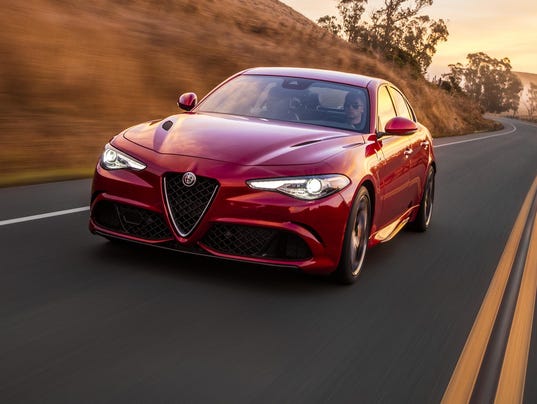

Payne: Can Honda Odyssey out-van King Pacifica?

Payne: It’s a bird, it’s a plane, it’s Tesla Roadster

Payne: Mustang sales roar overseas
Monster ZR1: Front-engine Corvette won’t go quietly

Supersize SUVs fund EV, self-driving car development
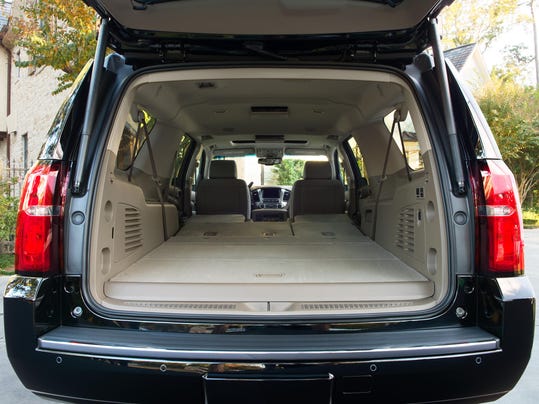
Payne: Tesla’s Model X is an SUV/sports car cross
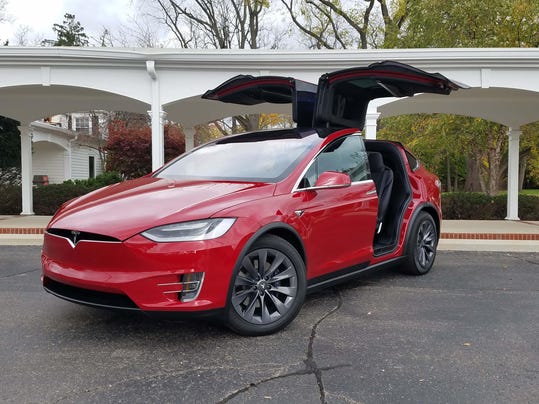
Payne: Still waiting for my Tesla Model 3
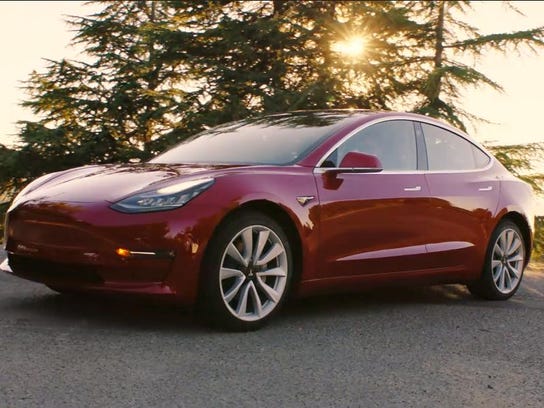
Payne: Audi’s Q-uintessential Q5 raises the bar

Jeep teases next-gen Wrangler in Vegas

Payne: Newgarden the new face of Penske

First Tesla Michigan gallery opens at Somerset

Payne: Porsche maestro meets Toyota student

Payne: Stinger adds venom to Kia lineup
