- Search Cartoons
- Comic Archive
-
Payne
Store



 Henry Payne RSS

Articles Blog
Payne: A Tesla is Detroit News Vehicle of the Year
Posted by Talbot Payne on December 28, 2018
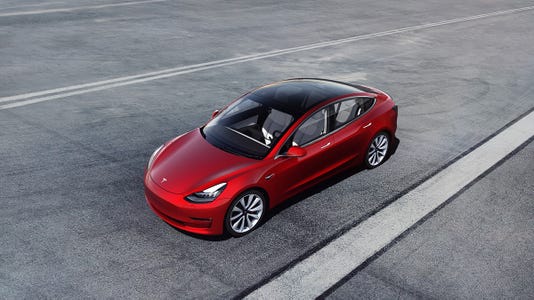
Hollywood is determined to expand its Oscars list to offer more diversity. But if it’s diversity you want, check out the field for Detroit News Vehicle of the Year.
I tested more than 60 new vehicles this year. There’s never been such a range of options for every consumer stripe. Let me count the ways.
There are pickups that range from midsizers to mega heavy-duties taller than my 6-foot-5 frame.
Then there are all the sport utilities: So crackers are customers for SUVs that luxury makers like BMW and Mercedes are making SUV “coupes” to mimic sports sedans.
The best SUVs are athletic, all-around value plays like the Acura RDX. Its doppelganger in the sedan segment is the $35,000 Mazda 6, which will make you think twice about spending $20,000 more for an equivalent luxury brand.
In a sea of practicality there is still plenty of eccentricity. This year brought sequels to the Audi A7, Mustang Bullitt and three-door Hyundai Veloster. Speaking of threes, there’s even a Polaris trike out there for enthusiasts.
You want power? Dodge unveiled another Hellcat, the 797-horse Redeye. It does 0-60 in 3.4 seconds, which is still a second slower than the Tesla Model S P100, putting us on notice that batteries aren’t just for tree-huggers.
EVs abound from affordable Hyundai Konas to bonkers Porsche hybrids. The new, new thing — 48-volt battery systems — is found in everything from Audi A6s to Ram trucks for smoother operation.
Like the Oscar judges, I’ve seen a lot of stuff this year. Some new, some small, some epic.
Here are my top new vehicles of the year. The envelopes, please.
This was the Year of the Truck. Detroit’s Big Three brought their best with the all-new Ram 1500, Chevy Silverado/GMC Sierra and upgraded Ford F-150 Raptor.
The smooth-riding coil-sprung Ram is in a style class of its own with a sculpted grille and Tesla-like 12-inch console touchscreen. The Silverado is an ugly duckling to the Ram’s swan, but its shrewd use of high-strength steel make it the lightest, best-handling truck in class — and I never tire of its push-rod V-8 bellow.
The Raptor is the most addictive truck made, and the addition of Recaro saddles and Fox Live Valve shocks make it even more irresistible. I rode this 450-horsepower stallion all over Utah and never got close to the edge of its considerable envelope.
But my biggest favorite was the smallest new entry, the $35K Ford Ranger. Think of the F-150’s little brother as a compact pickup. In the Age of Ute, the Ranger gives ute families — say, someone with a Ford Escape — the viable option of a compact SUV with a bed, 7,500-pound towing and daily manners. The on-road ride of the Ranger is that good.
Now, if only Ford would give junior a Raptor option.
The front-engine Corvette ZR1 is the last of the breed.
It’s been stretched to the limits to compete against the pinnacle of mid-engine cyborgs: the V-12 Lamborghini Aventador, turbo-V8 McLaren 720S and hybrid Acura NSX. I tested them all this year, and they are sci-fi supercars from the future.
Chevrolet will soon follow these beauties — by May, I reckon — with its own mid-engine Corvette rocket. And no wonder. The front-engine design is pushed as far as it can go, with the engine literally bursting through the ZR1’s skin. To squeeze 755 horsepower from the 6.2-liter V-8, the supercharger sticks out of the hood. An enormous rear wing anchors the beast to the ground.
For raw, unbridled pleasure, there is nothing to rival the $135K ZR1. At Road Atlanta Raceway it consumed asphalt at an awesome rate, the V-8 roaring in my ears like a T. rex.
It’s the perfect automotive bookend to our winner …
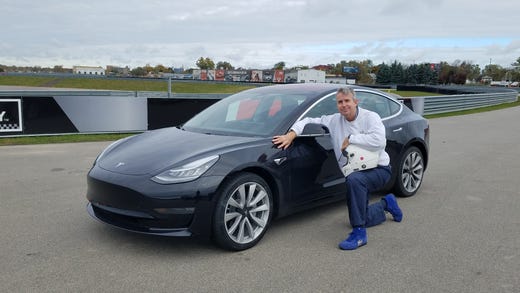
Payne: Compact Ford Ranger has out-size capabilities
Posted by Talbot Payne on December 26, 2018
I get the big truck thing. Big Ford F-series trucks that drive small business to construction sites every day. Big Ram trucks that haul race cars to the track. Big Chevy Silverado profits that fuel GM’s big autonomous dreams. Big, big, big. “Ungh, ungh, ungh,” as Tim Allen might grunt.
But I’m a compact vehicle guy.
I like spicy Ford Fiesta ST meatballs with nimble handling and hatchbacks you can stuff IKEA stuff into. Mazda CX-5 crossovers that will carry the kids to school, then dance through the twisties on the way home. Buick Encores that have single-handedly put POP POP into a FIZZLE FIZZLE brand.
So I’ve been watching this compact truck thing. Once a sleepy segment monopolized by the Baja-shredding Toyota Tacoma, it has come back to life as the Detroit Three have invaded with their unique truck features: Handsome GMC Canyons, Chevy Colorados with corner-step beds, Rubicon-forged Jeep Gladiators.
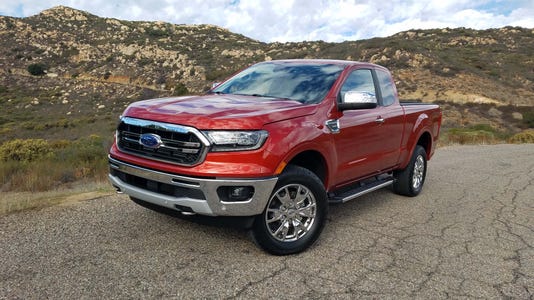
Now comes the Ford Ranger pickup, and I like it a lot.
It’s a truck with all that compact stuff I crave: utility, interior room and fun, fun, fun. If I were a construction boss like my neighbor, Pickup Bob, I’d have an F-series with acres of interior room for long days on the job. But we can barely fit the things in our garages. It needs a tugboat to get down my driveway.
Add three things and my pulse quickens: FX4 off-road package, Sport package… and getting behind the wheel.
Compact sedans like the Volkswagen Jetta are value leaders with standard safety features like adaptive cruise-control, blind-spot assist, etc. Compact trucks, not so much.
The Ranger doesn’t get interesting until you opt up to the $35,210 XLT SuperCrew with standard Co-Pilot360 safety package (adaptive cruise-control, Blind Spot Information System, etc.) plus FX4 off-road goodies like a bash plate. It makes the Ford a better deal than a comparable Toyota TRD Off-Road.
Add the Sport package’s blacked-out grille and 17-inch wheels, and now you got attitude. Attitude to match the Ford’s handling.
I’m a big Tacoma fan, but its talents lie off-road, not on.
The Ranger is a mid-sized truck that truly feels compact on the road with tight handling and minimal bed flutter. Where I had to saw at the Tacoma’s wheel through fast corners, the Ranger is steady. It’s got the feel of the pricier, Multimatic-shocked Chevy Colorado ZR2.
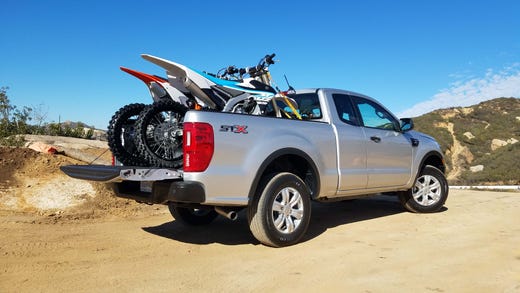
Married to Ford’s 10-speed tranny, the engine’s 310 pound-feet of torque does everything well from cruising to hauling motorbikes.
Excellence extends off-road.
While Ranger left the U.S. market, it never ceased international production. But to meet U.S. customer standards — and the expectations that come with being Son of F-series — engineers went through the Ranger head to tow (pun intended).
The head gets a class-exclusive steel bumper for when, well, you hit things off-road. Towing gets the aforementioned muscle thanks to liberal use of high-strength steel in the frame. On a challenging California off-road course, the Ranger rollicked like a Raptor, eagerly attacking moguls with its steel chin and underbelly skid plates (get the FX4 off-road package), then sprinting across open spaces under full throttle.
Ford trucks are expected to have brains to go with their brawn. The Ranger brings to the game Trail Control, the clever low-speed adaptive-cruise option I also tested on the F-150 Raptor in Utah last month. The feature takes care of low-speed crawling over rocky terrain so you can enjoy the scenery while steering.
This Jeep-like feature is a reminder that the Ranger’s size is more suited to the craggy Outback than big brother Raptor. (Ahem, when is that Ranger Raptor coming to the U.S., Ford?)
Thus equipped, my lightning-blue, tech-tastic, 4WD, SXT (middle trim) Ranger with Sport package comes in at a very class-competitive $40,000.
The bad news for the Ranger is that, at $40,000, pickup lovers might just trade up for a bigger F-150 XLT.
The good news is that a well-equipped Ranger SuperCrew can be had for about the price of a Ford Escape Titanium for the family that needs access to a bed for weekend adventures, but without sacrificing good road manners and most interior amenities.
The Escape customer might frown on the Ranger’s hard plastic surfaces like door sills and lower dash. Ford counters they’re necessary for the truck customer who expects a truck to be rough, muddy — and even washed down internally. Fair enough. But a truck for this price should also come with the same standard amenities as a compact car.
Pay the premium, however, and Ranger’s tech offerings are plentiful: Apple CarPlay and Android Auto, two USB ports in the rear seat, digital instrument display. It’s a thoroughly modern truck that’s light years from the ol’ 2009 nail.
“In some ways it’s a good thing it took us a decade to get back to market,” says engineer Keith Erickson, “because the truck has changed so much.”
Welcome back, Ranger. Because big matters — but so does compact.
2019 Ford Ranger
Vehicle type: Front-engine, rear or four-wheel drive, five-passenger pickup
Price: $25,395 base including $1,095 destination fee ($42,085 SuperCrew 4×4 as configured)
Powerplant: 2.3-liter, turbocharged inline-4 cylinder
Power: 270 horsepower, 310 pound-feet torque
Transmission: 10-speed automatic
Performance: 0-60 mph, 6.3-6.7 seconds (Car and Driver est.); 1,860-pound payload (SuperCab 4×2); 7,500-pound towing
Weight: 4,145 pounds base (4,441 pounds SuperCrew 4×4 as tested)
Fuel economy: EPA fuel economy: 20 city/24 highway/22 combined (4×4)
Report card
Highs: Capable on and off-road; tech-tastic
Lows: Vanilla looks in base truck; tech will cost ya.
Overall: 3 stars
Payne: Mightier Ford Raptor in a class of its own
Posted by Talbot Payne on December 13, 2018

Where do you exercise your pet Orca whale? Big, ravenous, and capable of speeds in excess of 30 mph, it needs an ocean to play.
A similar riddle plagues the Ford F-150 Raptor pickup.
Though the name suggests a bird of prey or velociraptor of “Jurassic Park” fame (Ford intentionally won’t signal either), the 5,500-pound pickup is more of a land shark — an animal of outsized capabilities that needs a sea of sand to really show its stuff.
Based on the formidable best-selling Ford F-150, the Raptor is America’s only supertruck. No one else makes a pickup capable of Baja-like, 100-plus mph off-road speeds. Its fortified steel skeleton, sinewy 450-horsepower twin-turbo V-6 and robust Fox-shocks cartilage enable terrain-shredding capabilities that are awesome to experience.
When I first experienced them in southern California’s Borrego Springs desert in 2016, I was in awe — and sorrow. The vast Borrego desert is a Raptor playground. Miles of high-speed dirt flats where the big truck hit 100 mph. Sandy expanses where its Fox shocks leaped from mogul to mogul. And dry-wash beds where its 35-inch tires dance in dust.
Trouble is, it’s rare earth — far from where the Kraken lives in suburban garages. Mere off-road parks like Michigan’s Mounds or Silver Lake can’t contain it.
Buy a Corvette ZR1 supercar and you can track it at M1 Concourse at speeds approaching 130 mph. Its full limits can be explored at track days at myriad facilities like Mid-Ohio or Road America or Autobahn Auto Club.
Happily, Ford is trying to solve that.
Buy a Raptor — about 15,000 are sold a year — and Ford gives you a free day at Utah Motorsports Park to explore its considerable capabilities.
For 2019 those capabilities have, incredibly, expanded.
Add to its holster electronically controlled Fox Live Valve shocks which adapt to the terrain so the beast conforms to the changing landscape. They reduce roll, pitch and skittishness to make the Raptor even faster off-road. Think of the shocks as the off-road equivalent to magnetic shocks that allow track-focused cyborgs to turn faster laps.
And since long trails ultimately lead into the mountains, Raptor has gained Trail Assist, a sort of low-speed cruise control — pioneered by Land Rover — that automatically pilots the truck at speeds from 0-20 mph up/down steep grades so you can concentrate on steering and navigating.
Ford packs these goodies into a $54,000-$74,000 truck that is cheaper than a supercar, but affords unique off-road thrills.
I experienced the new Raptor at the Ford Performance Racing School outside Salt Lake City like a customer would. With over 100 sold-out dates a year hosting 20 owners each, the Raptor experience won’t disappoint.
Compared to my 2016 Raptor outing, the shocks felt immediately better on-road as we turned out of Utah Motorsports Park for the Wasatch Mountains. Where the previous-generation Raptor felt stiff with a constant empty-bed flutter in the background, the 2019 model was smoother, to the point that I forgot it was a pickup.
Not that anyone else would. Though its innards have been upgraded, the Raptor’s ferocious visage remains unchanged for the new model year. Its ribbed hood looks like a prehistoric predator’s back; its fearsome, black maw looms in the mirrors of cars half its size.
Turning off the asphalt onto twisted trails through Jacob’s City and Sunshine Canyon, the Raptor was in its element. Toggling the steering-wheel mounted mode selector to Baja, I bounded across the landscape inhaling gravel, rock and moguls like they weren’t there. With 510 pound-feet of torque, the beast cries for more. More throttle. More landscape.
And more noise.
I understand the complaints of pals who have held onto their first-generation V-8 Raptors. Though the twin-turbo V-6 offers more power, the exhaust note needs more bass. Tip into the throttle and hear the V-6’s (muffled) roar. I wish I had a V-8.
Back at the school, Ford Performance set up a dirt jump. I floor the beast to 60 mph over the jump and Orca went airborne like it breached the ocean’s surface — WHUMP! It landed down the slope like an Olympic skier nailing a long jump. More!
“With the new shocks, everything performs at new levels of performance,” says John Williams, a school instructor. “It has more ability to handle the terrain and take performance to new limits.”
But even Williams acknowledges he doesn’t know its limits. He hasn’t found sustained trails here where he can hit the Raptor’s 100 mph potential. Even the Utah desert, it seems, is too small for Orca.
So Ford has made sure that the beast can excel at more mundane duties, like crawling up the face of the Wasatch. This is Jeep Wrangler Rubicon territory with craggy slopes, narrow ravines and rocky steps. But the Raptor now comes equipped with something even the Rubicon doesn’t have: Crawl control.
I engaged 4-Low to lock the rear differential and then pushed the Crawl-control button. The darn thing drove itself up the hill at 2.5 miles per hour (yes, digital speedos now do fractional speeds). No fighting the throttle, no lurches, no limits.
All this happens in a leather-stitched cabin as comfortable as your corner office. Playing passenger in the huge backseat of the Supercrew cab, I folded my legs and took in the scenery. The 7,000-foot Wasatch mountains offer breathtaking views of the surrounding valley. With more space than the average New York apartment, the Raptor’s bed will easily hold a family picnic.
Walking around the pickup is like walking around a supercar. Admire the wide track, the power-dome hood, the angry grille. But there are aesthetic touches, too. The tailgate graphic now subtly offsets the dark gray “Ford” from its black frame. The Recaro seat inserts are the same blue as Ford’s GT supercar.
I rowed the GT around Utah Motorsports Park’s demanding race track last year, sliding its carbon-fiber chassis to the limits of adhesion, then letting loose 647 ponies down the front straight.
The off-road limits of the Raptor are still out of reach here. That’s not to say the Performance School isn’t worthwhile. It’s a must for any Raptor owner. Because after you have conquered the Wasatch, you’ll be hungry for more.
Hey, Ford, how about a performance racing school in Baja?
Henry Payne is auto critic for The Detroit News. Find him at hpayne@detroitnews.com or Twitter @HenryEPayne. Catch “Car Radio with Henry Payne” from noon-2 p.m. Saturdays on 910 AM Superstation.
2019 Ford F-150 Raptor
Vehicle type: Front-engine, four-wheel drive, five-passenger pickup
Price: $54,350 base including $1,495 destination fee ($68,845 as tested)
Powerplant: 3.5-liter, twin-turbocharged V-6
Power: 450 horsepower, 510 pound-feet torque
Transmission: 10-speed automatic with paddle shifters
Performance: 0-60 mph, 5.1 seconds (Car and Driver); 1,200-pound payload; 8,000-pound towing
Weight: 5,518 pounds
Fuel economy: EPA fuel economy: 15 city/18 highway/16 combined
Report card
Highs: Upgraded Fox shocks improve on- and off-road performance; new Crawl control
Lows: Need a big playground to realize its outsized capabilities; wish it had a V-8
Overall: 4 stars
No mid-engine Corvette at Detroit auto show
Posted by Talbot Payne on December 12, 2018
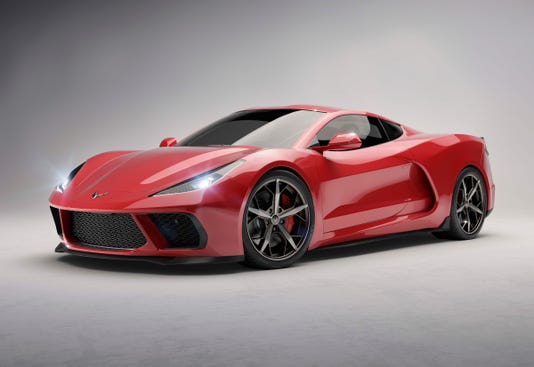
It is the auto industry’s white whale: the elusive, powerful, long-rumored mid-engine Corvette C8. Chevrolet refuses to acknowledge its existence despite numerous sightings at General Motors’ Milford Proving Grounds and race tracks like Wisconsin’s Elkhart Lake and Germany’s legendary Nürburgring.
Whale-trackers were sure it would breach the surface at this year’s Detroit auto show where previous Corvettes have debuted.
But they will have to wait a little longer. A Chevy spokesman confirmed the brand will not be revealing any new vehicles at the January show. The current-generation Corvette C7 was introduced at the Detroit show in 2013, with the C7.R race car breaking cover a year later.
The new Corvette is not expected to be seen until sometime in the spring.
Though hope of a Detroit sighting dimmed months ago, speculation stirred again last week with the posting of an internet video showing a race mule — barely disguised in zebra camouflage — night-testing at Sebring Raceway in Florida.
With the 24 Hours of Daytona kicking off the IMSA WeatherTech Sportscar Challenge season at the end of January, don’t expect to see the new Corvette there. A spokesman for Wixom race shop Pratt & Miller, which prepares Chevy’s Corvette racers, confirmed it will enter the same current-generation C7.R race car in this year’s Daytona endurance race.
International GT racing homologation rules require that 100 production cars be built in order to enter a race car. While the rules have been bent in the past for low-production models (the Ford GT, for example), the mass-produced Chevy traditionally has conformed to the standards: race car follows production car.
The News reported in August 2016 that Chevy was developing the eighth-generation Corvette as a mid-engine car.
In addition to spy shots of the mid-engine car testing in Milford, the project was consistent with GM’s investment of nearly $800 million in upgrades to its Bowling Green facility where Corvettes are built. Production is expected to begin there in fall 2019.
The iconic Chevy – dubbed America’s “affordable supercar” for performance rivaling $200,000 Porsches and Ferraris at half the price – has traditionally been a front-engine car. In order to make the next performance leap, however, program managers determined a mid-engine layout was necessary.
Mid-engine cars have better balance and handling than their front-bay cousins. That handling is not only important on road, but is key to keeping Corvette competitive at the summit of international motorsport where it faces stiff competition from mid-engine Ford GT and Ferrari 488 supercars. Even Porsche’s 911, Stuttgart’s rear-engine racing icon, has moved it engine amidships to keep pace.
A mid-engine layout also opens options for Chevy to take advantage of new technology like locating an electric motor up front for all-wheel drive.
Bob Lutz, GM’s former product chief — who received approval for a mid-engine Corvette in 2007 before it was sidelined by the Great Recession — speculated to The News in 2016 that the C8’s long lead time foreshadowed “electric motors at the front (that) would enable limited AWD capability.”
Car and Driver magazine has reported that a hybrid, twin-turbo V-8 version of the Corvette C8 is planned that could generate 1,000 horsepower with all-wheel drive.
The drivetrain changes are reported to include — in addition to a reliable, entry-level pushrod V-8 – a high-revving, Ferrari-like, flat-plane crankshaft V-8. The higher pitch of the camouflaged Corvette lighting up the Sebring night seems consistent with this option.
The mid-engine car’s absence from this January’s show has led to speculation that the project base been delayed.
Hagerty magazine’s Don Sherman, a veteran tracker of the mid-engine car’s development, said, “There may have been some issue that had to be resolved.”
Like finding Moby Dick, it’s hard to know all the details. Bringing an all-new sports car to market together with new engines and global race programs requires a lot of coordination.
The white whale is getting closer.
Auto shows adapt in a changing landscape
Posted by Talbot Payne on December 12, 2018
Los Angeles — Auto shows are dead, long live auto shows.
Buffeted by the winds of change — the electronic revolution, social media, growing global markets — vehicle showcases like the Detroit auto show are losing influence and manufacturers. Industry insiders say traditional auto shows remain an essential part of vehicle marketing even as they are viewed as just one of many tools to amplify a vehicle’s premiere.
Consider Audi, a premium automaker in Germany’s Volkswagen group, and its introduction of key products two weeks ago at the Los Angeles Auto Show. Audi was one of a wave of European premium-makers that pulled out of the North American International Auto Show in Detroit earlier this year — a list that included BMW, Mercedes, Volvo, Porsche, Jaguar, Land Rover and Mini Cooper.
“Our product cadence simply did not fit Detroit,” says Audi Product Communications Director Mark Dahncke. “Auto shows have become so expensive and less relevant with the advent of the internet.”
So Audi decided to show its first-ever all-electric model in September at an independent media event. The product: the e-tron SUV. The venue: the San Francisco Bay area.
Audi even gave the event a theatrical name: “The Charge.” It was broadcast live worldwide via satellite, Audi MediaTV and other Internet sites.
Ten weeks later, the e-tron made its auto show debut on a full Audi stand at the Los Angeles show – just a day after Audi took advantage of hundreds of media attendees to give a sneak peek of the e-tron’s sexy sibling, the e-tron GT. Adding to the sex appeal, the GT was introduced by Tony Stark himself, Robert Downey Jr.
Still, the Los Angeles show, which ended Sunday, boasted a healthy 65 new-vehicle unveils this year across a crowded floor that included new players like Rivian, an electric-truck maker. By contrast, the Detroit show, which saw 69 new reveals last year, will drop to about 30 this year, according to show organizers.
“Big reveals will always happen at auto shows,” said Chris Paukert, a veteran Detroit-based auto journalist who is executive editor of Roadshow by CNET, a California-based website. “But automakers have many more, different ways to approach things now. Honda introduced its CR-V ute at a farmers market in Detroit last winter. That was unheard of a few years ago.”
Says IHS senior auto analyst Stephanie Brinley: “Auto shows still have the advantage of being the only place that automakers can get both lots of media and a lot customers. There is still an element of maintaining relationships with the customers that you have.”
Shows also are benefiting as automakers drastically increase the pace of new-vehicle reveals. According to a Bank of America Global Research report, reveals of new models have grown, on average, from 38 per year in recent decades, to 58 per year.
But carmakers’ budgets are being stretched thin: Brinley says that in addition to the high cost of having displays on show floors, carmakers have to manage more shows such as those in emerging markets like Beijing and Shanghai. And tf the Las Vegas show takes place the week before the Detroit auto show.
That has worked to the disadvantage of the North American International Auto Show, which carmakers see as the backyard of the Detroit Three. It’s a market stacked with incentives to buy hometown products.
“It’s nothing personal,” says Audi’s Dahncke. “Detroit is Big Three country, and we may go back there. But right now we have luxury electric products, and our customers are in California.”
Other regional shows like Paris and Geneva have also seen automaker erosion.
Like Detroit, Los Angeles is a car town in a car-crazy state. But the different nature of the Southern California market has helped the Los Angeles show weather the storms that are shaking other events.
“Automakers know that we are a top market for most brands,” says Lefty Tsironis, the Los Angeles show’s director of experiential marketing. “This is a top sales market for every segment of car.”
Adds IHS’s Brinley: “LA and New York used to be smaller shows than Detroit. Now luxury automakers see them as important to selling their cars in those regions, and so Detroit has more to lose.”
With a majority of luxury vehicles sold on the West and East coasts, Audi is simply going where its customers are.
Two years ago, the Los Angeles show fused technology and automotive together with “Automobility LA,” bringing tech geeks and gearheads together under one tent.
The Detroit auto show is evolving as well.
The North American International Auto Show also has added forums for new technology. More fundamentally, the Detroit show will move from January to June in 2020, which will give carmakers a chance to move outside in more hospitable temperatures and give a resurgent Detroit a chance to showcase its restaurant and social scene. Attendees will be able to take test rides in vehicles —including self-driving cars — while sampling local entertainment and food along the waterfront.
“It gets us away from just static displays,” says Detroit Show chief Rod Alberts.
Says Audi’s Dahncke of Detroit’s new date: “I think it’s a positive move. It’s better timing for us to show our products, and it’s a better time to be in Detroit. It’s hard to go there right after the holidays, especially when there might be a snowstorm.”
January’s Detroit auto show looms, but eyes are on June 2020
Posted by Talbot Payne on December 12, 2018

Two numbers tell the tale of January’s Detroit auto show: After 69 vehicle introductions in 2018, organizers expect just 30 debuts next year. That’s largely because major European luxury-makers and other companies have decided not to attend.
But the Detroit Auto Dealer Association, which runs the event, is looking ahead to 2020 when the show transitions from chilly January to sunny June.
Representatives from the DADA teased details of the 2020 autopalooza on Friday. While Cobo Center will still be the epicenter with manufacturer auto displays, the show will expand outdoors to provide show-goers with opportunities to drive cars and interact with Detroit’s resurgent downtown restaurant and social scene.
The show will take over 14 acres of Hart Plaza along the Detroit waterfront, spilling into Spirit Plaza and Campus Martius. There will be food trucks, live entertainment and experiential displays. Automakers are determined to move beyond static displays to give customers an opportunity to experience their products in motion — a staple of the sunshine-drenched Los Angeles auto show that takes place in early December.
“The 2020 show will be transformational,” said North American International Auto Show Vice Chairman Doug North, a local Ford dealer. “Exhibitors will display outdoor experiential brand activations and immerse attendees in actual product experiences. We will… show the world the renaissance the city of Detroit is experiencing with cultural attractions, a phenomenal waterfront and cuisine second to none.”
Since announcing the June date this fall, organizers have compared the 2020 show to the Goodwood Festival of Speed in England, a sprawling four-day July extravaganza.
“We’re impressed with the ways Goodwood has diversified into a festival atmosphere with food and entertainment in addition to cars,” said Detroit Show Executive Director Rod Alberts who visited Goodwood this summer. “It’s an opportunity for showgoers to get out and have fun with more than cars.”
The 2019 show continues to expand its Automobili-D tech conference — which debuted in 2017 — running from Jan.14-17 this year. Automobli-D will coincide with media debut days Jan.14-15, industry days Jan. 16-17, with the Charity Preview ball wrapping up the week on Jan. 18 (an event that has raised $120 million since 1976 for local children charities).
Public days will follow Jan. 19-27, including a family day Jan. 21, which is Martin Luther King Day. Of the 30 reveals, expect muscle cars like the Mustang GT500 and Toyota Supra.
Come 2020, everything will be completely different.
The show will become part of a month-long, downtown Detroit summer celebration, beginning with the Belle Isle Grand Prix that runs May 29-31, and ending with the river-front Ford Fireworks display June 22.
The show will be the meat of the sandwich, running from the opening of the tony, exotic-car Gallery event on June 6 until the end of Public Days on June 20. In between will be a circus of media debut days, charity ball and sprawling public day activities.
“The event will continue to have a media focus,” said Alberts of a show that attracted 5,078 journalists this year from 67 countries. “But it will have much more engagement with product for the public.”
The DADA, which upped the Detroit Show to an international showcase in 1989, is working closely with the Detroit Three automakers to take advantage of Detroit’s assets, including breezy June summer days.
“The Big Three are all collaborating on this because it’s good for the city,” said Terry Rhadigan, a GM spokesman.
Organizers are throwing everything at the wall to see what will stick, including using Belle Isle, post-Grand Prix, as a test facility for auto rides both personal and autonomous.
Speaking of autonomous, by 2020 autonomous auto services will be live across the country with Google’s Waymo and GM’s Cruise promising major programs in San Francisco and Phoenix. Detroit organizers are aware that Toyota will be the official auto sponsor of the 2020 Tokyo Olympics in July to showcase their self-driving tech in venue-to-venue shuttles.
“We have already had inquiries from two companies about a similar arrangement here,” says a DAD spokesperson.
The DADA is eyeing the Cobo Roof — an expanse as big as the show floor inside. Though traditionally used for parking, the DADA sees an opportunity for food and interactive displays there as well.
“We can do things that nobody has ever done before,” said North. “It’s an opportunity to see Detroit in a whole different light.”
Payne: All right for Nissan Altima all-wheel drive
Posted by Talbot Payne on December 6, 2018

I vaguely remember a time when I noticed the homely Nissan Altima. It was sometime in 2006 and the midsize sedan introduced cool, wrap-around rear taillights. The lamps inside the casing were colorful, staggered, alive. But save for that delicious chunk of chocolate-covered almond, the Nissan sedan has been pure vanilla.
Until now.
“That’s a beautiful car,” said Mrs. Payne as I pulled the all-new, made-in-Tennessee, 2019 Nissan Altima into the driveway this fall. Stop the presses. Unlike her car-mad husband, my wife is an auto appliance shopper. Give her a sedan with reliability, room, attractive looks and all-wheel-drive for winter and she’ll drive it. Brand be damned.
Nissan has always tested well on the three Rs — reliability, ergonomics and room — and the Altima’s rear seat easily accommodates my sprawling, basketball-player frame. Heck, the subcompact Sentra I recently rented has more back seat room than many mid-sizers. That simple formula has made it an appliance mainstay in the midsize aisle. But it’s the looks and all-wheel drive that are game-changers for the new offering.
No longer an appliance, this Altima stirs emotion.
Good thing, too, because sedans aren’t packing them into the dealership like they used to. SUVs are the new, new thing — but they are also the new vanilla. Five-door box, tall stance, snooze. Nissan knows this and has been on the cutting edge of crossover design with spicy confections like the Murano (introduced in 2015) and its floating roof, sculpted flanks, and V-motion grille.
The V-motion design really takes hold with Altima. The Murano’s funky grille stands out like someone hung a Georgia O’Keefe painting on the front of the two-row ute. Its multiple surfaces are attention grabbing for sure, but not everyone’s cup of tea.
The Altima’s grille, by contrast, is simpler, more elegant — a natural pool into which the sedan’s long, flowing lines flow. Unlike the bulbous, monotonous Altimas of old, the ‘19 is a symphony of lines playing in harmony. The wraparound lights and floating roof waterfall across snazzy, tire-wrapped pin-wheels to a low, clamshell hood. Los Angeles design studio, take a bow.
From ugly duckling to swan in a generation, the Altima — like competitors Honda Accord, Chevy Malibu, and my segment favorite Mazda 6 — offers sleek designs to compete against upright utes.
It’s the all-wheel drive system, however, that really expands the Altima sedan’s bandwidth.
Only Subaru’s Legacy and the (retiring) Ford Fusion offer AWD in the midsize sedan market. Want AWD for Michigan’s brutal winters? We have a Nissan Rogue box over here — or you can have the Altima.
Interestingly, the all-wheel drive system only comes paired to the base 188-horsepower, 2.5-liter engine. Nissan explains the decision as a way to make AWD available in all trims of the car right down to the base model — which is good news to Mrs. Payne, who could price the sporty AWD SR model competitively against her smaller, AWD Impreza Sport hatch (alas, the Altima does not come in a hatch/wagon). The AWD Altima is also attractively priced next to its stablemate, the Rogue SUV — coming in $1,000 cheaper at $25,995 (consistent with the FWD base model, too).
As Nissan studies AWD take rates in the sedan segment, the pricing allows exposure of AWD to as broad a demographic as possible.
What it doesn’t do, however, is pair AWD with the most appealing engine option — Nissan’s new, variable compression, 2.0-liter, 248-horse turbo-4 which replaces the outgoing, normally aspirated V-6. Variable compression (or VC-T) engines are engineering marvels. Without scrambling your brain with the tech details, it allows the turbo-4 to stretch its performance legs while also maximizing efficiency. The payoff? A 3 mpg gain over the Altima’s ol’ V-6.
The Rogue doesn’t get the engine either, which means sedan customers get exclusivity to go with their designer wardrobe. Want the VC-T with AWD? You’ll have to cough up another 10 grand for the premium Infiniti QX50.
The VC-T turbo-4 is a treat to drive around Metro Detroit, its torque surging over 3,000 rpms. For all its fancy engineering degrees, the biggest revelation might be its CVT (continuously variable transmission) partner, which manages the feat of feeling like an 8-speed auto tranny while retaining the fuel economy of a CVT.
This was music to my ears after driving a classic CVT in a Lexus NX hybrid which droned on and on like a Bob Woodward interview. The Altima’s electronically stepped shifts not only sound good, but they are smooth when you stomp on the pedal for added low-end torque.
YUNK! Went the Volvo S60 automatic I recently tested as it downshifted under duress. Not the Altima.
Happily, the CVT was also paired to the 2.5-liter four in my $30,175 blue tester. The Altima is no Mazda 6 or Accord (the class athletes), but it’s perfectly content being pushed through the twisties. Push too hard and it will, well, push — no fancy torque-vectoring tricks here — but it’s in Michigan winters that the AWD hoofs will pay their dividend.
Nissan has foregone fancy, torque-shifting twin clutch packs like GM has outfitted to its Buick and Chevy Equinox AWD models — the better to shift torque away from a rogue wheel spinning in the snow. But the Japanese maker still claims that it can electronically use anti-lock brakes to sedate that wheel and get your car moving again.
Inside, the Altima closes the gap to luxury-class vehicles with a tidy, horizontal dash resting on a “gliding wing” of wood. With the 8-inch tablet screen suspended above the console, I could not only keep my eyes on the road while operating the touchscreen, but also throw my phone, fries, loose change in the ample storage bin beneath. Standard tech abounds from USB ports front and rear to smartphone app connectivity.
A new Nissan wouldn’t be complete without available Pro-Pilot Assist which has become synonymous with Star Wars ads showing Nissans avoiding various sci-fi creatures. Appropriately, drivers should treat it as a sci-fi toy — a peek at the autonomous future, but a consistent road guide no more reliable than Jar-Jar Binks.
Keep your eyes on the road — and on an all-wheel drive Nissan Altima, homely no more.
Henry Payne is auto critic for The Detroit News. Find him at hpayne@detroitnews.com or Twitter @HenryEPayne. Catch “Car Radio with Henry Payne” from noon-2 p.m. Saturdays on 910 AM Superstation.
2019 Nissan Altima
Vehicle type: Front-engine, front and all-wheel drive, five-passenger sedan
Price: $24,645 base including $895 destination fee ($30.015 SR AWD as tested)
Powerplant: 2.5 liter inline-4 cylinder; 2.0-liter, turbo-4
Power: 188 horsepower, 180 pound-feet torque (2.5L); 248 horsepower, 280 pound-feet torque (2.0L)
Transmission: CVT (continuously variable automatic)
Performance: 0-60 mph, 6.0-8.1 seconds (Car and Driver est.)
Weight: 3,418 pounds (2.5L SR AWD as tested)
Fuel economy: EPA fuel economy: 26 city/36 highway/30 combined (2.5-liter with AWD); 25 city/34 highway/29 combined (2.0L turbo-4)
Report card
Highs: Altima is a looker; rare sedan with all-wheel-drive
Lows: Pro-pilot assist still a toy; AWD comes only with base, 2.5-liter engine
Overall: 4 stars
Heavy Chevy: Giant Silverado HD debuts
Posted by Talbot Payne on December 6, 2018
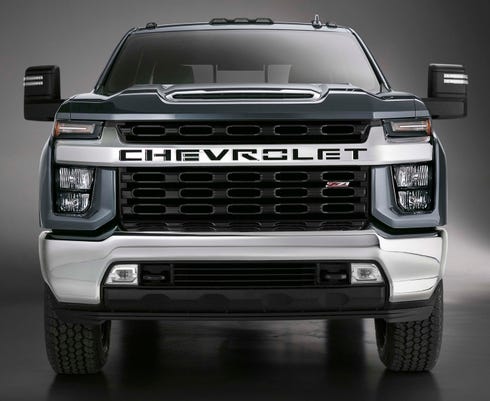
Here come the trucks. General Motors Co. may be scaling back its sedan offerings, but pickups are booming and its Chevrolet brand is slicing and dicing the market to keep the customers coming.
Chevy gave a sneak peak Tuesday of its latest monster, the 2020 Chevrolet Silverado Heavy Duty — the biggest, baddest truck the General has ever made.
Forged at Flint Assembly and built on the same bones as the steel Silverado 1500 Light Duty truck introduced at this year’s Detroit Auto Show, the HD brings a new face, more interior room, and a stump-pulling diesel engine with 910 pound feet of torque when it goes on sale in mid-2019.
Where the 1500 populates corporate fleets and the driveways of daily drivers, the HD delivers the brawn for heavy payloads, long-distance hauling, and, well, stump-pulling.
Chevy says the HD will benefit from the Silverado’s new, high-strength steel architecture — bucking the aluminum trend of its chief competitor, Ford which introduced its F-series Super Duty for the 2017 model year. The new chassis allows three more inches of rear legroom.
But where the lean-looking light-duty takes its grille design cues from the Camaro, the Heavy Duty’s front fascia is bolder, more upright with big, lower headlights topped off by LED “eyebrows” where the 1500’s thin lights are located. Already a leader in pickup bed access with its corner step innovation, the HD introduces a new, side bed step for easier, forward-box access.
From stem to stern the HD battleship shares only a roof with the light duty 1500.
Chevy is coy about engine offerings, promising a new gas engine “with direct injection,” as well as its ol’ reliable Duramax, turbo-diesel V-8 — now mated to a 10-speed transmission.
The big Silverado is the latest salvo in a GM truck onslaught. Since re-entering the mid-size truck market in 2015, GM has brought all-new versions of the middie Colorado and GMC Canyon trucks and full-size Chevy Silverado and GMC Sierra. The Silverado light-duty now spans eight different models from the fleet Work Truck trim to the luxurious High Country, while the Sierra has been moved upscale with an emphasis on the premium Denali and all-new, rambunctious AT4 off-roader.
The Silverado HD comes on the heels of Chevy’s introduction of a more-extreme, off-road Colorado Bison to compliment its veteran ZR2 dirt-kicker.
All told, GM’s holy trinity of midsize, light-duty, and heavy-duty trucks has made the General the best-selling truckmaker in the United States — outpacing Ford Motor Co. (which boasts the best-selling light heavy duty Ford F-series) by some 600,000 units from 2014-2018.
Look for more details of the 2020 Silverado HD in February.
Ford and Logano bring home NASCAR trophies to Dearborn
Posted by Talbot Payne on December 5, 2018

Dearborn — At Ford they’re partying like it’s 1999.
For the first time in 19 years Ford has won the NASCAR driver’s and manufacturer’s title in the same year. On Wednesday, Ford employees celebrated the occasion with NASCAR superstar and 2018 champion Joey Logano and his team at Ford headquarters.
Logano was joined by his crew chief Todd Gordon of Penske Racing, Edsel Ford Jr., Ford Performance Motorsports chief Mark Rushbrook, Roush engine guru Doug Yates —and Joey’s four-wheeled, earth-pawing, thoroughbred No. 22 Fusion NASCAR.
“It’s been a long time coming,” said Logano to a packed Ford World Headquarters auditorium of 500 employees. “This is the top level of American motorsport. This is all I ever wanted to do when I was 6 years old and asked for a go-kart for Christmas.”
Dozens of championships have followed —five of them this year, including the IMSA Weathertech GTLM (Ford GT) and Continental Tire Sportscar (Mustang) championships, Australian Supercar (Ford Falcon) and World Rally Champioship (Fiesta).
But none was as sweet as the Monster Energy NASCAR Cup two-fer.
Ford has weathered a difficult year in which it announced eliminated of its sedan models while fending off criticism that it’s not moving fast enough to outline a vision for the future. Its performance unit has had no problems with speed.
Logano, one of the most touted oval-racing talents since he was barely a teen, seemingly came out of nowhere in 2018 to defeat “The Big Three” who had dominated the season — Martin Truex, Jr., Kyle Busch, and Kevin Harvick — in the last playoff race at Miami’s Homestead Raceway.
“What an amazing season… last year, we didn’t even make the playoffs,” the 28-year old Logano said of the season-ending races structured like the NFL or NBA post-season. “If it wasn’t for each and every person in this company, there’s not the support to go out an win these races.”
Edsel was effusive in his praise for Logano, who is the youngest driver to ever win a NASCAR Cup race at 19. “Joey is one of the hardest-charging race drivers in NASCAR. Period,” said the Ford scion. “He’s a good man. A good husband… and new father to his little boy Hudson. The night before won the championship, Joey and (his wife) Brittany was at a local grocery store giving out Thanksgiving dinners to the needy of the Homestead community.”
Ford presented No. 22 with a check for $22,000 to the Joey Logano Foundation, which in the last five years has invested more than $2 million in organizations offering a second chances to kids in crisis.
Racing for the Monster Energy NASCAR Cup prize is a massive multi-million-dollar team effort encompassing drivers, engineers, engine builders and sponsors across a 36-race calendar. Since founder Henry Ford attracted investors’ attention to his inventions on the track, Ford has aggressively pursued racing as important tech transfer from the track to the showroom. Or, as Ford brass pithily put it: “Win on Sunday, sell on Monday.”
Edsel Ford was lavish in is praise for engine supplier Yates: “He puts the middle name back in Ford Motor Company.”
Notably absent from the team celebration was Roger Penske, whose NASCAR championship capped off a big year for his Bloomfield Township-based race organization. Penske completed a 2018 trifecta in winning the Monster Energy Cup, Indy 500 and Australian Supercar series. Penske was traveling to one of the many outposts in his empire.
“This was my 10th season… and a chance to drive for the greatest car manufacturer and greatest car owner I could ever ask for,” said Logano. “I can’t tell you what it means to drive for the best.”
Logano and Penske will next turn their sights to winter development as Ford introduces an all-new Mustang body and NASCAR regulates V-8 engines to 550 horsepower for long tracks (think Daytona) and 750 for short tracks (Martinsville, for example).
But this day was all about taking a victory lap at headquarters.
“I was scared to death going into Homestead” for the final race, said Edsel. “You don’t know what’s going to happen. There were over 100 dealers there. The victory was very sweet.”
Jaguar, Honda beat Tesla, Toyota for LA’s ‘green car’ awards
Posted by Talbot Payne on December 3, 2018

Los Angeles — The envelope, please. . . .
The Jaguar I-Pace took away the first ever Luxury Green Car of the Year Award as the prestigious, 14th annual Green Car Awards announced their annual winners at the LA Auto Show. Other winners include the Mitsubishi Outlander GT plug-in and the Honda Insight sedan.
Presented by the Green Car Journal, the awards “honor the vehicle that raises the bar in environmental performance while remaining within reach of most consumers.” With governments across the globe forcing an industry transition to zero-emissions electric cars, the awards have become important headliners for automakers.
The I-Pace, Jaguar’s first-ever electric car, scored an upset by beating out the Tesla Model 3, the most popular electric vehicle ever with more than 80,000 in sales this year and some 400,000 more on order. The I-Pace brings the British cat’s stylish lines to the EV segment as well as 240-mile range and the performance brand’s signature, taught performance.
“We are committed to an emissions-free, accident-free future,” said Jaguar North America President Joe Eberhardt in accepting the award on stage. “By 2020 all models in our lineup will be electrified. We are truly committed to an electric future.”
Other luxury finalists included the Audi e-tron, Porsche Cayenne e-Hybrid, and Range Rover P400e.
Green Car of the Year went to the 52 mpg Honda Insight hybrid, defeating the Lexus ES 300h, Nissan Altima, Toyota Avalon hybrid, and Volkswagen Jetta.
The win over Toyota was sweet for Honda as the Insight — now in its third generation — has always played in the shadow of hybrid superstar Prius. The 2019 Insight gets 52 mpg.
“This was our first hybrid back in 1999,” said Ray Mikiciuk, Honda VP of sales for North America. “We’ve come along way. Electrification is a big part of our future, but it’s got to come with no compromise. Every one of our cars comes with great mpg and is fun to drive.”
The awards also expanded into SUVs this year with the Mitsubishi Outlander GT plug-in climbing the rostrum ahead of the Cadillac XT4, Hyundai Kona, Lexus UX, and Volvo XC40. The Outlander can go 22 miles on battery alone before a 2.0-liter gas engine kicks in.
Award emcee and Green Car Journal Editor Ron Cogan emphasized the importance of including SUVs — the most popular vehicles with U.S. consumers — in the awards mix:
“SUVs have for too long consumed too much fuel, but they now feature more advanced drivetrains. The future of the auto industry is tied to fuel efficiency. It is the only contest that matters.”
California, where the Air Resources Board regulatory body is considering a ban on gas engines by 2030, is trying to influence national environmental policy. The state has targeted 1.5 million EVs on the road in just seven years with over 10 percent of vehicle sales currently being a hybrid, plug-in, or pure EV.
Jeep Gladiator pickup elbows into the truck wars
Posted by Talbot Payne on December 3, 2018
Los Angeles — Jeep unveiled its rock-crawling Gladiator pickup here Wednesday at the Los Angeles Auto Show, sending another serious contender to the midsize pickup wars.
Packing all the off-road weaponry of its iconic Wrangler sibling, the steel-frame 2020 Gladiator goes on sale in the second quarter of 2019, following closely the Ford Ranger midsize truck expected early in 2019. It re-enters one of the fastest-growing and most lucrative vehicle segments in the U.S.
But the Gladiator is much more than a Wrangler with a bed.
The frame has been beefed up and the vehicle’s length extended to 212 inches long to accommodate a 60-inch bed. The result is a truck that Jeep says beats the Ford with best-in-class towing and payload — 7,650 and 1,600 pounds, respectively.
“They were key metrics for the why-buys,” said Jeep boss Tim Kuniskis, who established the Hellcat as a performance beast in his previous Fiat Chrysler job as Dodge commander. “The people we talked to who are owners in this segment were very clear they wanted a real truck with serious hardware that would do what they wanted to do. They didn’t want some styling statement with a bed on the back.”
Indeed, Jeep once sold such a truck: the Scrambler, which was a version of the Wrangler with a bed attached. Kuniskis and his team were adamant that a midsize Jeep truck get the Gladiator name — a throwback to Jeep’s serious 1960s truck — in order to separate it from Wrangler.
“It was important that we called it a Gladiator so it competes in its own segment,” continued Kuniskis. “Customers are looking for real trucks. They’re looking for serious hardware.”
That serious hardware includes a 3.0-liter Ecodiesel engine with a stump-pulling 442 pound-feet of torque. Though, says Kuniskis, it’s the base 3.6-liter V-6 that puts up the best-in-class tow number.
The Gladiator and Ranger will round out a Detroit Three battle in the midsize pickup truck market, which GM has occupied with its Chevrolet Colorado and GMC Canyon for the past four years. With the segment up 14 percent this year and roaring toward a 500,000 sales volume, Jeep sees an opportunity to expand its brand.
“The segment is growing because SUVs are so hot – and they are enabling a lifestyle,” said Kuniskis. “Jeep is (already) playing in SUV segments with 4 million in volume. (Gladiator) brings another half-million segment on top of that with 14 percent growth.”
Toyota’s Tacoma is the midsize pickup leader with nearly 52 percent market share through mid-November, compared to GM’s nearly 32 percent of the market, according to data provided by GM.
But as with Jeep in the midsize SUV market, the new Gladiator stands to carve out a niche of its own in the midsize truck segment.
“The Gladiator might not be on an island like Wrangler is, but it’s going to stand out,” said Jeff Schuster, president of global vehicle forecasting for LMC Automotive. “This is going to appeal to the Jeep enthusiast as well as wealthy buyers looking to buy a toy for their garage.”
Schuster added that the Gladiator debut might make the Ranger launch a bit bumpy, as the Gladiator appeals more to off-roading with its Wrangler bloodline than Ranger will.
GM officials weren’t fazed by the new competition.
“Frankly, we are mystified that it has taken competitors so long to follow GM’s lead,” GM spokesman Jim Cain said Wednesday. “The Chevrolet Colorado and GMC Canyon helped our company sell more pickups than any other competitor for four consecutive years through 2017, and we’re ahead of the pack this year, too. At least Jeep is trying something new. Ford’s Ranger has been running around Asia since 2011, so they’re more than a little late to the party.”
The Gladiator will come in four trims: Sport, Sport S, Overland and Rubicon.
The four-door truck has a slew of Wrangler design cues, including the seven-slot grille and the boxy four-door cab with removable doors. Its interior will share the all-new Wrangler’s improved comfort with rear-seat H-Vac and improved door storage. A 7- or 8.4-inch touchscreen infotainment system is available (a 5-inch touchscreen comes standard on the Sport trim). Apple CarPlay and Android Auto connectivity are standard.
The Gladiator will one-up the Wrangler with an exclusive off-road feature that will make the Jeep faithful salivate. To enable high speed driving off-road, the Rubicon can reconfigure its locking differentials with the flip of switch to enable an easy transition from rock-climbing to high-speed dune-running.
The truck will launch with one engine option, a 3.6-liter Pentastar V-6 delivering 285 horsepower and 260 foot-pounds of torque. The automaker will offer a 3.0-liter EcoDiesel V-6 engine in 2020. The engines will be mated to a standard six-speed manual transmission. An eight-speed automatic is optional.
The Gladiator will be available will be available with two 4×4 systems. The Overland and Rubicon trims will have upgraded systems. The Sport, Overland and Rubicon will all have a Trail Rated badge.
Pricing has not been announced.
The pickup will be built in Toledo at Fiat Chrysler’s Toledo North Plant, where the automaker has built Jeeps since 1941.
“By birthright, Jeep has a right to compete in this segment,” Kuniskis said. “It’s going to compete in that segment. It’s going to set the new benchmark.”
And the nominees for Car of the Year are. . .
Posted by Talbot Payne on December 3, 2018

Los Angeles — Nominees for the auto industry’s “Oscars” — the 2019 North American Car, Truck and Utility of the Year awards — were appropriately announced at the Los Angeles Auto Show near Hollywood this morning.
Asian automakers dominated the car and SUV nominees as Detroit automakers failed to make the finalist lists for either category. However, Chevy, GMC and Ram swept the nominees for best truck. The nominations held plenty of surprises as neither the iconic Jeep Wrangler nor the Toyota RAV4 — America’s best-selling vehicle — made the final cut.
NACTOY, now in their 25th year, is one of the industry’s most prestigious as it is selected by an independent jury of 55 journalists (including the author of this story) from across North America. The winners will be announced to kick off the Detroit Auto Show in January.
Car of the year finalists are the Genesis G70, Honda Insight and Volvo S60. Detroit automakers are abandoning most sedan segments, and only the lovely Buick Regal Tour X wagon was on the 2019 entry list.
Hyundai’s Genesis nameplate is building its brand with sedans, and the athletic G70 his impressed media reviewers with its nimble handling and features-laden value. China-owned Swedish-carmaker Volvo is on the comeback trail with its popular XC90 and XC60 utes, and the S60 brings slinky power to the sedan segment.
The Honda Insight was perhaps the biggest surprise of the nominees as a niche hybrid vehicle. The Insight has come a long way from the geeky Insight that got blown off the road by the Toyota Prius hybrid in the early 2000s. But Honda has rebooted the nameplate with a stylish, upscale-looking model based on Honda’s compact Civic.
Utility sales, meanwhile, are red hot and the category was stuffed with viable contenders. Finalists are the Acura RDX, Hyundai Kona, and Jaguar I-Pace. Detroit automakers are shifting production to SUVs from sedans, and they sported two strong contenders this year, the stylish Cadillac XT4 and the Jeep Wrangler.
Acura is rebooting Honda’s vanilla luxury brand, and the quick, roomy, high-tech RDX has wowed with its quickness and standard options that include a full moonroof. Hyundai’s Kona is also a stylish, value entry in the growing subcompact SUV segment – and its EV version is an affordable, battery-driven option.
Speaking of electrics, the $80,000 I-Pace is a giant leap for Jaguar as the brand’s first electric vehicle. A Tesla-fighter, it brings designer Ian Callum’s typically lovely lines to the EV fight.
Only three entries were eligible for truck of the year, but all three are important entries for their Detroit brands. The Chevy Silverado, GMC Sierra and Ram 1500 will vie for the crown.
The Silverado has defied chief competitor Ford’s move to aluminum by bringing an even lighter, more nimble steel truck to the truck wars. The GMC is based on the same bones as the Silverado but separates itself with an innovative, multi-way tailgate. The Ram, like the Sierra, brings impressive luxury to the pickup segment with an available, Tesla-like center infotainment screen. Combined with its smooth-riding, segment-exclusive, rear coil springs, it rivals European sedans in opulence.
Car of the Year:
Genesis G70
Honda Insight
Volvo S60
Utility of the Year:
Acura RDX
Hyundai Kona and Kona EV
Jaguar I-Pace
Truck of the Year:
Chevy Silverado
GMC Sierra
RAM 1500
NACTOY finalists announced at LA Auto Show
Posted by Talbot Payne on December 3, 2018

Los Angeles — The finalists for the 2018 North American Car, Truck and Utility of the Year pits new and old faces against one another, while Detroit automakers have a lock on Truck of the Year.
The nominees were announced at the Los Angeles Auto Show on Wednesday.
Battling for Car of the Year will be the mid-size sedan titans Honda Accord and Toyota Camry. Seeking to knock these perennial best-sellers off their perch will be the upstart Kia Stinger, the Korean brand’s new performance halo sedan. For the first time in the award’s history, no Detroit cars were eligible.
American is over the moon for utes, and three strong entrants will vie for the crown: the Alfa Stelvio, the first luxury SUV from the Italian brand, resurgent Volvo’s XC60 and the Honda Odyssey minivan.
Detroit iron dominates the Truck of the Year category. Finalists are the Chevrolet Colorado ZR2, Ford Expedition and Lincoln Navigator. The latter plus-size SUVs are eligible because they are based on truck platforms.
The NACTOY winners will be announced at the Detroit auto show in January.
Audi takes aim at Tesla with Electrify America charging network
Posted by Talbot Payne on December 3, 2018

Los Angeles – Actor Robert Downey Jr. introduced the battery-powered Audi e-tron GT concept car at the Los Angeles Auto Show here this week, confiding to assembled media, “I’ve been having an affair for over a decade with … the brand.”
But exclusive introductions by Tony Stark aren’t the only thing that sets Audi apart at this year’s show.
The company’s e-tron models will be the first EVs to take advantage of Electrify America’s national DC supercharging network, putting Audi on par with Tesla for quick charging.
Funded by Audi parent Volkswagen as part of a $2 billion settlement with the Environmental Protection Agency that punished the German automaker for the Dieselgate emissions-cheating scandal, Electrify America promises the first supercharging network outside Tesla’s proprietary DC infrastructure. And it will be open to all electric vehicles, not just Audis and Volkswagens.
In addition to its electric vehicles’ innovative design and high performance, industry experts credit Tesla’s foresight in building its own charging network — in a country starved of charging options — with giving the brand staying power.
Where most interstate EV travelers require an overnight stay on a 240-volt AC charger (twice the capability of a typical, 110-volt wall plug) to refuel (30 miles of range gained per hour of charging), Tesla customers can stop for lunch while supercharging — and then drive another 200 miles to their destinations.
In Los Angeles on Tuesday, Electrify America CEO Giovanni Palazzo gave details of the company’s progress, promising that 500 charging locations – 160 of them in California – will be built by June of next year. EA’s goal is 2,000 stations nationwide by the end of 2019.
Palazzo did not say how many stalls would be at each station nor whether all will get 150 kW fast-chargers. Some of Tesla’s superchargers, for example, offer less than 100 kW.
“Our goal is to move America from traditional cars to pure EVs,” he said, lamenting that 80 percent of EV charging currently takes place in the home. “Most EVs are a secondary vehicle. We would like to make it the first car.”
The largest spend of the VW-EPA settlement — $800 billion — will be allocated to California, which is the U.S. leader in EV sales. While Electrify America has already entered into agreements with Audi and start-up EV-maker Lucid, Giovanni stressed that Electrify America is “brand neutral” and will welcome all cars to its chargers. He predicted 1.5 million EV on the road by 2025, with sales coming from an expected 70 different models.
Audi says that the e-tron’s 150-kW DC charging capability – faster than Tesla models’ 120 kW – will allow it to charge its estimated 250-mile range battery to 80 percent in a half-hour. That’s slightly quicker than, say, a Tesla Model S P85 (with 265 miles of range) which claims 80 percent of charge in 40 minutes.
Following closely on the heels of Audi is Byton, a Chinese-funded startup that plans to bring its 150 kW-capable EVs to market by late 2019. The Byton K-Byte, introduced here along with the M-Byte crossover, promises similar range to the Audi — but with a promised 325-mile range upgrade.
Electrify America and Tesla face an uphill task in creating their own infrastructures without corresponding public demand for EVs. They are bucking historical trends – gas stations and cellphone tower networks, for example, where infrastructure typically follows product adoption.
Payne: American muscle, German metal, electrics highlight LA auto show
Posted by Talbot Payne on December 2, 2018
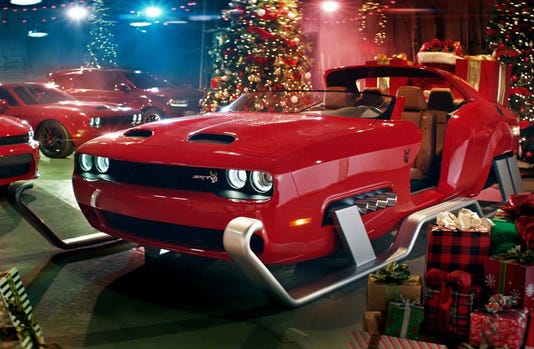
Los Angeles — If I were Santa Claus browsing the L.A. Auto Show, I would covet the Dodge Challenger Hellcat Redeye sleigh on display at the front of the FCA booth. Yes, a 797-horsepower sleigh.
Introduced for a Black Friday TV promotion, the huge luge is door-less — its roof chopped and rear trunk lid removed to fit a giant canvas toy bag. The V-8 under the red hood exhales through four dragster-inspired exhaust pipes emerging from each side — its wheel wells engorged with silver snow runners instead of tires. My favorite detail? The iconic Hellcat logo has sprouted antlers. On Comet!
But since you, dear reader, simply want a new toy for Christmas, I will focus on the vehicles unveiled this week at the LA Convention Center. The LA Show has it all from the all-new Porsche 911 sports car to a Jeep pickup to three-row utes. Herewith my best in show. . . .
Jeep Gladiator
The wildly-anticipated Jeep pickup is a Wrangler with a bed. Not. That formula failed as the “Scrambler” back in the early-’80s CJ Jeep era. The Gladiator, based on the TJ Wrangler four-door currently ripping up the sales charts, is a midsize bruiser with best tow capacity in class, a 31 inch-longer steel frame supporting a 60-inch box. Equipped with all the Wrangler’s off-road hardware, this beast can scale Mount Rushmore, then off-load two dirt bikes for more grins.
Porsche 911
The sports car that birthed a luxury brand. The family scion has grown wider with age (haven’t we all?) while packing interior luxury amenities to rival its Panamera sedan and Cayenne SUV offspring. Nevertheless, the muscled 911 has lost none of its athleticism, maintaining its status as the performance car upon which all others are judged. The eighth generation (you’ll know it by the thin, horizontal taillight) gains 23 ponies, a half-second from zero-60, and a manual tranny for the hard-core faithful.
VW Beetle Final Edition
One German icon prospers, another wilts. The Bug predates the 911 and is as instantly recognizable. But it is a victim of the tide washing over small cars. For its final 2019 model year, V-dub will produce a limited edition with nostalgic details like chrome accents, available 18-inch chrome wheels, rhombus cloth seats, and unique beige and light blue paint. Ride the $23,000 Bug into the sunset as coupe or convertible.
Mazda 3
Can a compact be the sexiest car in show? Mazda promised its 3 hatchback would look like the stunning Kai concept that wowed a year ago — and it delivered. Dressed in Soul Red, the 5-door hatch (a sedan is also available) is a triumph from its muscled haunches to its arrow-head headlights to its upscale cabin. And all-wheel-drive is available for those long Michigan winters.
BMW 3-series
With the cheaper Mazda 3 sexpot nipping at its heels and the Tesla Model 3 stomping it in sales, BMW has competition as the best 3 sedan. So Bimmer recrafted a lighter, state-of-the art chariot with angular surfacing and a fetching face. Inside, the BMW’s techtastic digital displays catch up with Mercedes and Audi. The LA stand showcases the AWD, M230i trim with a whopping 382 horses. Yum.
Rivian R1T electric pickup truck
While the Chinese-made Byton M-Byte EV shown here is closer to market, the Made-in-America R1T is what turned heads here. Rivian is headquartered in Plymouth with manufacturing in Normal, Illinois, (ex-Mitsubishi plant) and its stylish truck doubles Tesla’s battery size to 180 kWh (the base, $69,000 model gets 105) to carry this dirt-kicker to the Outback and back. To make sure you don’t get stuck out there (um, while doing 3-second 0-60 burnouts in the mud) Rivian is building a park-based supercharging network.
Lincoln Aviator
Call it Navigator Jr. The three-row Aviator brings the big truck’s stitched leather and tablet interior on a more refined, rear-wheel drive unibody architecture. The hybrid version boasts a whopping, 600-torque hybrid model — but the Aviator is all about creature comforts, not stoplight burnouts. A Detroit Symphony Orchestra chime greets you, and the thing will even park itself.
Hyundai Palisade
While U.S. automakers are leaving sedans, Asian automakers aren’t quitting Detroit’s bread-and-butter SUV segments. The elegant, three-row Palisade is light years from your father’s tinny Hyundai compact. Palisade joins the Subaru Ascent in targeting the three-row Ford Explorer and Chevy Traverse.
Genovation GXE
They took a ZR1 and stuck a battery in it? Remarkable what you can do for $750,000. The GXE is an electric ‘Vette — complete with 7-speed manual that will beat the ZR1 to 60 mph (2.5 seconds) and won’t stop until it hits 220. Add a higher rear wing for even more downforce, and you can tear up M1 Concourse without waking the neighbors.
Hmmm, maybe Santa would prefer a stealthy, 800-horse, electric Corvette sleigh. . . .
Porsche 911 blockbuster sequel premieres in LA
Posted by Talbot Payne on November 28, 2018
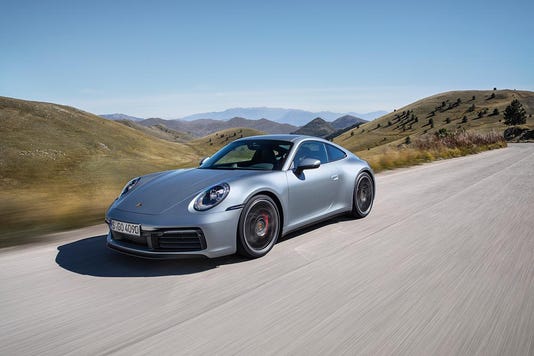
Los Angeles — Porsche premiered an all-new sequel to its 911 coupe — one of the world’s true, four-wheeled celebrities — in the heart of Tinseltown Tuesday night.
The auto superstar drove the red carpet accompanied by other celebrities like actor Armie Hammer, international racing star Mark Webber, and tennis great Maria Sharapova.
The stunning, 2020 model 911 gains more power, width, and electronic capability.
The teardrop-shaped 911, first introduced in 1964, has maintained its iconic silhouette over six decades with a rear-mounted engine, 2+2 seating arrangement, long tapered hood, and frog-eyed headlights. It is the performance standard by which all other sports cars are judged, and the eighth-generation car pushes the technological envelope in materials, handling, and digitization.
The 2019 model was unveiled, not as a base model, but in Carrera S and all-wheel-drive RS performance trims. Their shared, turbocharged, flat-six engine gains 23 horsepower over the last generation. To manage those 443 horses, the 911 has increased in width by nearly 2 inches front and rear.
The added oomph will rocket the RWD Carrera S from 0-60 in just 3.5 seconds — nearly a half second quicker than its predecessor. Equip it with AWD — and the nifty Sports Chrono transmission-assist package — and that number improves to a neck-straining 3.3 seconds.
Wardrobe updates are typically conservative, and the new 911 will be most distinguishable from the rear which has adopted a narrow, horizontal tail lamp that also accentuates the car’s broad stance. Save for the front and rear facias, the 911’s skin is all aluminum.
Like Boris Becker and Pilsner beer, the 911 is one of Germany’s premier symbols. Significantly, however, the Stuttgart-built sports car was introduced here in the United States, which is key to the luxury brand’s global strategy.
The 911 was rolled out at Porsche’s Los Angeles Experience Center here, a sprawling, 53-acre automotive theme park in the middle of the city where customers can play with their toys on track. In addition to its celebrity friends, the new Porsche was accompanied by representatives of all seven generations of the 911 dating back to 1964 — fitting nostalgia for a car that has stood the test of time.
The 911’s famous shape has inspired a lineup of family SUVs and sedans — Cayenne, Macan, Panamera — that have far outstripped Porsche’s traditional sports car lineup (that includes 911 little brother Boxster/Cayman). The best-selling Macan bests 911 sales by 300 percent.
Like SUV buyers, Porsche customers laying down $114,250 (up from gen 7’s $106,050, including destination fee) for a sports car expect five-star interior comfort. As conservative as the design upgrades are outside, the inside changes are dramatic.
But for the traditional, center-focused tachometer, the instrument display is now entirely digital. The center console too has been digitally transformed with a 10.7-inch infotainment display replacing the old, cramped, 7-inch glass. A remote rotary button controls infotainment options. The driver’s seat can now be adjusted 18 ways. The center console even gets its first cupholder.
An array of electronic features also provide driver assistance including a Wet Mode that senses — and corrects handling for — wet roads, adaptive cruise control, automatic brake assist, and more.
With Porsche developing an electric lineup to compete with Tesla (and meet Draconian European carbon dioxide emissions mandates), the 911 is being closely watched for a first-ever hybrid option. But the LA reveal shed no light on that possibility.
Nor does the 911 move its engine amidships — as the IMSA Weathertech GTLM model has done. That feature remains exclusive to the race car.
The 2020 911 is available for orders now and will reach U.S. showrooms next summer.
Mini-me Navigator: Lincoln Aviator debuts
Posted by Talbot Payne on November 28, 2018
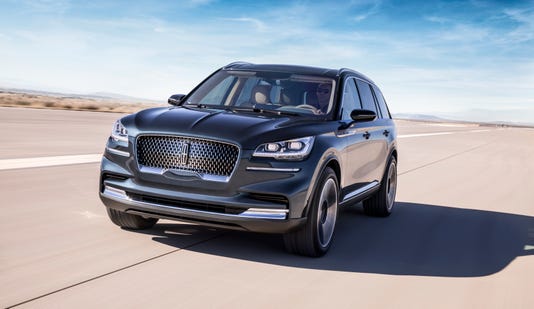
Los Angeles — Say hello to Navigator Jr.
Ford’s Lincoln luxury division unveiled the sumptuous, three-row Aviator SUV at the LA Auto Show with more horsepower than a Audi Q7 plugin and a long, Range Rover-like, rear-wheel-drive greenhouse.
But most of all, the 2020 Aviator looks like a more affordable, unibody-chassis Navigator — the big, Ford F-150-based land yacht. The first-ever Lincoln with a six-figure price tag, the Navigator can’t be built fast enough to satisfy jet set demand. The big Aviator will be slotted between the two-row, $40,000 Lincoln Nautilus and the gigantic, $73K Navigator.
While Lincoln will announce pricing closer to launch next year, expect it to be competitive with the Infiniti QX60 and Audi Q7 three-row competitors starting in the $45-$50K range. For all intents and purposes, the Aviator displaces the poor-selling, similarly-priced Continental sedan as the brand’s flagship vehicle.
“We will go right at Audi and Infiniti because with a vehicle with this much content we have a great value story to tell,” said Lincoln boss Joy Falotico at the media unveiling Tuesday.
Approach the Aviator and the mirrors pool the Lincoln logo on the ground at six-feet away. At three-feet the vehicle unlocks. That assumes that you haven’t already activated the Aviator via Lincoln’s “Phone As A Key” system where the ute can be remotely monitored and started via a phone app.
With optional air suspension it will kneel to help you inside like a pet elephant.
Open the door and the Detroit Symphony Orchestra welcomes passengers with subtle violin music — augmented by more chimes that remind you, for example, to fasten your seatbelt. The spacious surroundings are reminiscent of the opulent Navigator — 12.3-inch, fully digital instrument display, 10.5-inch console touchscreen, optional, signature 30-way seats, and individual rotary knobs for audio, climate control, and drive modes.
“The Aviator is always thinking of the next step,” says chief engineer John Davis.
Backseat passengers get their own, five-inch control touchscreen and the roomy third-row is accessed with a simple push of a button atop the seat.
Beneath this rolling divan is, in fact, a sophisticated piece of chassis and drivetrain engineering. The Aviator is built on a rear-wheel-rive architecture — like the Navigator but without the land yacht’s harsher, body-on-frame truck architecture. The architecture allowed designers to design a long-hood, long-greenhouse design reminiscent of Range Rovers that are the design envy of SUVs.
The 200-inch long (compared to the Navigator’s 210 inches) SUV will come standard with rear-wheel-drive with all-wheel-drive optional. A 400-horse, 3.0-liter, twin-turbo V-6 mated to a liquid-smooth 10-speed transmission propels the big ship.
All-wheel-drive is standard on the battery-assist version — Lincoln’s first-ever plugin option. The Aviator showcased the plugin here in Los Angeles, carrying the “Grand Touring” badge. It’s distinguished by its blue logo and “reverse grille” in front. The plugin also gives the Aviator — the most powerful Lincoln ever with 450 horsepower and 600 pound feet of torque — bragging rights as the most powerful hybrid in the high-volume, midsize luxury segment.
Like other Lincolns, the Aviator will come with a laundry list of available Black Label luxury options like 22-inch turbine wheels and a 28-speaker Revel audio system – for when passengers want to play a full Detroit Symphony Orchestra piece.
Payne: As Detroit dumps cars, Asian rivals go all in
Posted by Talbot Payne on November 28, 2018

Los Angeles – Detroit automakers are abandoning sedans, but their Asian competitors are all in.
The fetching new Mazda 3 that debuted at the Los Angeles Auto Show here Tuesday joins the Mazda 6, Toyota Corolla, Toyota Prius, Toyota Camry, Subaru Impreza, Hyundai Elantra, Kia Forte, Honda Civic, Honda Accord, Nissan Altima and more as all-new cars introduced in the last two years — as Japanese and Korean automakers double down on entry-level cars they see as crucial to attracting new customers into their automotive family.
“We want owning a Mazda to enrich our customers’ lives so they see us as a partner in their journey through life and stick with the brand for the long haul,” Mazda says in its press materials announcing its Mazda 3 in sedan and five-door hatchback form. The 3 is “a model aimed at first-time car buyers, shows our determination to earn customers’ trust and become an essential part of their lives.”
With a powerful, yet fuel-efficient new engine and premium good looks, the 3 hopes to win over millennial buyers with a $20K-something car with the sex appeal of a $40k European chariot.
The onslaught of new Asian cars comes as General Motors Co. joined Ford Motor Co. and Fiat Chrysler Automobiles NV this week in gutting its sedan lineup. In shuttering four plants that produced the Chevy Impala, Cruze, Volt, and Cadillac CT6 models, GM eliminated all but its midsize Chevy Malibu and subcompact Sonic and Spark cars.
Ford has announced plans to end all car production but for its iconic Mustang coupe. In the FCA stable, only the Fiat 500, Dodge Challenger and Charger muscle cars remain — with the Chrysler 300 reportedly on the chopping block.
The contrast highlights competing corporate visions as automakers adapt to a changing U.S. auto market and make investments in future autonomous technologies. Asian automakers have long seen small cars as their franchise vehicles — they got a toehold in the U.S. market decades ago with reliable, fuel-sipping vehicles. And while that market has shrunk in recent years, automakers like Honda, Toyota, and Nissan still see the 2.6 million vehicle compact sedan market as an entrée into more profitable SUVs.
“The (compact) market serves as a foundation for growing people through the brand,” John Morel, Honda’s senior manager for business intelligence and strategy, told The Detroit News this summer. “Civic buyers are tremendously loyal; more than 60 percent return to the Honda brand, which is among the best in the industry, and that feeds future volume to future Civic sales, CR-V sales and eventually across the line.”
Indeed, the Big Three Japanese automakers all claim the three best-selling SUVs in the market in 2017: Toyota RAV4, Nissan Rogue, and Honda CR-V.
“You need product across all economic status,” Toyota spokesman Curt McCallister told The News last year. “Small cars get our buyers hooked from cradle to grave. If you get them into the family early, then you can keep them on up the family tree.”
The Big Three Detroit automakers, on the other hand, see trucks as their franchise vehicles. With profit margins in excess of $8,000 per vehicle on sales totaling over 2 million trucks combined, the Ford F-150, Chevy Silverado, GMC Sierra, and RAM 1500 dominate the pickup market, while Japanese makers like Honda with its best-selling Tacoma have only penetrated the mid-size pickup market.
Pickup profits in turn fuel capital-intensive Big Three investments in autonomous cars, mobility services and electric vehicles, the purported foundations of a next-generation auto industry.
The end of production for the battery-powered Volt is a particularly bitter pill for GM. The plug-in Volt was GM’s answer to Toyota’s battery-powered green hit in 2011, but never gained market traction. While the Prius is the best-selling battery-powered vehicle ever, the Volt never sold more than 1/3 of Prius sales.
Here in LA, Toyota will showcase an all-new Prius with all-wheel-drive aimed at northern states. With 50 mpg, it boasts the best fuel economy for any gas-electric AWD car.
The demise of GM sedan production in Ohio and Michigan also leaves Japanese makers as the dominant producers of cars in the U.S. The new Accord (Ohio), Camry (Kentucky), Altima (Tennessee), Impreza (Indiana), and Civic (Indiana), for example, collectively employ thousands of workers across America’s industrial heartland.
In a stark illustration of the contrast in Japanese and Detroit business models, the North American Car and Truck of the Year finalists will be announced Wednesday morning in LA. Of the 14 semifinalists for Car of the Year, 9 are from Asian automakers. Only one, the German-made Buick Regal, comes from a U.S. maker.
Of the three truck semifinalists, all three are Detroit brands.
LA Auto show preview: Big SUVs, Jeep Gladiator pickup
Posted by Talbot Payne on November 28, 2018
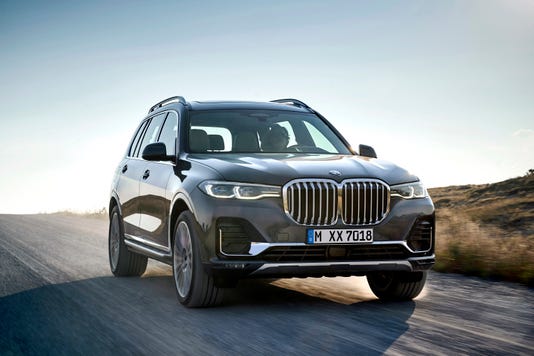
Los Angeles — The Los Angeles Auto Show has traditionally favored introductions of environmentally conscious electric cars and luxury chariots, given the Golden State’s reputation for green regulation and greenback-spending high-rollers.
But with America’s obsession with SUVs unabated, this year’s extravaganza looks to be one of the premier mainstream exhibits of the North American season. It is brimming with meat-and-potatoes reveals to suit every American taste.
The meatiest debut of all Wednesday is the Jeep Gladiator pickup.
This wildly anticipated truck will do battle in the reinvigorated midsize pickup segment. The segment includes SUV-based entries like the unibody Honda Ridgeline, as well as body-on-frame Detroit iron like the Chevy Colorado and Ford Ranger. The Jeep is definitely of the latter variety.
Pictures leaked ahead of Gladiator’s LA debut show a vehicle that closely hews to the legendary Wrangler rock-kicker’s DNA: Familiar upright face with round headlights and seven-slot grille. Sahara and Rubicon trims. Folding front windshield and removable roof A choice of 3.6-liter V-6 or 3.0-liter diesel powerplants. Locking differential for climbing Mt. Rushmore. The works.
LA’s playbill is expected to be dominated by other sport-utility debuts: the production version of the three-row Lincoln Aviator, Honda’s new Passport, Hyundai’s first-ever three-row SUV, BMW’s X7 three-row mega-crossover, as well as new versions of the Fiat 500X and Kia Soul.
Staying true to LA’s past, Audi is expected to show a speedy, new e-tron electric concept during media reveals, and hometown favorite Tesla will make a rare show appearance. Premium carmaker Volvo boasts “it will show nothing,” choosing instead to promote its subscription service for upscale customers.
At a time when traditional auto shows are under pressure as carmakers find independent venues to introduce new vehicles (Detroit, Paris and Geneva have all lost exhibitors), Los Angeles has emerged as a must-attend show.
“Auto shows aren’t going away, there are just fewer of them,” said LA-based auto analyst Karl Brauer of Kelley Blue Book. “With the decline of Chicago and automaker pullouts in Detroit, we are down to two major (North American) shows. Every brand wants to sell in LA and New York.”
With California and New York state combining for 40 percent of luxury U.S. auto sales, LA and its New York City counterpart in March have always been the go-to forums for premium auto debuts. With BMW, Mercedes, Audi, Porsche, Volvo, Jaguar, Land Rover, Maserati and Ferrari all having departed Motown, LA is essential to foreign automakers to market their latest wares.
Hollywood celebs gotta spend their millions, so the show will feature exotic new toys — from Mercedes AMG track-weapons to a topless BMW 8-series.
Significantly, Porsche is expected to make the world debut of its latest, iconic 911 sports car — not in Germany, but here in LA. The Porsche may be the best-selling sports car in Germany, but California accounts for a quarter of its U.S. sales.
Volvo’s novel “This is not a car” display is a statement about automakers transitioning to subscription and autonomous service. “Volvo Cars will show a number of interactive demonstrations of connectivity services, such as in-car delivery, car sharing, its vision for autonomous driving … and the car subscription service Care by Volvo,” the company said.
Still, the number of mainstream vehicle debuts are eye-opening. Consumers have a voracious appetite for SUVs and manufacturers are trying to keep up.
“Automakers are still working in reaction to the shift to SUVs from sedans,” said IHS auto analyst Stephanie Brinley. “That process is still ongoing.”
A parade of three-row SUVs will bow in LA including first-ever big ute offerings from Hyundai (the Palisade), BMW (the X7, which makes its production debut) and Lincoln, whose Aviator SUV will spread its three rows over a crossover unibody instead of its stylish big brother’s Ford F-150 truck frame.
Speaking of three-row utes, Honda is adding fourth SUV in its lineup — the Passport, a shortened, two-row version of its popular three-row Pilot. If the name Passport sounds familiar, that’s because Honda sold a rebadged Isuzu Rodeo under that name from 1993 through 2002.
“The Passport is really cool and it speaks to the idea that you can’t have enough crossovers,” says KBB’s Brauer. “It’s more proof that SUVs are critical to automakers. A lack of success in the SUV market will make or break an automaker. The Palisade, for example, is critical to Hyundai because they have been too sedan-dependent.”
The granola crowd will still get plenty to munch on, including Audi’s sleek GT concept, a battery-powered Kia Soul and a rumored Mitsubishi EV concept. But electrics are no longer just a Left Coast thing. Governments across the globe are mandating them, and Tesla’s Model 3 EV is the best-selling luxury vehicle in America.
“EVs are just part of the world now,” said Brinley. “They are part of the automotive landscape — not just for the California market anymore.”
“The Audi e-tron crossover debuted to media in San Francisco,” she said. “And the BMW Z4 M40i Roadster we first saw at the Pebble Beach Concours.”
The sexy Roadster will be welcome eye-candy to those looking for something other than a five-door SUV. Mazda is expected to show its remade Mazda 3 compact, based on a stunning Kai concept at last year’s show that made onlookers weak in the knees.
LA Show schedule
Where: Los Angeles Convention Center
When:
Today through Thursday: “Automobility LA” technology conference
Wednesday and Thursday: New-car reveals to media
Wednesday: North American Car of the Year finalists announced
Thursday: Green Car Awards
Friday through Dec. 9: Show open to the public
Schedule and ticket information: https://automobilityla.com/schedule/
Payne: Life with my Tesla Model 3
Posted by Talbot Payne on November 26, 2018
As a young newspaper cartoonist and graphic artist, I wanted an Apple computer. So perhaps it’s logical I would own a Tesla Model 3. On the track, on the road, in the garage, the Model 3 is just different.
Like Apple, Tesla boasts a unique operating system.
Innovated by the visionary, controversial, mercurial Steve Jobs (Tesla’s version is the equally outsized figure, Elon Musk), Apple’s graphical interface was a sea change from the MS-DOS standard developed by Microsoft (which ultimately introduced its own Apple-inspired graphic interface).
Apple changed the computer industry, and then music players and then cellphones by fundamentally re-imagining products. Even as its innovations have been adopted by other makers, Apple stands alone.
Will Tesla have the same effect on autos? I don’t know. But I do know there is nothing like it today.
Tesla has been wowing Detroiters since it debuted the sleek Model S sedan on the auto show floor in 2010. Its 17-inch vertical console screen was a revelation. I had to stand in line to get inside the thing, for goodness sake. I drove it, coveted it, and ultimately put $1,000 down on the more affordable Model 3 to be part of Apple’s — er, Tesla’s — journey.
The Model S (and its Model X SUV sibling) was a leap, but the Model 3 takes the operating system to another level. My friends enter the cockpit for the first time and gasp.
Oh, my lord!
That’s amazing! Everything is in the screen?
Wow! It’s so simple.
The Model 3 is an iPhone on wheels. The 15-inch tablet screen is its core. It dominates an elegant, spare interior consisting of screen, wood trim and steering wheel. It’s complemented by just three buttons — an emergency flasher button on the ceiling and two scroll buttons on the steering wheel.
Tap the steering wheel box in the screen and adjust steering column position. Repeat for the mirrors. Otherwise, the button is for radio volume. It’s brilliant.
“I gotta say, I prefer the Tesla,” said an impressed auto engineer pal after back-to-back spins in the cars.
Unconventional the Tesla may be. But like Apple, it also works.
I frankly expected to be disappointed. After all, I like to drive fast. Which means I prefer my car controls front and center. I’m an advocate of head-up displays and steering wheel controls. Like the cockpit of my Lola race car, the more gauges in my line of sight the better.
The Model 3 gives me none of those. No instrument display. No gauges. Just a screen-based, 3-D graphic monitoring everything around me (who needs blind-spot assist in the mirror?) and a speedometer. Because it’s an electric motor, there’s no RPM gauge. Just floor it and hang on.
Hammering the Model 3 around M1 Concourse’s challenging test track, I quickly grew accustomed to the lack of instrumentation. I didn’t need it. The simple electric-drive means I can concentrate on driving.
In the car’s basement, the 80.5-kWh battery is structurally integrated into the chassis for increased crash strength — and increased handling stiffness. Despite weighing 400 pounds more than a BMW M2, for example, the Model3 is impressively planted in turns with little body roll. Push to the limit in a corner and the car understeers.
I was on the limit longer than I thought, flogging it for six laps without any protest from the battery (big brother Model S notoriously overheats into limp-mode after a couple of laps).
It was the brakes that cried uncle after four laps of hard exercise. Paired with electric-motor regeneration for optimal range efficiency, the brakes aren’t made for the track. I felt a pang of longing for my favorite, similarly priced, track-focused BMW M2 which can pound around M1 all day. Next time I’ll have race pads installed.
Nine miles (six laps) on the track sucked 50 miles in battery range. Don’t go tracking EVs unless you have lots of charge.
The same can be said for long-distance travel. Driving 202 miles back home to Oakland County after picking up my 310-mile range car in Cleveland (Why Cleveland? Keep reading.), I kept within the factory-advertised range as long as I ran the 70 mph speed limit. Going with the traffic flow at 80 mph, however, meant getting just 60 percent of predicted range — that’s just 186 miles of range.
So, every outing must be calculated within the limits of Tesla’s Supercharger network. It means feeding my filly every night at the home stable so she’s ready the next day. A rolling iPhone it may be, but charging the Model 3 is not as easy as plugging in a cellphone. I’ve become an expert on battery capacity, maintenance — even charging the car remotely (via phone app) while on a Caribbean vacation.
Within the confines of normal commuting, however, the Model 3 is the cure for the common car. Screen response and voice commands are phone-like, eclipsing other automakers. “Take me to Kroger.” Instantly the nearest grocery pops up. Want to play a song? Ask the Slacker streaming service.
Autopilot is the best I’ve experienced outside Caddy’s geo-fenced Supercruise. Want to drive with one pedal? Dial up brake-regeneration. Need more storage? Put a suitcase in the “frunk.” Got the need for speed? Attack a clover leaf.
But like Apple, the Model 3 has its flaws.
Trying to reinvent the audio experience, Tesla ditched AM radio (seriously?). Reinventing the dealer experience with retail stores (like guess who?), Tesla has been stiffed by Michigan and other states. That forces me to service my car through Cleveland. Trying to fill 450,000 orders, manufacturing quality has suffered with body panel gaps wider than David Letterman’s front teeth.
And like Apple, I can’t find any owners who care about all those shortcomings. The operating system is that good.
I don’t know if Tesla will dominate autos any more than Apple dominates PCs (12.7 percent market share). But customers have something special.
Henry Payne is auto critic for The Detroit News. Find him at hpayne@detroitnews.com or Twitter @HenryEPayne. Catch “Car Radio with Henry Payne” from noon-2 p.m. Saturdays on 910 AM Superstation.
2018 Tesla Model 3
Vehicle type: Electric, rear-wheel drive five-passenger luxury sedan
Powerplant: 80.5-kWh lithium-ion battery with electric motor drive
Transmission: Single-speed transmission
Weight: 3,814 pounds, long-range battery; 3,549 pounds for base-battery model
Price: $57,500 as tested, including $1,000 order deposit and $2,500 configuration downpayment ($49,000 base with long-range battery)
Power: 271 horsepower, 307 pound-feet torque
Performance: 0-60 mph, 5.1 seconds (mfr.)
Fuel economy: Range, 310 miles (186 if driving 80 mph)
Report card
Highs: Sweet operating system; nimble handling
Lows: Trips governed by charging infrastructure; poor panel fits
Overall: 4 stars