- Search Cartoons
- Comic Archive
-
Payne
Store



 Henry Payne RSS

Articles
Premium cars remains the standard in luxury
Posted by hpayne on January 18, 2018
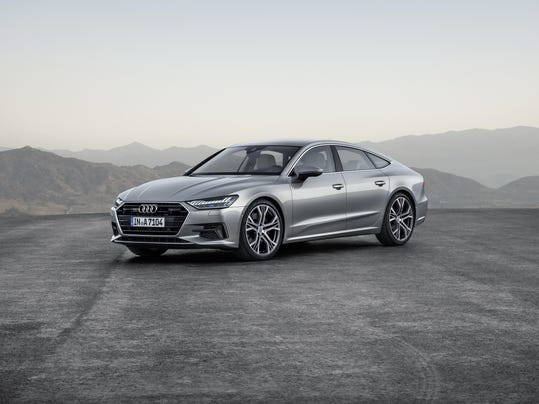
The thoroughbreds in the luxury class have been the definition of automotive elegance, but not even sedan icons are immune from the sport-utility tsunami. The Mercedes S-class, Lexus LS and Audi A8 all saw big sales declines in 2017, as luxury customers snapped up big SUVs. Even BMW is not immune, with a giant X7 crossover looming over the brand’s 7-series sedan (down 28 percent in sales) as its new flagship. But for style and handling, premium cars are still the standard — think the gorgeous Mercedes CLS Coupe or the hot-rod Cadillac ATS-V.
Audi A7
What it is: The second generation of Audi’s iconic fastback, perhaps the prettiest sedan on the market today. How to improve on perfection? The all-wheel drive A7 gets more-muscular wheel wells and a bigger grille to complement its bigger interior dimensions. The most significant changes are in the tech department, where twin haptic–touchscreens replace the rotary-controlled infotainment system of yore. Augmenting the familiar 340-horse turbo V-6 is a 48-volt lithium-ion battery, which promises better mpg and torque.
Payne’s take: In its short life, the A7 has already become a benchmark for the industry. The mainstream Kia Stinger and Buick Regal unashamedly borrow from their luxurious idol. The new touchscreens are a big change from the Euro-preferred rotary touch-dial, and longtime Audi fans may find the transition uncomfortable. My suggestion? Get the optional, configurable Virtual Cockpit instrument display with its controls on the wheel.
Mercedes AMG CLS53; E53 Coupe/Cabriolet
Payne’s take: The mild-hybrid powertrain will soon proliferate the Mercedes lineup, enabling better mpg and acceleration (for less cost than a full-hybrid powertrain). Now, if Mercedes would just simplify its alphabet soup model names …
SUV revolution has changed vehicle landscape
Posted by hpayne on January 18, 2018

The SUV revolution has changed the American vehicle landscape. Sedan sales are cratering as consumers choose the better visibility and utility of elevated five-door hatchbacks. For the first time in the U.S. in 2017, an SUV — the Toyota RAV4 — became the best-selling non-pickup, with more than 400,000 sold. The ute transformation has also elevated an off-road niche brand, Jeep, into the biggest-volume brand in the Fiat Chrysler lineup, with nearly a million vehicles sold. Unlike their sedan counterparts, economy trims for SUVs come with all-wheel drive — making for better grip in the snow (even if that all-wheel drive sucks up more fuel).
Ford Edge
What it is:One of the original elegant crossovers — along with the Chrysler Pacifica (before it became a minivan) and the Nissan Murano — the high-tech Edge gets a mild refresh for 2019. The Edge gets more handsome with new front and rear fascias. The bold, truck-inspired grille that defined the early Edge has been nixed for a more subtle Focus-like face. More technology comes in the form of standard auto high-beams, blind-spot assist and post-collision braking (a first for a non-luxury vehicle). Drivetrain? Turbo-4 mated to a 10-speed tranny.
Payne’s take:The Edge is the first Ford sport-utility to get the performance ST badge. In a sign of the times, the Edge gets the ST badge before the Fusion sedan. ST gets all the goodies — 335-horse twin-turbo V-6, front winglets inspired by the Mustang GT350, stiff shocks, monogrammed leather seats. Gotta get the ST in the exclusive Ford Performance Blue.
Jeep Cherokee
Payne’s take: The 2014 Cherokee got attention for its radical styling, and it flew off shelves, tripling its Liberty predecessor’s sales. But the novelty has worn off and the Cherokee design has gone more mainstream. More important is its 200-pound diet, which will maximize efficiency from its new 4-banger while not compromising the off-road intentions of the rugged Trailhawk trim.
Big and bold dominate the Detroit auto show
Posted by hpayne on January 18, 2018
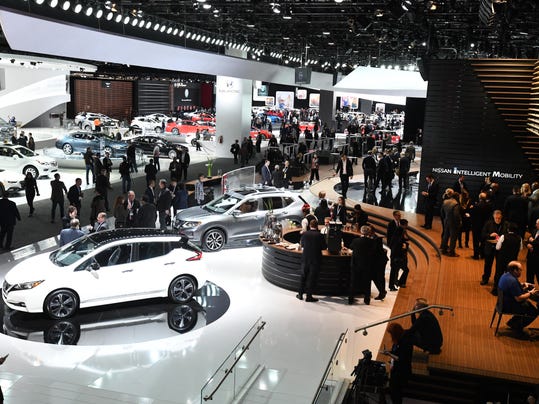
Walk through the Hall A entrance to the Detroit auto show at the north end of Cobo and you’re standing on the gridiron. The automotive Super Bowl. You can almost smell the testosterone.
A long purple carpet marks the scrimmage line separating the Ford and Chevy teams.
These two arch-enemies face each other across the carpet with armies of firepower.
Up front are the fleet-of-foot athletes. At the fore of GM’s arsenal is its Pro Bowl superstar, the all-new 755-horsepower, supercharged V-8 Corvette ZR1 supercar — fire it up, and its flame-throwing exhaust and explosive roar will shame Tuesday’s meteor display.
Its opposite is another legend, the 2019 Ford Mustang Bullitt in a Highland Green jersey, just like the original ’68 that Steve McQueen rode into battle in the movie of that name. Indeed, the original car — recently restored — is lined up next to it. Flanking the ’Stangs is a ruby-red, carbon-fiber Ford GT — wearing a heritage 1966 LeMans livery.
Across the aisle, the ZR1 is backed up by a menacing red Corvette Grand Sport and orange “Hot Wheels” edition Camaro SS.
But the real might is farther back.
Detroit’s pickup titans have rolled out all-new models of the Chevy Silverado, Ford Ranger, and the first-ever diesel-powered F-150. An all-new Ram 1500 pickup looms nearby.
The Super Bowl of trucks is on! Are you ready to rrrrrrrumble?!
Truck wars
Four truck reveals in the same show are as rare as Halley’s Comet, so enjoy the moment.
In 2014, the lightweight all-aluminum Ford F-150 rocked the auto show and the trucking world braced for an aluminum future. Didn’t happen. What happened instead was a mid-size truck future.
Meanwhile, Chevy shows its first Silverado since the aluminum F-150 broke the sales barrier. The reveal Chevy makes its bed from good old-fashioned rolled steel — part of a mixed-metal strategy (aluminum doors, hood, tailgate) that tips the scales 450 pounds lighter than the last generation. The Silverado also begs to differ on engine strategy. Ignoring Ford’s move to turbo-6s, it boasts the small-block V-8 — and a new diesel.
Not to be outdone, Ford called an audible with its own 3.0-liter diesel, the first F-150 oil-burner. It looks out over the display like Simba on Pride Rock.
Ahem, says Ram, can I butt in here?
The innovative 1500 wowed truckers with its intimidating cross-hair grille and smooth ride in 2009. Now, as the Silverado and F-150 put on ever-fiercer masks, Ram detours to a more-subtle SUV-like grille. It’s part of a stylish package that includes a 12-inch console screen on premium trucks — call it the Tesla trim — and storage boxes for the bed. Which, by the way, is made of steel.
GM Product Chief Mark Reuss trash-talked at Silverado’s introduction last week: “The working end of every pickup is the bed. It’s like the head of a good hammer. I don’t think we’d get much work done with an aluminum hammer.”
Oh, it’s on.
Sportbacks
For all the heavy artillery at the Detroit displays, there is surprising elegance elsewhere.
While you could hear the hard-rockin’, strobe-lightin’ truck reveals a mile away, Audi quietly brought in its all-new, second-generation Audi A7 onto its show stand and just left it there for its first North American sighting.
The German beauty, with its long sportback and roomy rear hatch, is a luxury icon. But look close and its redesign has some unmistakable Yankee touches. Its muscled shoulders have been to the Camaro gym, while its horizontal rear-LED light mimics Lincoln. Inside, the Audi contradicts years of European design by moving from remote, dial-controlled infotainment systems to a Cadillac-like haptic-touch interface.
Audi’s influence on other floor models, however, is unmistakable. Across from the Ram display, the Kia Stinger GT is hard to miss. With A7-like specs for an A4 price, the Stinger redefines Kia as an upscale mainstream brand. And there’s Buick’s lovely Regal Sportback, appearing in Cobo for the first time, with a wardrobe that will force folks to look away from SUVs and consider a sedan again.
Utes, utes, utes
Speaking of the devil, SUVs dominate the show floor this year, just as they dominate the market. Everyone’s got something new but four stand out.
I wish you could see the wild 650-horsepower Lamborghini Urus, the “Super SUV” the Italian super-car maker unveiled in Midtown. But the Urus won’t be in Cobo. The $85,000 707-horsepower Jeep Grand Cherokee Trackhawk will be — and it beats the $200,000 Lambo zero-60: 3.5 seconds to 3.6.
Acura is going back to its sporty roots with the sculpted RDX, which will grow A-Spec and Type-S performance badges, just like the good ol’ days. Speaking of badges, SUVs are so hot that Ford debuted its hot-rod ST trim on the Edge crossover before the Fusion sedan.
And China’s GAC will enter the U.S. market next year with an SUV, naturally. The three-row Trumpchi GS8 will cross the Pacific to take on the formidable Chevy Traverse and Ford Explorer. It will change the brand name — which means “legend” in Chinese — to something, um, more politically neutral.
Good things come in 3s … and 19s
The show features big reveals this year — but as always, there are delicious details. Like the three-door Hyundai Veloster — back for a second-gen with three new trims — and the three-wheel Slingshot roadster next to the equally eye-popping BMW i8 Roadster.
Want to see the fastest production car in the world? The 277-mph Koenigsegg Agera RS is on the Michelin stand.
Then drop by the Subaru stage and check out the new three-row Ascent SUV. See if you can find all 19 cupholders.
Stars come out for Indy race car Detroit reveal
Posted by hpayne on January 18, 2018
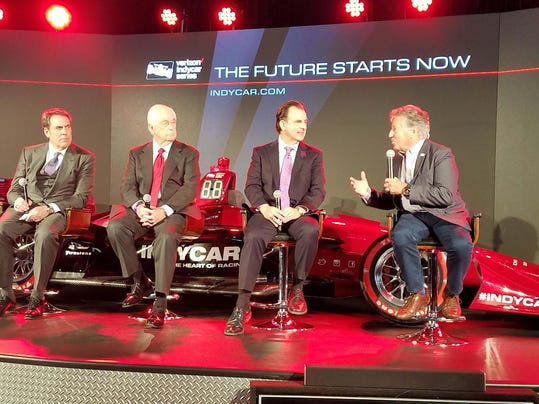 What major reveal at the Detroit auto show brought in GM Product Chief Mark Reuss, Detroit mogul Roger Penske, racing legend Mario Andretti, and racing superstar Josef Newgarden?
If you answered the new Dallara IndyCar, you’re right.
With a captive audience of some 5,000 auto journalists at Cobo Center, racing organizations have become savvy in using Detroit to do reveals of their own vehicles.
Last year NASCAR unveiled its new Camry racer as part of the Toyota Camry production car debut and this year Acura is showing its new prototype racer (run by Penske’s race team) ahead of this month’s 24 Hours of Daytona.
IndyCar used its press conference to debut its landmark, all-new aerodynamics package — the wings ’n’ things that suck open-wheel race cars to the ground, especially on road courses like the Detroit Grand Prix on Belle Isle. Italian manufacturer Dallara makes IndyCar’s chassis and aero kits.
But as the celebrities indicate, IndyCar’s high profile brings together a lot of interests, from Big Auto corporate marketing to Detroit’s Renaissance to the place of American racing in the sports marketplace. All those subjects came up on stage in a moderated, post-reveal discussion.
Begin with the new IndyCar introduced by the Hollywood-handsome Newgarden, who won the American open-wheel championship for Team Penske last year.
While most performance cars on the floor tout increased downforce — Chevy’s winged Corvette ZR1 monster boasts nearly 950 pounds, for example — for better cornering, the IndyCar series has experienced the issue of too much downforce. Festooned with aerofoils, last year’s design made a staggering 6,000 pounds of downforce — making the cars faster, but also making them difficult to follow closely so turbulent was their wake (the same reason Boeing 747s can’t follow each other closely on airport landings).
“We think it’s going to be great. It’s going to mean more passing,” said Newgarden, standing next to a red IndyCar which is more aesthetically appealing without garish winglets crowding the car’s sleek, coke-bottle shape. “It’s going to mean better battles between drivers, and you won’t get that anywhere else in the open-wheel racing world.”
Think ultra-high tech, ultra-high downforce Formula One, which has become a parade with little passing.
“Too much turbulence is what drivers complain about,” said Andretti, still looking racy at 77. “They can’t get close to each other. You have to keep in mind the show itself.”
Every great sporting organization has to put on a show. It’s how they attract crowds, sponsorships, and big bucks.
It’s those crowds that interest GM’s Reuss whose Chevy brand is major sponsor — and engine provider — for the series.
“It’s a great fan base to reach,” he said of the IndyCar series, which saw its TV audience grow 3 percent last year. The Detroit Grand Prix’s doubleheader (called the Dual in Detroit) alone attracted 100,000 spectators and another 1.8 million on ABC’s broadcasts of the weekend event.
Reuss said racing also hones GM technology — especially in competition with arch-rival Honda, which also supplies engines for the series. Henio Arcangeli, Jr., Honda North America’s chief, joined Reuss on stage to tout the importance of the IndyCar series to his company’s marketing and technical strategies. Reuss, a licensed track driver, said the twin-turbo V-6 used by IndyCar trickles down in to the turbo-4 engines found in Chevy production cars like the Camaro and Equinox.
Like any other auto debut, the new IndyCar has to make a business case, and Penske said the new aero package will make racing more affordable — which, in turn, may attract more manufacturers and more competition to the series.
“We could sell out old car chassis, for example, and then a new team would just have to buy the new standard aero kits to outfit them,” said Penske. “Before, it was costly to engineer the aero.” The Captain puts the cost of a new chassis at $500,000. The once-size-fits-all aero kits are another $150,000.
“From a customer, competition, and driver perspective, the new IndyCar is going to be a home run,” he added.
Andretti is the only driver to have ever won the Indianapolis 500 (IndyCar’s marquee event), NASCAR’s Daytona 500, and the Formula One championship. As the car debut wound down, he noticed all the beaming faces on stage.
“If there is a negative in all this, it’s that I don’t have an (IndyCar) ride yet,” he laughed.
Squeaky-clean Jeep Cherokee debuts
Posted by hpayne on January 18, 2018
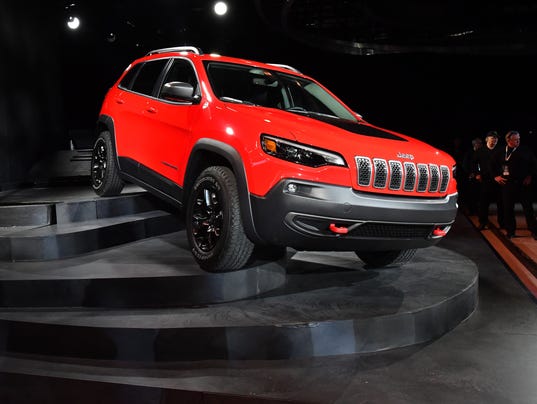
The compact Jeep Cherokee debuted in 2013 with a polarizing face, three stacks of lights and its license plate hanging below its, um, beltline. What, no piercings?
The second-generation 2019 ute debuted Tuesday at the Detroit auto show, and after those awkward youth years, the Cherokee has been cleaned up to look like a respectable member of the family. The seven-slot grille is more upright, the headlights and running lights properly consolidated under one lens cover, and the license relocated to the middle of the tailgate, just like big brother Grand Cherokee.
“We took the geekiness out of it,” said designer Mark Allen, a 30-year veteran of Jeep. “Now Cherokee is more closely aligned with the rest of the brand.”
For all its geekiness, though, the redesign did what it had to do, re-interpreting the iconic Cherokee name as a compact SUV in the hottest segment in autodom and tripling sales of its predecessor, the Liberty.
“Yes, the first Cherokee was very progressive,” said Jeep boss Mike Manley, “but we needed to do it to break through in the segment.
All told, the new ute’s wardrobe doesn’t change between the fenders, but gets a new front clip, taller front end, and composite liftgate that saves 17 pounds. That lighter touch hints at a mid-cycle product refresh that is more comprehensive than most.
Determined that Jeep’s reformation be more than skin deep, the Cherokee team has put the Cherokee on a 200-pound diet, introduced a premium 2.0-liter turbo-4 and expanded the rear cargo-hold.
The light-weighting should benefit fuel efficiency in the Jeep’s carryover 3.2 liter V-6. But the real prize is the up-trim turbo-4 mated to a 9-speed transmission that puts out a stump-pulling 295 pound-feet of torque. That’s significantly more than the 235 pound-feet from the larger displacement V-6, which the turbo replaces as the Cherokee’s top-spec engine. The V-6 still beats the new block in towing ability with class-leading 4,500 pounds.
The turbo-4’s added grunt should thrill off-road buyers, who will get a typically fearsome-looking Trailhawk option with trail-rated capability (approach angle of 29.9 degrees; departure angle of 32.2) to ford streams and conquer rocky heights.
The base ute gets a 2.4-liter “Tigershark” 4-banger with 180 horsepower and 170 pound-feet of torque.
Payne: How my bets fared for vehicles of the year
Posted by hpayne on January 18, 2018
The 2018 North American Car, Truck, and SUV race has been run and my horses didn’t win the trifecta. Heck, I didn’t even win a two-fecta.
I’m one of 58 jurors for the North American Car, Utility and Truck of the Year Awards, and every year we separate the industry’s latest models into three neat classes, whittle the contenders to three over a year-long marathon, and then vote our picks. They’re announced Monday at the opening of the Detroit auto show.
The Honda Accord sedan beat my pick for Car of the Year, the Kia Stinger. The Volvo XC60 nipped my Alfa Romeo Stelvio thoroughbred for SUV. Even my only winning entry, the Lincoln Navigator, for truck, feels weird.
The stunning Navigator is an SUV, after all, but was classified as a truck because — in a product cycle anamoly — the only new pickup for the 2018 model year was the ZR2 trim of the Chevrolet Colorado; the truck was introduced way back in 2014. So the truck-based Navigator and Ford Expedition — both built on the F-150’s bones — got pushed into the truck race. Kind of like Clydesdales racing an ox, don’t you think?
I asked Lincoln boss Kumar Galhotra if he really wanted to market the Navi as Truck of the Year.
“It means recognition of the brand we’re building,” he grinned next to the gorgeous NACTOY trophy.
The race for best car was a classic. The favorites were the Accord and Toyota Camry. With nimble handling and sleek, coupe-like shapes, the ’18 models are the best Accord and Camry ever.
Toyota rolls out all-new Avalon in Detroit
Posted by hpayne on January 15, 2018
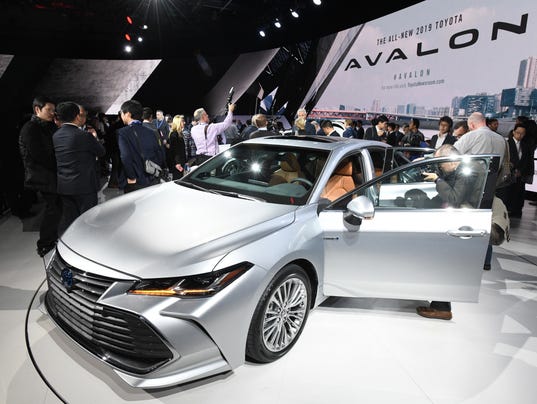
Toyota’s all-new Avalon sedan made its grand entrance into the world Monday at the Detroit auto show.
After a 32 percent sales dive in 2017, Toyota is hoping to jump-start sales of its flagship mid-size sedan in a ute-obsessed market.
The fifth-generation Avalon will be powered by either a 3.5-liter V6 or a Toyota’s hybrid system that features a 2.5-liter-four-cylinder- and 650-volt engine paired with a Continuously-Variable Transmission.
All Avalons are assembled in Georgetown, Ky., and have been since 1994.
The sleek Avalon is joined at the North American International Auto Show by the brand’s full vehicle lineup of cars, trucks and SUVs, including future mobility vehicles and NASCAR Camry designs in a 38,971-square-foot display.
On the heels of its coming-out party at the Los Angeles Auto Show in November, the rugged FT-4X Concept also bowed in Detroit.
The Toyota FT-4X Concept — short for “Future Toyota” four-wheel-drive crossover — is a modern toolbox for today’s city driver. The vehicle was designed by Toyota’s Calty Design Research Inc. in Newport Beach, Calif., and inspired by Toyota’s iconic adventure vehicles.
Also on display in Cobo are a trio of future mobility vehicles that demonstrate Mobility for All — Concept-i RIDE, Concept-i WALK and Concept-i Experience.
Concept-i RIDE is Toyota’s ride-sharing solution for the city of tomorrow aimed at transforming mass transportation into a personable and wheelchair accessible experience.
For the last leg of a user’s commuter, the ultra-compact Concept-i WALK autonomously drives users home or to work using sidewalks.
With the Concept-i Experience, guests can step into Toyota’s vision for the future. The interactive display engages with drivers through a powerful AI system that learns with the driver to build a relationship that is both meaningful and human.
Several concepts unveiled at the 2017 Specialty Equipment Market Association — or SEMA — show will be on display, including the NASCAR driver designed Camrys. NASCAR Drivers Martin Truex Jr., Kyle Busch, Denny Hamlin and Daniel Suarez each created a Camry to push its design and performance.
The championship Camry driven by No. 78 Truex Jr. also is on display.
VW Passat gets GT swagger
Posted by hpayne on January 15, 2018

After the new Jetta debuted Sunday night, Volkswagen’s best-selling model brought a hot date to the Detroit auto show floor Monday. Say hello to the sporty 2018 Passat GT.
Hinrich Woebcken, CEO of Volkswagen’s North American region, said the car is the first vehicle VW designed and engineered in the U.S. for the local market.
The production model, previewed as a concept at Automobility LA in 2016, was designed in Santa Monica, Calif., and engineered by VW’s North American team in Chattanooga, Tenn. The GT — available in four exterior colors — Pure White, Reflex Silver, Platinum Grey, and Deep Black — joins the Passat lineup for model year 2018 as a limited-run special model based off the R-Line trim.
Its black and red highlights echo the Golf hatchback GTI’s sporty look. But though the GT gets the Passat’s powerful 280-horsepower, 3.6-liter VR engine, it will not be built on the same, more athletic MQB chassis that the German-built Golf and Jetta share. The award-winning, front-wheel-drive MQB chassis is due for the Passat later this decade at VW’s Tennessee plant.
Desperate to get in good graces with its American customers after the Dieselgate fiasco, VW is offering an industry-leading, 6 year/72,000 mile, fully-transferable warranty on its cars. EPA fuel economy is 19 mpg city and 28 mpg highway.
The GT gets 20 design changes from the base Passat and is expected to arrive at U.S. Volkswagen dealers in the second quarter of 2018. Pricing for the Passat GT starts at $29,090.
Accord, XC60, Navigator named NACTOY winners
Posted by hpayne on January 15, 2018
The awards for 2018 North American Car, Truck and Utility of the Year kicked off press days at the Detroit Auto Show on Monday, and the Honda Accord won bragging rights for Car of the Year in a surprise squeaker over the Kia Stinger Sportback.
This was supposed to be the year of a showdown between the all-new Accord and the Toyota Camry – which have dominated the midsize segment for two decades – but the Camry faded in the end. In a close finish, the Stinger – the Korean brand’s athletic, performance sedan – nearly pipped the Accord, losing by just 31 points, 277-246. The Camry was a distant third with 77 points.
Honda was not so dominant in a wide-open race for SUV of the Year, its Odyssey minivan coming in second to the Volvo XC60. The Alfa Romeo Stelvio, the Italian luxury brand’s first entry in the SUV market, was third.
“The Accord’s win shows we’re still in a strong position to sell sedans in a SUV-dominated market,” said Henio Arcangeli, chief of American Honda. Indicative of the tectonic shift in the US market to SUVs, Honda’s perennially best-selling Accord and Civic sedans were outsold this year by the brand’s CR-V ute.
“We offer a well-balanced lineup,” said Arcangeli next to the Cobo Hall stage where the award was presented. “Both our SUVs and sedans can do well in this marketplace.”
For the first time in the NACTOY award’s history, no Detroit cars were eligible for sedan of the year. But Detroit brands dominated Truck of the Year nominees with the Lincoln Navigator SUV, Chevrolet Colorado ZR2 pickup and Ford Expedition SUV.
“Navigator is a very versatile that meets cusomers’ needs for space and capability,” said Lincoln president Kumar Galhotra. “Every single Navigator we build is flying off the lots.” The Navigator is key to a Lincoln brand redefining itself as “quiet luxury.”
The NACTOY awards are among the auto industry’s most prestigious. They are judged by an independent panel of 50-plus journalists hailing from across the US and Canada.
Acura RDX ute revs up the brand
Posted by hpayne on January 15, 2018
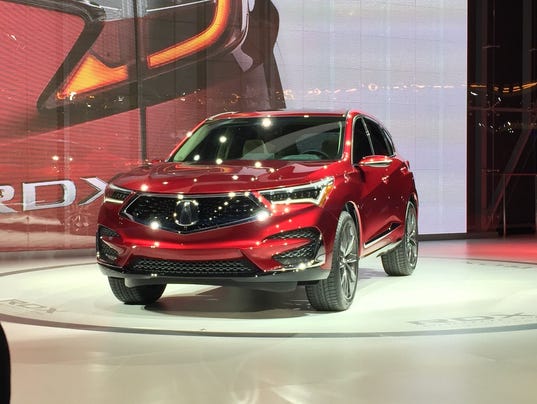
Acura jump-started its brand at the Detroit auto show Monday with an all-new RDX compact SUV. Aimed at luxury’s hottest segment, the RDX brings its trademark value — but wraps it in a more stylish package.
Bowing at the North American International Auto Show — and culminating a two-year design exercise that introduced a supercar, a design concept, and interior concept at auto shows from coast to coast — the RDX for the first time brings together Acura’s new design direction on an all-new platform.
The show car is labeled “RDX Prototype,” but a spokesperson said little will change to the production vehicle, set to launch this spring. The debut trim will be a sport-trimmed A-Spec model, showing Acura’s commitment to returning to its performance roots. All vehicles going forward will feature A-Spec and Type-S badges — the latter a racy high-horsepower model.
“Beginning today, RDX will fully implement Acura design inside and out,” said General Manager John Ikeda, with the RDX in stunning red behind him onstage. “The future for Acura starts here.”
Gone is the controversial Acura chrome beak — also derisively called the bottle opener — which came to symbolize Acura’s detour into passion-less vehicles that lacked visual separation from their Honda parent. Honda has come back from its own identity crisis with the critically acclaimed Civic and Accord — and with the RDX, Acura is poised to do the same.
Though the midsize, three-row MDX crossover and TLX sedan had previously received the “diamond pentagon” grille pioneered by Acura’s Precision Concept at the 2016 Detroit show, the RDX is the first vehicle to apply the concept’s new design language comprehensibly across a new skeleton.
The RDX ditches the Honda-like gills on the front and rear fascias for a more singular look derived from the hybrid NSX superccar. RDX engineer Steve Hansen says the dash-to-axle ratio has been increased, pushing the wheels to the corners of the chassis so that the dramatic fascia (complete with signature Acura “Jewel Eye” LED headlights) flows comfortably into the RDX’s sculpted flanks.
“Dragon’s tail” lights punctuate the Acura’s rear end underneath a tapered “floating” roof design.
Under the hood, a new, 2.0-liter VTEC turbo brings 40 percent more torque and is mated to a quick-shifting 10-speed transmission — a first for the segment. Acura’s advanced SH-AWD, torque-vectoring-all-wheel-drive system promises good traction in Michigan blizzards.
More dramatic than the exterior is the RDX’s class-leading interior space and totally redesigned “floating console” — echoing the Acura Precision Interior that debuted at the Los Angeles Show in 2016. The design is anchored by the distinctive trigger shifter seen in other Acura’s like the NSX supercar.
But most telling is Acura ditching its confusing two-screen infotainment system — replaced by a remote screen controlled from a touch pad. Acura says the pad maps the screen 1:1 — so-called “absolute positioning” — so your finger is always in the same place on the pad as the cursor is on the screen.
For all its changes, the RDX remains a bargain with a suite of standard options that have made it consistently competitive in class — and racked up seven straight years of sales increases.
Likely to start in the mid-$30,000 range, the RDX comes with standard driver-assist and safety systems like collision mitigation, lane-keep assist, and adaptive cruise control.
Also standard — a panoramic sunroof.
The 2019 model is the first RDX to developed in the U.S. by designers in LA and an engineering team in Raymond, Ohio. All RDX models for the North American market will continue to be built in the company’s East Liberty, Ohio, plant.
BMW X1 brother, X2, joins the litter
Posted by hpayne on January 15, 2018

Say hello to the rambunctious X2, the newest new member of BMW’s growing SUV family.
X2, introduced at the Detroit Auto Show Monday, shares the same bones as the German luxury maker’s entry-level X1 — but comes with a sportier, coupe-like wardrobe and new, Pentagon-shaped version of Bimmer’s signature kidney grille.
The X2 joins the X4 (coupe cousin of the X3 SUV) and X6 (X5’s coupe doppelganger) in BMW’s lineup. Another SUV relative due to make production soon is the BMW X7 iPerformance Concept, a hybrid, full-sized SUV that will instantly become the flagship of BMW’s SUV lineup. BMW surpassed Lexus in US SUV sales last year and is chasing Mercedes for top honors.
“2018 is the year of X,” BMW Group CFO Nicholas Peter said.
Also joining the X2 and X7 Concept on stage Monday was the world premiere of the updated, mid-engine i8 hybrid coupe — as well as the BMW M3 CS sedan and BMW M5 performance SUV.
The turbocharged, 4-cylinder X2 joins the X1 as the only Bimmer with a front-wheel-drive-based, transverse engine-mounted architecture. The rest of the performance brand’s sedan, sports car, and SUV lineup features RWD-based drivetrains with longitudinal engines. The X2 chassis is shared with BMW-stablemate Mini Cooper.
The X2, which was first seen as a concept at last year’s show, is outfitted to look more athletic than the X1. Though sharing the X2’s 2.0-liter engine and 8-speed automatic transmission, the X2 wears a narrower greenhouse and is 3.2 inches shorter and 2.8 inches lower than X1. The new grille also helps give the wee ute a wider-looking stance.
The dramatic i8, with its dramatic scissor doors, has been a crowd favorite at the Detroit Show since it was shown as a concept in 2012. Its updates are minor, with a small increase in battery-only range. The i8 is joined by a roadster first seen in Los Angeles last year.
Mercedes reveals sleek hybrid AMG 53 models
Posted by hpayne on January 15, 2018
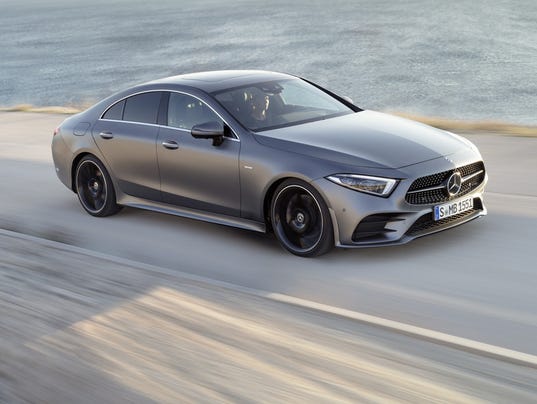
After debuting its boxy, gas-guzzling, off-road G-class SUV to the world Sunday night, Mercedes changed gears at the Detroit auto show Monday to show off its sleeker, electrified, on-road side.
The German automaker unveiled new AMG 53 performance variants of its lovely E-Class models — the CLS, E-Class Coupe, E-Class Cabriolet – which are animated by powerful, mild-hybrid, inline-6 cylinder engines.
The “53” designation is part of the automaker’s dizzying, alphanumeric ladder of increasingly aggressive trims, with 63 being the most potent. Mercedes is reportedly reserving the 63 designation for a V-8-powered GT sedan. Still, the 53-series 3.0-liter turbos are significant as they continue to proliferate a Mercedes lineup that is marching to an electrified future.
Augmented by the same 48-volt lithium ion battery found in the base CLS (introduced at the LA Auto Show), the powertrain is both more fuel-efficient and more powerful. Output in the base CLS is 362 horsepower and 664 foot-pounds-of-torque –numbers that rise to 429 and 384 for the 53-series models. Zero-60 acceleration will fly by in 4.4 seconds.
Mercedes G-class lights up Michigan Theater ruin
Posted by hpayne on January 15, 2018
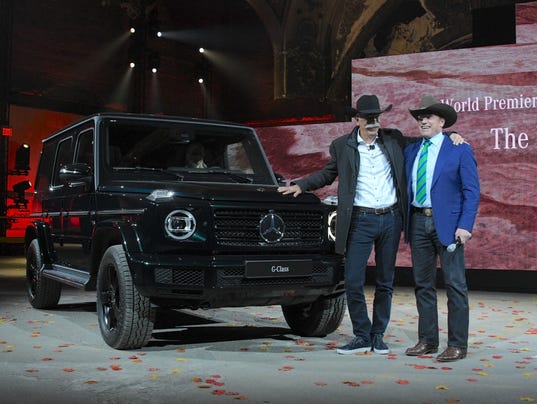
The Mercedes-Benz G-class, the godfather of the brand’s booming SUV lineup, debuted in Detroit ‘s decrepit Michigan Theater as an all-new, 2019 model.
The contrast between the iconic, shiny Mercedes and one of Motown’s most famous “ruin porn” sites – a reminder of the city’s storied cultural past – was intentional. “Unlike the G-class, the theater didn’t last,” said Mercedes Cars chief and Daimler chairman CEO Dieter Zetsche, referencing over three decades of G-class production that have made it one of Daimler’s most enduring models. “(The G-class) has always adapted and evolved.”
Evolution is a relative term. The rugged Benz looks its familiar homely, boxy self with three differentials, body-on-frame chassis, and a gas-guzzling, twin-turbo, 4.0-liter V-8 under the hood.
But like Jeep’s Wrangler, the Mercedes gets 21st-century technical upgrades under the skin, while retaining its stubbled iconic ruggedness.
The truck’s toughness has made it a status symbol among the upper crust even as its owners rarely take it farther off-road than the club polo field. So the $120,000-plus G-class has gained a more on-road-friendly independent front suspension (its rear is still a solid axle), standard LED headlights and quicker 9-speed transmission.
One of its most avid upper-crust celebrity owners is Arnold Schwarzenegger – body-builder, actor, politician – who joined Zetsche on stage to introduce the latest “Gelandewagen” as it’s called in Europe. Indeed, Schwarzenegger and G-class were born in the same town in Austria, Graz, 32 years apart.
“G-wagen and me are the true twins,” said Arnold in reference to the movie “Twins” in which he co-starred with tiny Danny DeVito. He then used his own career spanning multiple professions to praise the Merc ute’s upgrades on and off-road.
“This one can do anything and everything. That’s what I like about this car.”
Hood and doors are made of aluminum as part of a 375-pound diet for better fuel efficiency, but the exterior otherwise changes little with its exposed door-hinges and tailgate-mounted spare tire. A front camera has been added and the classic, upright turn indicators on the front fenders will disappear in a collision in order to avoid pedestrian harm.
Dimensions subtly grow by 2.1 inches in length and 4.8 inches in width to benefit passengers who will enjoy more elbow room with which to ogle the interior’s refinements.
The chrome-studded cockpit gets as an option the same elegant 12.3-inch instrument-and-infotainment display found in the E and C-class sedans. The digital displays are encased under one piece of continuous glass that stretches across the dashboard. Rear seats fold flat for added cargo and both rows get heated seats.
Pampered in sumptuous standard leather seats, drivers get five Dynamic Select modes which – at the touch of a button – change the characteristics of the engine, transmission, suspension, and steering into Comfort, Sport, Eco and Individual. The fifth “G-mode” automatically kicks in when one of the three locking differentials is activated for maximum off-road performance.
G-mode is a reminder that, for all its new creature comforts, the G-class still had to pass muster on Austria’s grueling 4,741-foot Schöckl mountain peak – Europe’s version of Jeep’s punishing Rubicon trail proving grounds.
Ground clearance and front-and-rear departure angles have all been improved to up the truck’s off-road abilities. The throaty V-8’s 416 horses and 450 pound-feet-of-torque are unchanged – though expect an AMG performance version with more than 600 horsepower later in G’s product cycle.
G-class has been coveted by everyone from the Pope to the Shah of Iran to Schwarzenegger (who has converted his to battery-power for a princely sum of money) and has seen sales increase in the U.S. for the last four years. The new box hits the shelves in late 2018.
New Chevy Silverado debuts Saturday for show
Posted by hpayne on January 15, 2018

Are you ready to r-r-r-rumble?!
Roaring onto the pickup gridiron opposite Ford, Chevrolet will take the wraps off an all-new Silverado on Saturday in advance of the Detroit auto show. The 2019 pickup is the first retooled Silverado since Ford shook the 2014 show with its lightweight aluminum-skinned F-150.
Ram is also introducing an all-new 1500 pickup at Cobo, but it’s the Silverado vs. F-150 showdown that’s shaping up to be a dog-fight. These two truck titans don’t send each other Christmas cards.
Chevy mercilessly attacked Ford’s aluminum choice with a series of ads, including a spot in which a dropped toolbox punctured the F-series’ bed. A similarly targeted Silverado bed came away unscathed. But with Washington tightening the fuel-economy noose, speculation was that Silverado would have to adopt an aluminum wardrobe, too.
But teasing the Silverado at its 100th-birthday truck celebration in Dallas last month, Chevy disclosed that a higher-grade alloy is “used in the roll-formed, high-strength-steel bed floor, contributing to a bed that is more functional and lighter weight.” R-r-r-rumble!
Beyond its steel bed, the Chevy is expected to be made of mixed metals. The last-gen Silverado was lighter than its Ford counterpart, though the F-150’s aluminum makeover brought it more in line with the GM model. Materials aren’t the whole story, though, as Ford has outfitted its F-series with an army of engines, including a 3.0-liter Power Stroke diesel – the first time an F-150 has been outfitted with an oil-burner. Chevy promised more engine choices for Silverado in Texas without giving more details.
Ford made its diesel announcement Monday to pre-empt Silverado’s Saturday reveal which pre-empts Ford’s mid-size Ranger pickup unveil on Sunday. We told you they hate each other.
The Ranger is playing catch-up to Chevy and GMC, which have capitalized on a revived small pickup market with their successful Colorado and Canyon models.
Silverado’s Texas tease showed off an all-new LT Trailboss trim, one of eight 2019 Silverado models (the F-series offers seven). The Trailboss trim includes the off-road performance package found on the Z71 trim with a two-inch suspension lift.
The Silverado’s traditional sandwich grille is still huge and still dressed up with a Chevy bow-tie, but the headlights are narrower. The body, too, has changed – eschewing its predecessor’s blocky design for more sculpted doors and rocker panels. Silverado’s answer to Ford’s “dipped” side window for better visibility is to put its side-mirrors on the bodywork, sports car-style.
Around back, the Silverado maintains its vertical taillights and corner step for easy bed access. Ford has taken to stamping trim names in its rear tailgate, and the Silverado follows suit with “Chevrolet” carved into the Trailboss tuckus.
Chevy hopes to make a dent in the F-Series market share with its new pickup. The F-Series won the Pickup Bowl for the 41st year running in 2017 with almost 900,000 units sold – a 9.3 percent increase. GM’s tag-team, the Silverado and GMC’s Sierra (which will soon follow Chevy’s remake), held stable with just over 800,000 sold (585,864 of those Silverados).
2017 Detroit auto show Top 10: Where are they now?
Posted by hpayne on January 11, 2018
This weekend Detroit kicks off the 2018 auto show season with a bumper crop of rookie talent. We’ll be treated to new pickups, new EVs, new concepts — all vying for Detroit News Ten Best in Show.
But what of last year’s frosh wonders?
Did they live up to their promise? Did the Kia Stinger drive as good as it looked? Did the Honda Odyssey minivan dethrone King Chrysler Pacifica? Would Camry get trampled in America’s stampede to SUVs?
Herewith a look at the 2017 Ten Best in Show and how they are doing.
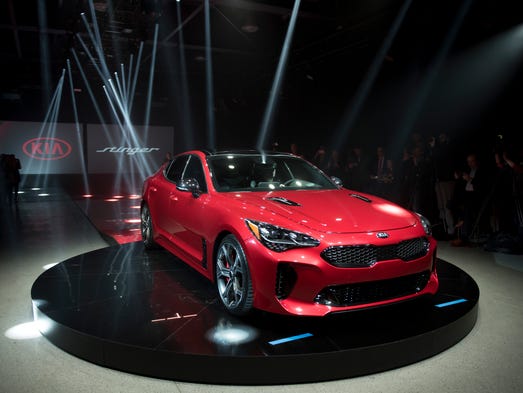
Kia Stinger
A performance sedan developed on the famous Nurburgring race track. From Kia. You’re kidding, right? Nope. The Korean econobox-maker hired Audi designer Peter Schreyer and BMW M-division engineer Albert Biermann to redefine the brand with an all-wheel drive, turbo V-6, Audi A7 lookalike priced like a Dodge Charger. The sleek Stinger wowed media testers last fall at its California proving grounds. Kia offered us a Porsche Panamera, Audi A7 and A5 to test it against. That’s confidence. The sportback held its own and then some. It’s one of the favorites for 2018 North American Car of the Year.
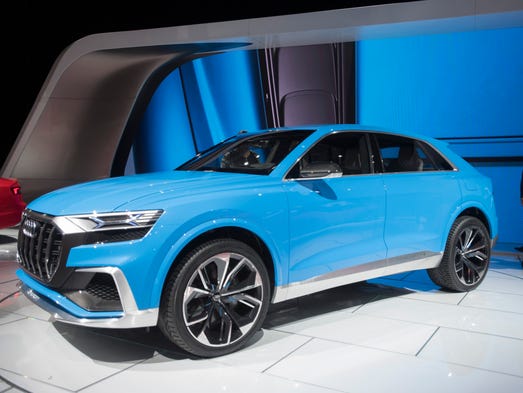
Audi Q8
The bold Q8 SUV is expected in production form later this year, but the concept gave us plenty to digest. The Q8 is Q7’s doppelganger with a coupe-like roof (more sex appeal, less headroom) aimed at similar ute coupes from BMW and Mercedes-Benz. It’s also the template for Audi’s new design direction as seen on the fresh A8 sedan at November’s LA Auto Show. Echoing the Q8, the A8 has more high-definition interior screens than a sports bar — and a continuous, LED taillight across the trunk.
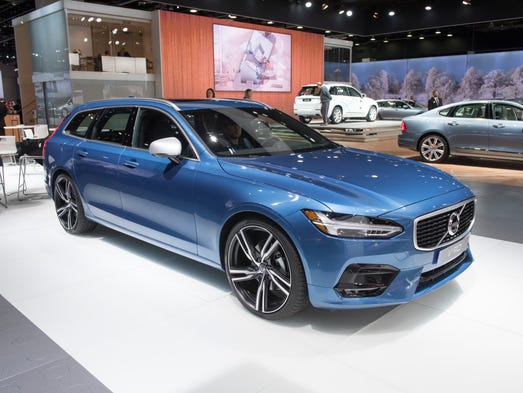
Volvo V90
The wagon is dead, long live the wagon. A big reason for America’s SUV preference is the security that an elevated seating position gives drivers. So Volvo markets the five-door version of its S90 sedan by jacking it up 2.3 inches and giving it a rugged ute-name: V90 Cross Country. But for those who value aesthetics, the V90 is available by dealer special order in wagon form. It sold an exclusive 176 units in 2017 (less than a tenth of the Cross Country), but with its long wheelbase, flowing lines and rich Scandinavian interior, it is a rolling sculpture.
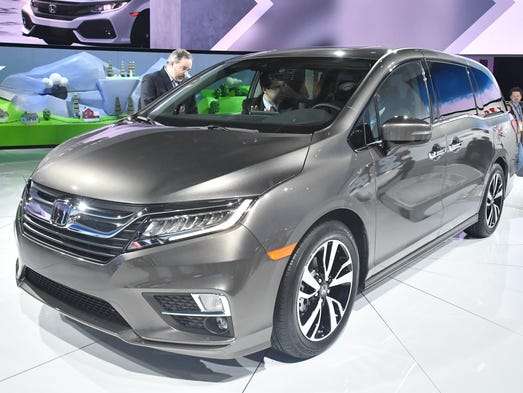
Honda Odyssey
Odyssey’s quirky exterior can’t compete with the Pacifica head-turner, but young families may find the Honda more appealing. The best-selling Fiat Chrysler minivans (Pacifica and sibling Dodge Caravan) wow with removable Stow’n’Go second- and third-row seats. Odyssey makes its pitch with a “Magic Slide” middle seat that moves tantrum-prone toddlers closer to the driver for needed attention — and a third-row microphone system for better communication.
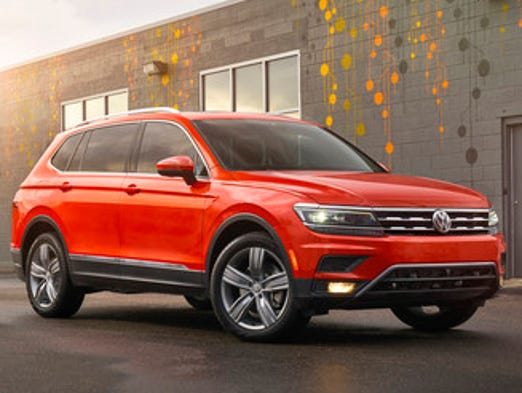
Volkswagen Tiguan
After years of alienating Yanks with too-small utes and too-much Dieselgate, VW is back to win our hearts with the Americanized Tiggy. The compact SUV makes its case with a supersized interior, handsome exterior and tech galore. VW motorheads looking for a nimble SUV should look elsewhere — this V-dub puts on the pounds with a third-row seat option and storage space aplenty. That’s more utility than a comparable Audi Q5 for 15 grand less.
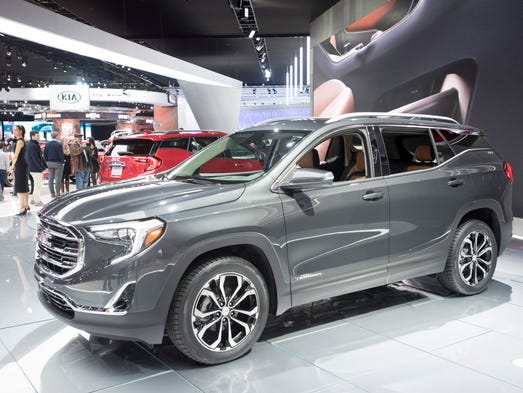
GMC Terrain
GMC joins VW and Mazda with an upscale, compact ute — and accompanying $1,500 price jump. Shedding its blocky truck lines for a more stylish wardrobe, the Terrain’ssculpted grille and boomerang taillights telegraph a small SUV with big ambitions. Terrain is loaded with innovation from its electronic “trigger” shifter to its Japanese-inspired “floating roof” to a terrific, nine-speed tranny. What’s most surprising is GMC’s 350-pound diet and toned chassis make it one of the best utes to flog on a twisty road.
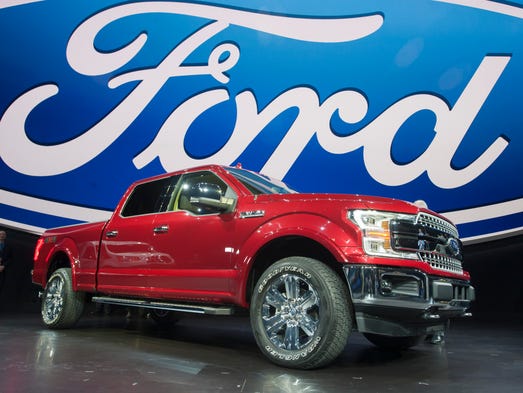
Ford F-150
America’s best-seller isn’t resting on its laurels. Just two years after its aluminum-skin transformation, the high-tech F-series keeps raising the bar with a redesigned “double I-beam” grille, Wi-Fi hot-spot (up to 10 devices for your big tailgate party), 10-speed transmission, semi-autonomous trailer backup-assist, and more engine choices. Like the first-ever F-150 diesel. Nearly 900,000 F-series sold last year.
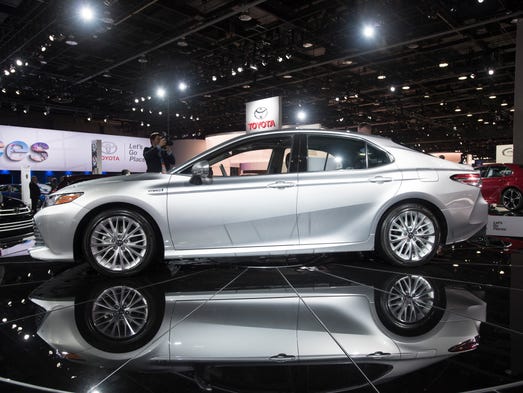
Toyota Camry
Chairman Akio Toyoda’s made good on his promise of a “really sexy” Camry. The 2018 model is Toyota’s best-looking, best-handling, most ergonomically satisfying sedan yet. Trouble is, Camry must overcome two formidable competitors — the all-new Honda Accord, which is even better; and the Toyota RAV4, which dethroned King Camry as the best-selling non-pickup in America for the first time in 15 years.
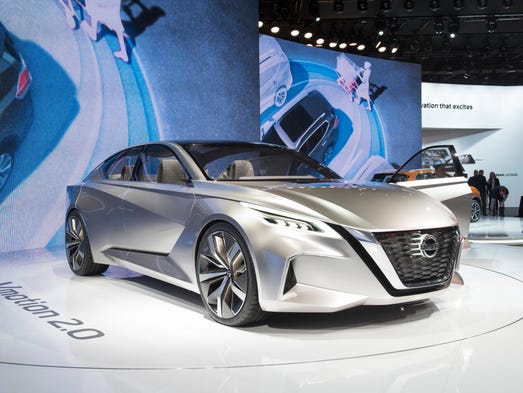
Nissan Vmotion Concept
The Rogue SUV flew off dealer lots in 2017 as Nissan fed our thirst for all things ute with the Rogue Sport, and … what were we talking about? Oh, yes, a sedan concept. The V-motion. Its futuristic cabinet doors and semi-autonomous features aside, Vmotion previewed the lines of camouflaged 2019 Altimas seen in spy shots.
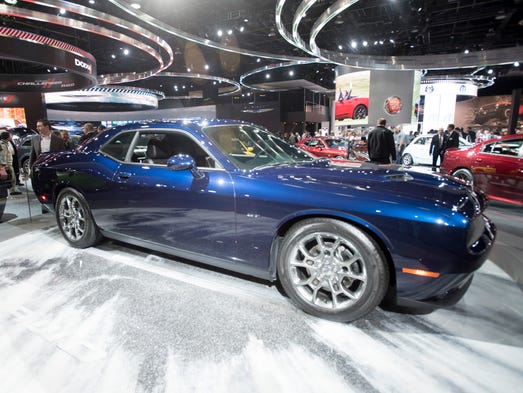
Dodge Challenger GT
The what? Just after the GT debuted in Detroit, the breathless countdown began to the New York Auto Show’s April premiere of the 840-horsepower Dodge Demon. Demon didn’t disappoint with its unmatched quarter-mile numbers and unholy, supercharged shriek. But for Dodge shoppers looking for a practical, all-season, all-wheel drive Challenger, the GT is it. Just wish it came in a V-8.
Amid tech quake, Detroit auto show stays on its feet
Posted by hpayne on January 11, 2018
The digital revolution is changing the Detroit auto show, too.
Once the global auto industry’s unchallenged blockbuster for the new calendar year, the Detroit show faces challenges on multiple fronts: The auto-relevant CES technology show happening now in Las Vegas is siphoning away news makers. Social media is muddling messaging. And restless manufacturers are looking for more exclusive venues.
Even Martin Luther King Day isn’t helping because the timing of this year’s show calendar is turning that traditionally heavy public traffic day into a press day. But reports of the death of the auto show are greatly exaggerated. Count on the 2018 Detroit-a-palooza to make plenty of noise again.
In 1989, organizers of the event rebranded it as the North American International Auto Show and broadened its global appeal to become a premier stop for foreign automakers and their domestic rivals. At the turn of the 21st century, the show attracted some 5,000 members of the international news media to witness the introduction of what frequently included more than two dozen new production vehicles and nearly three dozen concept cars.
This year, despite healthy U.S. sales and media attendance, new production reveals will shrink to around 20 and a handful of concepts. The reasons are many, including an accelerating product cadence that has distributed show reveals to other events in the calendar year, like the Los Angeles and New York shows.
Some automakers like Jaguar are avoiding the Detroit show altogether. Sure, the elegant Brit-brand debuted its latest, compact E-Pace SUV in Detroit last year — it just decided to show it alone. In Novi. In September.
The event was part of an international premiere of the Jaguar cub that included a 360-degree barrel-roll in London. Using the internet and social media, the E-Pace owned the news cycle with its singular introduction, away from the noise of an auto show.
Jaguar’s events mirror a trend that includes global reveals like Ford Mustang’s six-city intro in 2013 and the Chevy Corvette introduction in Dubai in November. Says John McElroy, host of Autoline and a long-time industry watcher: “It’s all about presenting your own message and getting as much media as possible.”
But the biggest competitor to the auto show is CES.
The sprawling, January exhibition in Las Vegas has been an industry gathering place for all things electronic since 1978. The two spectacles — one a trade show, the other a public auto show — shared little other than female product-models until this decade.
But as digitally savvy consumers demand more of their cars than legroom and horsepower, manufacturers have introduced more electronics. And they made more of those introductions at CES.
Ford Motor Co. launched its MyTouch connectivity suite at CES in 2010. And this year automakers are introducing not just new car features — like Mercedes-Benz’s MBUX infotainment system and Ram’s Sirius satellite-radio feature — but all-new cars. Hyundai debuted its hydrogen-powered NEXO SUV, and Kia unveiled its electric concept, the Niro EV.
CES also poaches important auto executive speeches once exclusive to the Detroit show. During CEO Alan Mulally’s tenure at Ford, the Blue Oval used CES to tout its technology cred. General Motors Co. CEO Mary Barra keynoted the 2016 CES on “Redefining Personal Mobility.” And this year new Ford CEO Jim Hackett gave a much-anticipated speech.
“CES is the 800-pound gorilla for Detroit,” says McElroy. “The industry has changed so much in recent years. Auto shows are still part of the marketing, but with the Internet, carmakers can track their ROI (return on investment) digitally so everything has gotten much more granular.”
In short the Detroit show is in a battle with CES for media coverage. Once divided into tidy camps of car and technology geeks, the two shows now share media outlets. It’s a unique situation for Detroit compared to other international auto shows like those in Frankfurt and Tokyo.
But the North American International Auto Show hasn’t stood still.
“I like competition,” says Executive Director Rod Alberts, who has run the show for 24 years. “But I look at it as a competition with ourselves to grow and target more audiences. CES is a great show, but by definition they have to be a blend because electronics cover so many markets.”
“We’re a purist show,” he continues. “We’re concentrated on autos and all that they do.”
He dismisses the idea that AutoMobili-D — an addition featuring the latest in connected and autonomous car technology which debuted last year — was a response to CES.
“It would have happened anyway,” he says, tracing the Detroit technology conference’s roots to 2009 when NAIAS offered public rides in new electric vehicles. “AutoMobili-D goes back to our creating a show energy and getting into technologies and other aspects that are changing the industry.”
He even shrugs at any concerns about Martin Luther King Day falling in the middle of press days this year because CES scheduling pushed NAIAS back to the third Monday of the month. Historically, the work holiday has boosted show crowds.
“MLK Day will be back in public days again in 2019,” says Alberts.
IHS Senior Auto Analyst Stephanie Brinley says the challenges to the Detroit Show are obvious, but she says the competition brings out its enduring strengths.
“CES and Detroit are fundamentally different shows,” says Brinley, who will attend both this year. “Because CES is a trade show, it’s a great way for manufacturers and suppliers to show off what they have in store. But if you have a vehicle that’s coming to market in the next six months, then an auto show is where you need to be.”
Brinley says that while the internet has allowed more flexibility in introducing cars, the idea of independent auto reveals has been overblown. “Off-site programs are really expensive to do. Shows are still very relevant to media — and they matter to consumers who want to come in and kick the tires.”
Autoline’s McElroy says CES has executed “a neat chess move” in garnering a week of auto attention before Detroit, but believes Alberts and his crew are resilient.
“This is going to be a big show,” McElroy says. “You’re going to see mega-launches of everything from pickup trucks to a Lamborghini SUV.”
Henry Payne is auto critic for The Detroit News. Find him at hpayne@detroitnews.com or Twitter @HenryEPayne. Catch “Car Radio with Henry Payne” from noon-1 p.m. Saturdays on 910 AM Superstation.
Detroit auto show
The North American International Show is coming, with media days Jan. 14-16 and public days Jan. 20-28. Here are the events open to the public.
The Gallery of luxury cars, 6:30-11 p.m. Saturday. Tickets: $250.
Charity Preview, 6-9 p.m. Jan. 19. Tickets: $400.
Public show, 9 a.m. to 10 p.m. Jan. 20-27; 9 a.m. to 7 p.m. Jan. 28. Tickets: $14; $7 ages 7-12 and 65+.
First time ever: An SUV is the best-selling non-pickup
Posted by hpayne on January 9, 2018

The SUV is officially king.
Three full-size pickups were still the best-selling vehicles in the United States last year. But the fourth-place spot was claimed for the first time by an SUV, not a sedan.
In 2017 the Toyota RAV4 sport ute outsold the Toyota Camry sedan, reigning car-sales champ for the last 15 years.
The compact, five-door RAV4 crossover sold 407,594 units last year — a gain of 15.7 percent — eclipsing Camry by 20,513 in sales. The midsize sedan saw an annual sales decline of 0.4 percent. Camry wasn’t even runner-up as another SUV, the Nissan Rogue, gained 22.3 percent to 403,465 units sold.
The best-selling vehicle in America for the 36th year in a row is Ford’s F-Series pickup, followed by two other full-size pickups, the Chevy Silverado and Ram 1500.
“With the strength of the SUV market, it’s no surprise that RAV4 was not only our best-selling model, but the best-selling non-pickup truck in the industry,” said Jack Hollis, group vice president and general manager, Toyota Division.
The RAV4’s accomplishment crowns the meteoric rise of SUVs from their humble beginnings as truck-based light trucks in the early 1990s to the dominant form of transportation today. Less regulated for fuel efficiency than cars following the introduction of federal gas-mileage laws in the mid-1970s, SUVs gradually gained favor as automakers eliminated gas-gulping station wagons while customers still craved five-door utility.
Midsize sedans have long ruled the sales charts going back to the mid-1960s when the Chevy Impala sold over 1 million copies. Chevy and Ford traded the crown until 1991 when Japanese-maker Honda Accord briefly broke the duopoly.
The Camry asserted itself in 1997 over the Ford Taurus, and has held the pole position ever since (save 2001 — Accord again).
The RAV4 was first introduced in 1994 following the success of SUV trailblazers like the unibody Jeep Cherokee and truck-based Ford Explorer. By 2007, the so-called light truck segment has passed cars in popularity with 53 percent of the market. But the Great Recession briefly turned the tables as cash-strapped customers turned back to cheaper, sippier sedans.
Since 2010, however, SUVs have returned to the fore as nearly every manufacturer — even performance makers like Porsche and Maserati — has rushed to build higher-riding, five-door SUVs with unibody construction that are both more car-like in handling and in fuel efficient. Light truck sales in 2017 nearly crested 60 percent of the market while sedan sales plummeted.
Honda also saw its once perennial best-seller, the Accord sedan, eclipsed by its CR-V ute for the second year in a row. Chevy and Ford small crossovers healthily outsold their passenger cars stablemates, though the RAV4, Rogue, and CR-V have been able to translate their sales leadership in midsize sedans to compact SUVs.
The decline of sedan sales has brought a reassessment of the market from Detroit automakers. Japanese manufacturers are still bullish on cars, however, with both Toyota and Honda introducing an all-new Camry and Accord, respectively, for 2018.
“Our cars are doing very well,” says Honda America PR chief James Jenkins. “Civic continues to dominate the compact segment and we are thrilled with the launch of the new Accord. We are fully committed to passenger cars and will continue to push that segment moving forward.”
VW, Hyundai partner with self-drive start-up
Posted by hpayne on January 9, 2018

Aurora Innovation, the self-driving start-up owned by ex-Google chief engineer Chris Urmson, is partnering with Volkswagen AG and Hyundai Motor Co. to develop autonomous vehicles.
Aurora will help Hyundai bring self-driving vehicles to the market by 2021, while VW and the tech company based in Silicon Valley and Pittsburgh will work together to develop a driverless ride-sharing vehicle fleet in cities.
Both automakers are working with Aurora to integrate the developer’s self-driving technology into their vehicle platforms.
The VW-Aurora partnership marks the comeback of two major players — Germany’s largest carmaker and ex-Google chief engineer Chris Urmson — in the auto sphere. VW has seen its reputation damaged by the Dieselgate cheating scandal. Its foray into the autonomous space is not only important as it competes against other global giants like General Motors Co. and Toyota Motor Co. But it also is an opportunity for the company to re-assert its damaged engineering prowess and showcase its new direction away from diesel engines and toward battery-powered vehicles.
Other automakers looking to speed up the development of autonomous technology have been making similar partnerships and acquisitions in recent years. General Motors Co. acquired Cruise Automation in 2016 for $581 million and Ford Motor Co. forged a $1 billion partnership with Argo AI at the beginning of last year.
The acquisition of Cruise vaulted GM as one of the leaders of the self-driving car pack in 2017, with the Detroit automaker promising a self-driving fleet in a yet-to-be-named city by next year.
VW and Hyundai appear to be hoping for the same boost from Aurora. Over the past six months, the German automaker says it has been working with experts from Aurora to integrate the developer’s self-driving system — including sensors, hardware and software — into VW’s vehicle platforms.
Urmson said his company will help VW bring self-driving vehicles to the mass market. And while Hyundai is focusing on bringing self-driving cars to market in the next three years, it said Thursday it would work with Aurora to commercialize self-drivinge vehicles worldwide in the longterm.
Urmson was the team leader for Google’s ground-breaking egg-shaped autonomous car in 2014. But after Google restructured its self-driving program under CEO John Krafcik, the highly regarded Urmson left the tech giant and started his own Palo Alto-based company, Aurora. The latest deals mark Urmson’s re-emergence as a player in the autonomous race alongside other Silicon Valley notables like Google, Apple, Intel and Nvidia.
Payne: Buick Regal Sportback is a utility with sex appeal
Posted by hpayne on January 4, 2018
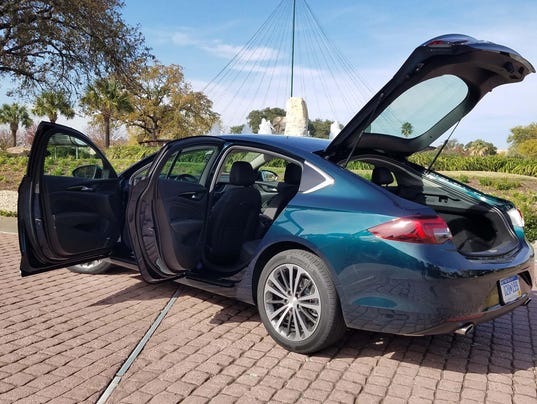
Regular readers of this column know that my favorite cars are affordable, compact hot hatches like VW GTIs, Ford Fiesta STs, even wild-winged Honda Civic Type Rs. Small though their sales numbers may be, they boast supersized bandwidth: low center-of-gravity and turbocharged engines for performance — and five-door, hatchback utility for carrying stuff.
Right on these hatches’ rear bumpers is a new breed of five-door beauties that have caught my wandering eye. Call them sportbacks.
Budget-friendly kin of high-end, five-door thoroughbreds like the Tesla Model S and Audi A7, the appeal of the new Buick Regal Sportback and Kia Stinger sportback should be no surprise — they mix the hot hatch’s appealing recipe, but in a bigger pan.
The Stinger was a 2017 Detroit show-stopper and is a finalist for 2018 North American Car of the Year. Its rear-wheel drive power, sleek shape and interior volume not only recast the Korean maker as a sports brand, it brings Fifth Avenue design to Main Street showroom windows.
Running in its luxurious footsteps is the 2018 Buick Regal Sportback, which transforms Buick’s vanilla, mid-size sedan into a graceful swan. And it’s even more affordable (stop the presses!) than the Kia.
Heck, if Audi had a nickel for every time someone benchmarked to its stunning A7, they would be able to pay back all of parent VW’s Dieselgate fines in a fortnight. Since its birth in 2009, the A7 has been the sedan-beauty standard (well, the Aston Martin Rapide is more stunning, but it also costs the same as your house), eclipsing even the venerable Porsche Panamera sportback.
As the SUV sales revolution has threatened to make sedans as irrelevant as snow tires in St. Croix, sedan designers have had to recast the traditional, three-box, four-door concept. Their answer was as simple as hiring cheerleaders to rev up sleepy Detroit Lions fans: sex appeal.
The mid-size, front-wheel drive Chevy Malibu and Honda Accord were given sleek, Audi-like four-door coupe designs. But the premium-segment all-wheel-drive Regal goes further.
Designed and built in Germany as a rebadged Opel Insignia, the Regal Sportback’s ski-slope roof opens with hydraulic struts like a hatchback (thus the term sportback) to mimic the A7 and Model S in beauty, cargo utility and all-wheel drive dexterity. Cost of entry? Just $32,540.
Add three inches of wheelbase and subtract 200 pounds of weight from the previous generation and you have a bigger, nimbler, 250-horse looker with a European accent that brings real personality to the mid-size dance floor.
Buick needs every bit of that charm because the $30,000 mid-size disco is ferociously competitive — and not just from Regal’s usual Acura, Lincoln and Infiniti rivals. Indeed, those competitors, which Regal handles with better looks and value, are the least of its worries.
Take the Accord stallion that’s neck-and-neck with the Stinger for Car of the Year. Like the lovely Mazda 6 — which will arrive later this year with a turbo-4 spitting a serious 310 pound-feet of torque — Honda’s a mainstream brand with premium abilities.
Loaded to $36,700 — $2,000 shy of my Regal Essence trim — and the Honda matches the Buick feature for feature: 252-horsepower turbo-4, smartphone app compatibility, seat memory, adaptive cruise-control, blind-spot assist. And then it trumps the Buick with a nicer interior (wood trim, silver-bezeled cupholders), 10-speed transmission, packed steering-wheel controls and a heads-up display. Why GM starves the Regal Sportback of the latter — which the General invented! — is a mystery.
Row the two cars through the twisties and the Honda’s turbo-4 is more responsive, its chassis tighter, its 10-speed tranny a match for the Buick’s eight-speed unit.
But the Regal brings moves of its own.
While the Accord’s huge trunk could hide an elephant, the Buick’s hatched opening is more versatile. Pop it open, flatten the rear seats, and its 60 cubic feet of space will easily swallow a bicycle and three pieces of luggage.
And then there’s that all-wheel drive thing. The Accord doesn’t offer it — though I should note, the Buick can be had with front-wheel drive like the Accord for just $25,000, as Buick tries to do some down-market poaching in Accord value territory. Slogging through Michigan this time of year, all-wheel drive is a priority in the Payne family. Mrs. Payne won’t leave home without it, which has made her a Subaru groupie.
Regal’s four paws ain’t your average zoo animal. Armed with twin-clutch packs in her rear, the all-wheel drive all-the-time Buick can send torque to any wheel it needs to, meaning you can conquer slippy, icy conditions that would bedevil a Subaru — or even on some, more expensive Audi A5s — with more traditional open differentials.
I confidently plowed through snow before Christmas in an Audi SQ5 SUV. But I feel more confident and connected to the road in a lower-center of gravity Regal. That’s just physics.
The Buick’s all-wheel drive system also helps the front-drive biased car rotate better through corners, but the Buick is not a car you’ll be tempted to flog like the eager Accord or Stinger. You’ll drive with confidence and style. With its attractive winged grille and LED-lidded lights, it’s country club-pretty compared to the ready-to-rock-the-night-club Accord.
That said, the Regal’s design could be less, well, stuffy German. Buick’s Enclave does some wonderful things with chrome across its tuckus that are absent in the Regal — and there’s that bland (if ergonomically commendable) dash.
Perhaps the Regal — on sale now — is saving some panache for its pricier brothers: the 310-horse, V-6-powered, performance GS and the stunning Tour X wagon. With these two vehicles — which I will test later this year — the Regals cover a lot of customer real estate from $25,000 all the way to the mid-$40,000s. In a smaller sedan marketplace, that’s clever.
That’s a lot of personality for a brand that once had the presence of a wallflower. And it’s well-timed in a $30,000 aisle stuffed with neat toys. Those toys include entry-level Germans like the Mercedes CLA, Audi A3 and BMW 2-series. But despite their brand cachet, these cars simply can’t compete with the larger, feature-rich Buick and Honda. That’s how much the gap has shrunk between luxury and more mainstream brands.
Brand matters, but the Buick and Accord offer comparable value to sport utilities with more sex appeal. And should you have the need for speed, you can always spend a few extra coins on the Kia Stinger. It’ll stow your bike while you hunt down Panameras.
Here’s a New Year’s resolution idea: More sportbacks, please.
Henry Payne is auto critic for The Detroit News. Find him at hpayne@detroitnews.com or Twitter @HenryEPayne. Catch “Car Radio with Henry Payne” from noon-1 p.m. Saturdays on 910 AM Superstation.
2018 Buick Regal Sportback
|
VEHICLE TYPE |
FRONT-ENGINE, FRONT OR ALL-WHEEL DRIVE, FIVE-PASSENGER SEDAN |
|
Powerplant |
2.0-liter, turbocharged inline-4 cylinder; |
|
Transmission |
9-speed automatic (front-wheel-drive); 8-speed automatic (AWD) |
|
Weight |
3,417 pounds (FWD base) |
|
Price |
$25,915 base FWD; $32,540 AWD (38,715 AWD Essence trim as tested) |
|
Power |
250 horsepower, 295 pound-feet torque (AWD) |
|
Performance |
0-60 mph, 6.2 seconds (AWD, Car and Driver) |
|
Fuel economy |
EPA mpg est. 22 city/32 hwy/26 mpg combined(FWD); EPA mpg est. 21 city/29 hwy/24 mpg combined(AWD) |
Report card
|
HIGHS |
SPORTBACK STYLE, HATCHBACK UTILITY; GET THE ALL-WHEEL DRIVE TRIM |
|
Lows |
Interior lacks character; is it a better value than the upscale Accord? |
Overall:★★★
Top 10 auto innovations of 2017
Posted by hpayne on January 2, 2018

Americans love their automobiles. We eat in them, vacation in them, compete in them. Part tool, part personal avatar, autos are on the cutting edge of everything from engineering to fashion.
This year the electronic revolution continued to transform the automotive industry with e-gadgets that aid autonomous driving, in-car entertainment and muscle.
Herewith, and in no particular order, are the Top 10 automotive innovations of 2017 …
A lock on the past: Carmakers have largely moved away from those old-fashioned door-lock posts on window sills — you remember, the pegs you pulled straight up on to unlock car doors? Electronic rocker switches on door panels — or a double-pump of the door handle — do the work now. But new General Motors models like the Chevy Equinox and GMC Terrain defy the trend on their rear doors. Why the rears, you ask? Because focus-group parents wanted to look back and have visual confirmation that their rugrats’ doors were locked. And if the kiddies went to sleep with their arm on the door? No problem — they’d just push down the post.
Open Sesame: For years, auto suppliers have teased doors that automatically open to passengers. Tesla, as it has in many new technologies, decided to give it a try on its Model X SUV. With the X already offering falcon-wing rear doors, Tesla CEO Elon Musk thought the fronts needed pizazz, too. Walk past the door with the key in your pocket and the door swings open. Touch the brake upon entry and it shuts behind you.
Kick-open sliding doors: Before Tesla’s automatic driver door, there was Ford’s kick-open rear hatch — a feature copied by other automakers to help drivers with arms full of groceries. Chrysler offers the feature on both sliding doors (and hatch, natch) on its Pacifica minivan. Wave your foot under the door — and voila! A great feature for parents with arms full of child seats.
Super Cruise: Self-driving is the industry buzz, but so-called Level-4 fully autonomous cars are years away. Cadillac has made a practical Level-2 system for its CT6 sedan— one that requires driver attention, but allows for less-stressful driving over long distances. Restricted to limited-access divided highways, Cadillac’s GPS/laser-mapped system allows for miles of relaxed, hands-free driving (just like you’re sitting at home) with steering wheel-mounted alerts for when the CT6 needs you to take over.
Magic Slide: Chrysler may have invented Stow ’N Go second-row seating in the minivan segment, but Honda is no slouch in the interior innovation department, either. Listening to customers, they determined that Odyssey minivan drivers wanted better access to their child seat-bound, second-row rugrats. The result? A middle seat that moves on rails to get closer to the driver. The feature also allows better entry for third-row passengers.
Fastback hatches: Premium customers love their Audi A7, Porsche Panamera and Tesla Model S five-door coupes with sporty “fastback” hatchbacks. Now, thanks to the $40,000 Kia Stinger and $32,000 Buick Regal, more folks can enjoy the benefits of gorgeous design and hatchback utility. In the age of the all-wheel drive SUV, these all-wheel drive fastbacks may help sedans stay relevant.
Digital displays: Configurable digital displays help put more information in front of the driver, making for safer driving, especially when they’re heads-up displays. They can be found in everything from the $70,000 Audi Q7 to a $35,000 Honda Accord. An innovator in digital displays, Tesla has taken a chance by foregoing the instrument cluster altogether in its new Model 3 (all info is in the console tablet). Um, maybe they’ll at least consider a heads-up display?
48 volts: All those new auto electronics require more juice. Say hello to the versatile 48-volt battery. Volvos and Bentleys get them, so do Jeep Wranglers. While the 12-volt battery handles the basic ignition and lighting functions, 48-volt lithium-ion packs handle the electronic systems — e-steering, e-brakes, e-safety assist. Easily stored (the Wrangler’s battery is under the rear seat), the 48 also provides fuel-efficiency and power-assistance. With mpg requirements rising, the new battery can bring a 20 percent increase in gas savings.
Twin-clutch packs: As demand for all-wheel drive systems grows with the sport-utility revolution and performance cars, high-tech hardware is going mainstream. Rear twin-clutch packs were once exclusive to track rats like the all-wheel drive Ford Focus RS that needed better rotation through corners. But now Buick is offering the technology in its Enclave and Envision SUVs, and its Lacrosse and Regal sedans — the better to apportion torque for grip on slippery Michigan winter roads.
The pull blind: Another thoughtful interior solution from the folks who brought you Magic Slide seats, Honda Civic hatchbacks (Sport and snarling Type-R) come with a cargo cover that pulls from side-to-side across the cargo area — negating the need to remove a bulky front-to-rear cover as in other hatchbacks. The roll-away side-to-side blind means no more awkward, storage of the blind when the back seats are folded flat — or leaving it at home where it’s useless when you suddenly need to hide those Christmas gifts.
Website Copyright © 2009 - 2021 Henry Payne