- Search Cartoons
- Comic Archive
-
Payne
Store



 Henry Payne RSS

Articles Blog
Jeep Wrangler: Detroit News Vehicle of the Year
Posted by hpayne on December 28, 2017
This year was dominated by headlines about the driverless future. Chevy rolled out its autonomous Bolt fleet in San Francisco, I drove a Caddy hands-free across Texas, then hailed a headless Uber in downtown Pittsburgh.
Yet, the number of driver-focused cars multiplied like rabbits. Make that jackrabbits.
Looking over the 40-plus entries for 2017 Detroit News Vehicle of the Year, there wasn’t a dog in the lot. Even five-door, family-friendly SUVs often advertised their athleticism first, utility second. Credit in part the same electronics that are pushing autonomy with making cars more engaging to drive.
Vehicles today are routinely equipped with electronic-controlled steering, shocks, all-wheel drive and transmissions that can be altered for performance on-road or off with the push of a button. Quick-shifting 10-speed Honda Accords, twin electric-motor torque-vectoring Acura MDX hybrids and spool-valve damped Chevy Colorado pickupsfeature hi-tech goodies you’d expect to find on supercars.
SUVs continued their march to world domination with everything from the quick Alfa Stelvio to quirkbox Kia Soul turbo to rolling condo Lincoln Navigator. But the endangered sedan species isn’t going quietly. Kia debuted a saucy Stinger sedan hatchback that conjures Audi A7 performance numbers for half the price. Another $10,000 below the Stinger is another, all-wheel drive five-door stunner — the Buick Regal Sportback.
From the get-go this year the headliners were performance models. Self-drive? No, no — let me drive. Dodge’s Demon eclipsed “Hamilton” as the most talked-about show in New York City when it bowed in the Big Apple with a mike-dropping, 9.65-second quarter mile run. There was the Lexus LC 500 and Porsche 911 GTS and Ford Mustang GT and Tesla Model S P100D. Pardon me while I pick my jaw off the ground.
Our three finalists were old nameplates with new twists. The envelope, please …
First runner-up: Ford GT
No, you can’t have one. Priced north of $450,000 with all 750 copies spoken for, the GT is a rare beast. But it is a street-legal manifestation of the industry’s state of the art.
It is the most beautiful car made today. From its heritage GT40 beak to its scissor doors to its inspired twin-flying buttresses, it is Ford’s Mona Lisa. Lap any auto show floor in the world and it will be the image that is burned into your brain.
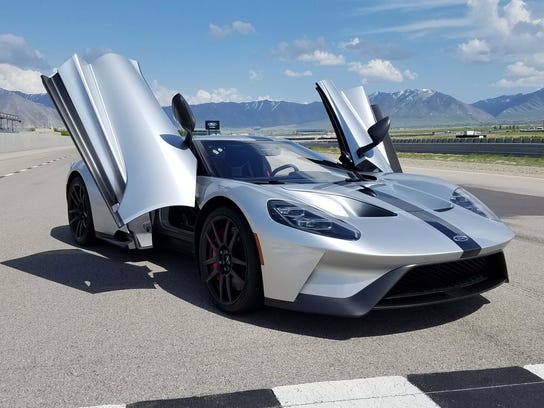
Its performance is even more breathtaking. Flogging its 647 horses around Salt Lake City’s Utah Motorsports race track just three inches off the ground, I was at one with a piece of automotive history. The GT’s carbon-fiber chassis was purpose-built to do one thing: win LeMans again 50 years after its grandfather GT40 drubbed rival Ferrari.
The keel-wing design is right out of modern racing, with its long, stiff spine optimized to force air through huge channels under the skin and suck the car to the ground. The twin-turbo V-6 behind your ear lacks the raw ferocity of the GT40’s V-8 but eclipses its power and fuel efficiency. Sitting in the sparse interior, everything I needed was on the Formula One-style steering wheel, even the windshield-wiper widget. This is a sci-fi Jedi machine from the future — a future where driving is still prized.
Runner-up: Honda Civics
I was sure Honda’s finalist would be the 2018 Accord. The brand’s pole-star mid-size sedan is an astonishing vehicle for a mainstream sedan. With its sweeping design cues, 10-speed transmission, Audi-like interior and laundry list of features, it’s a premium machine hiding behind a Honda mask.
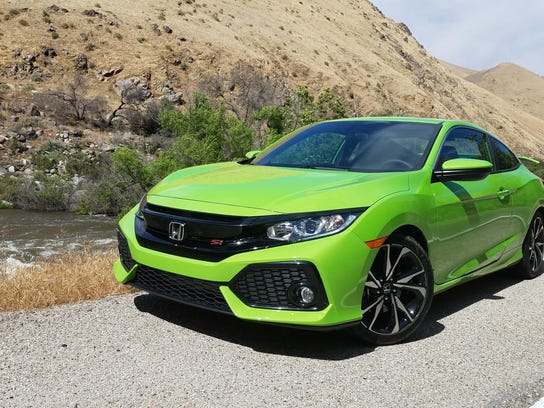
But I’m smitten with the Civic triplets.
This entertaining bag of bobcats is proof you don’t have to have a bag of loot to have fun in a car. Base on Civic’s new-generation, low, stiff chassis, the hatch Sport gets you in the performance door at just $22,175. With a manual transmission, revvy turbo-4 and hatchback utility, it beats any computer game — and you get to play outside.
Step up to the Si coupe or sedan (what, no hatch?) for just another couple grand and you get 25 more ponies, limited-slip differential and a lime-green paint option that will burn your eyeballs. It’s the first Si I’ve coveted since the free-revving 2006 Si that still sits in my garage.
But the icing on the triple-layer cake is the 306-horsepower, $34,000 Type-R which came to our shores for the first time thanks to Honda’s globally-produced platform. Built in England (its siblings are birthed in Indiana), sprayed white with black mascara, and festooned with wings, it looks like Daryl Hannah’s replicant somersaulting towards you in “Blade Runner.” Stunning and lethal.
These bargain toys aren’t for everyone with their polarizing wardrobes. But with stick shifts available, they are some of the most affordable fun on four wheels.
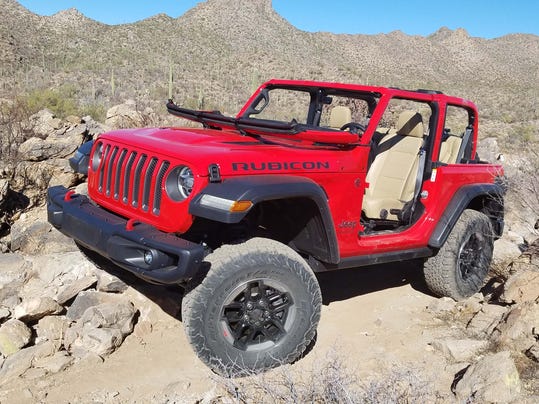
Winner: Jeep Wrangler
The Wrangler perfectly encapsulates 2017 in one vehicle.
Once the rough, Army-brat descendent of the World War II Willys workhorse, the Wrangler has matured into the icon of the hottest SUV brand on the planet. When Marchionne & Co. took over Chrysler in 2009 they saw the world coming to Jeep’s doorstep. With the Wrangler as its beacon, the off-road niche brand has exploded into a global juggernaut with more than 1.5 million in annual sales.
As Jeep extends its reach for every ute need, Wrangler has expanded its bandwidth, too, while not forgetting its rugged roots. A Swiss Army knife in the Outback, I used its multiple tools — detachable sway bars, locking differentials, four-wheel drive, 33-inch tires — to scale ridiculous terrain in Arizona.
But for 2018, the Wrangler also takes advantage of modern electronics and engine design to become a tool for all roads. It features the latest smartphone connectivity apps, a smooth eight-speed automatic tranny and even a cutting-edge, 48-volt battery usually found in luxemobiles to extend fuel economy.
West Coast car buyers have long turned their backs on American-made cars in favor of their Japanese competitors. Not anymore. I’m struck in my visits these days how many Jeeps — Wranglers, Renegades, Grand Cherokees, Cherokees, Compasses — cram the coastal states.
From truck-platform Jeeps to carbon-fiber Ford GTs. From Silicon Valley-crafted Teslas to Indiana-built Civics. The American automotive landscape has never been richer. And in a Wrangler, you can reach just about every inch of it.
Henry Payne is auto critic for The Detroit News. Find him at hpayne@detroitnews.com or Twitter @HenryEPayne. Catch “Car Radio with Henry Payne” from noon-1 p.m. Saturdays on 910 AM Superstation.
2018 Jeep Wrangler
|
VEHICLE TYPE |
FRONT-ENGINE, ALL-WHEEL DRIVE, FIVE-PASSENGER SUV |
|
Powerplant |
3.6-liter V-6; 2.0-liter turbocharged, inline-4 cylinder with battery assist |
|
Transmission |
6-speed manual or 8-speed automatic |
|
Weight |
4,175 pounds/4,485 pounds (Rubicon 2-door/4-door V-6s as tested) |
|
Price |
$28,190 base ($38,190 2-door/$38,540 4-door Rubicons as tested) |
|
Power |
285 horsepower, 260 pound-feet torque (V-6); 270 horsepower, 295 pound-feet torque (turbo-4) |
|
Performance |
0-60 mph (NA); 3,500-pound towing capacity (4-door) |
|
Fuel economy |
EPA mpg est. 18 city/23 hwy/20 mpg combined(V-6 automatic); turbo-4 TBD |
Report card
|
HIGHS |
ICON OF INTERNATIONAL JEEP BRAND; CAN CLIMB EVEREST |
|
Lows |
Reliability concerns; can get pricey |
Overall:★★★★
Payne: All I want for Christmas is a Jeep Hellcat
Posted by hpayne on December 21, 2017

Santa, I know what I want for Christmas: a 2018 Jeep Grand Cherokee Trackhawk with the same 707-horsepower supercharged 6.2-liter V-8 that possesses the Dodge Challenger SRT Hellcat.
You might know it as the Jeep Hellcat.
I know you have a few laying around your workshop. How else can you circle the globe in one night carrying a sack of gifts? Don’t give me that flying sleigh line. Throw your bag in the Jeep’s cargo hatch. All-wheel drive “Snow” mode for the Northern Hemisphere’s winter. Cooled seats and “Sport” mode for the Southern Hemisphere’s summer. Outrageous horsepower for everywhere. Heck, the red leather interior even matches your suit.
I first tested the Trackhawk last fall at Club Motorsports racetrack in New Hampshire. That’s what the “Track” mode is for. It’s only the second SUV I’ve had on a track (cousin Dodge Durango SRT was the other) and it was a blast. When Trackhawk arrived at my driveway for a week this December I contemplated calling my friends at M1 Concourse for more hot laps.
But I had plenty of fun with the Jeep Hellcat as a daily driver. Indeed, its huge all-wheel drive bandwidth deservedly places it as the premium option in Fiat Chrysler’s 707-horse lineup — above the rear-wheel drive Challenger Coupe and Charger sedan.
Wrapped in a black wardrobe, the Trackhawk is the ultimate stealth-mobile. The gaping, lower grille openings feeding the beastie under the hood aren’t obvious. Neither are the heat extractors tucked into the hood (no big hood scoops here). Only the four yellow Brembo brake calipers and quad pipes out back give this hawk-in-sheep’s clothing away.
Sidle up to a Corvette or BMW M3 or Audi S5 (yes, I did) at a stoplight, and it appears to be any other Grand Cherokee family hauler. Nail the throttle when the Christmas tree turns green and watch their jaws drop in your rear-view mirror.
With 700-plus ponies channeled to all four wheels, the Trackhawk explodes off the line with nary a tail wag. Leave the drama for the supercharged V-8’s scream, its eerie, high-pitched WHEEEEEE triggering every car alarm within five blocks and throwing dogs’ heads back in a howl.
Try that in a rear-wheel drive Charger and you might take out every road sign for the next quarter mile, its rear end shaking like a Vegas dancer while the big tires struggle for grip. Besides, you wouldn’t want to disturb the kids in the backseat watching the Smurf movie on the Blue-Ray DVD player.
Yes, the Trackhawk comes with every accessory, including headphones for the DVD player in back, full moonroof, trailer package, and a partridge in a pear tree. I want it all, Santa.
Truth be told, the wide-eyed kids that poured out of neighborhood homes at the words “want to experience 707 horsepower?” preferred the live theater of the Trackhawk smoking every vehicle in sight. Heck, not even the mighty Porsche Cayenne Turbo S can beat this monster off the line. At 3.5 seconds from zero-60, this is the fastest ute this side of an electric Tesla Model X P100D.
The eight-speed transmission is a treat, rapidly swapping cogs with a snarl on every upshift. Turn the center dial to “Track” for maximum acceleration and the shifts belt you in the back. The “Sport” setting will do just fine, thank you, though downshift rev-matching in “Track” is a visceral thrill. Either way, I ignored the steering-wheel shift paddles — quick shifting autos have gotten that good. Encounter a clump of left-lane lolly-gaggers on Detroit freeways, and you’re by them with a quick punch of the throttle, the downshift smooth as silk.
All this exercise will make the rhino thirsty, I should add. I got a mere 10.1 mpg during my week of commuting. Add a tanker truck to the accessories list.
The accessories list is as long as the weapons menu: adaptive cruise-control, lane-keep assist, automatic high-beams, voice control, blind-spot assist, heated and cooled seats, heated steering wheel and so on.
Whether a Laredo, Summit or Trackhawk trim, everything in a Grand Cherokee is where it should be. There’s a console cubby for the smartphone. A shelf to rest your thumb while the index finger scrolls through, say, Sirius XM. Only the climate buttons require thought — they are buried in the screen like a Tesla.
Large families with a need for speed might want the Durango SRT’s roomy third row, but two works for my family of four. On a trip to the airport, the rear cargo hatch easily swallowed four bags. If you pack only one, I would suggest a cargo net lest it be flung around like a rag doll when you encounter a curvy road and the red mist overwhelms you (again).
And if I returned to QuikPark airport parking with my Trackhawk buried in snow? No problem. It’ll pummel snow drifts with glee, a prospect that usually has me stashing my sports car for the winter.
We live in golden years, Santa, when the SUV landscape offers everything from a 707-horse Trackhawk to a 100 kWh Model X. Despite nanny bureaucrat predictions a decade ago that we would be sipping pricey gas in tiny hybrid cars, Jeep has thrivedas the world has come to its utility doorstep.
With a full line of SUVs from the subcompact Renegade to the muscle-bound Trackhawk, the elves in Auburn Hills are having fun exploring the bandwidth of their Hellcat toy.
The price of that gluttony is an hour plugged into Tesla’s Supercharger. If you can find one. My Jeep predicted 240 miles or range and I got 166. The refill took five minutes at a nearby street corner.
Speaking of gluttony, Santa, my base-price $87,000 Trackhawk will cost $99,965 plus aforementioned accessories. ’Tis the season of giving — and I’ve been real nice this year.
Henry Payne is auto critic for The Detroit News. Find him at hpayne@detroitnews.com or Twitter @HenryEPayne. Catch “Car Radio with Henry Payne” from noon-1 p.m. Saturdays on 910 AM Superstation.
2018 Jeep Grand Cherokee
Trackhawk
|
VEHICLE TYPE |
FRONT-ENGINE, ALL-WHEEL DRIVE, FIVE-PASSENGER SUV |
|
Powerplant |
Supercharged 6.2-liter V-8 |
|
Transmission |
8-speed automatic |
|
Weight |
5,363 pounds |
|
Price |
$86,995 base ($94,965 with all the goodies) |
|
Power |
707 horsepower, 645 pound-feet torque |
|
Performance |
0-60 mph, 3.5 seconds (manufacturer); top speed: 180 mph (mftr); tow capacity: 7,200 pounds |
|
Fuel economy |
EPA est. 11 mpg city/17 mpg highway (10.1 mpg as tested under heavy whipping) |
Report card
|
HIGHS |
CAN CARRY A CHRISTMAS TREE IN THE BOOT – OR SANTA’S BAG; DESTROYS PREMIUM SPORTS COUPES AT STOPLIGHTS |
|
Lows |
Needs its own tanker truck for frequent refueling |
Overall:★★★★
Acura teases RDX sequel
Posted by hpayne on December 21, 2017

Like a movie studio ahead of a Christmas blockbuster, Acura is teasing the latest installment of its RDX compact crossover franchise (third generation model) ahead of its Detroit Auto Show debut January 15.
Determined to get back its sporty “Precision Crafted Performance” roots, Honda’s premium brand is advertising the SUV prototype as “the beginning of a new era.” The RDX will be all-new from the ground up.
Though a photo and video trailer only tease dimly lit silhouettes, they show enough to confirm that the RDX is the first, full manifestation of two recent Acura concepts: the Acura Precision sedan and Acura Precision Cockpit.
From the “Diamond Pentagon” grille to bold, slashing shoulders, the SUV echoes the sleek Precision four-door – if in a more muted, five-door ute package. The pentagon grille – diamond-like accents flecking its surface – and angular headlights have already been adapted for Acura’s MDX SUV and TLX sedan. So the RDX’s face will look familiar.
It’s the interior that will get tongues wagging. Gone is the confusing, two-tier screen for the second generation model, replaced by the sci-fi layout of the Precision Cockpit porotype first shown at the 2016 Los Angeles Auto Show. The video shows an adaptation of the concept with its single console screen and big, “trigger” e-shifter in the middle.
Less obvious — but expected — is the concept’s “absolute positioning” touchpad that aligns the pad’s geography with the larger screen.
The electronic, “trigger” shifter harkens back to the Acura NSX supercar which debuted at the 2015 Detroit Auto Show and set the tone for Acura’s rebirth.
The RDX has hardly been a sales dud — it was one of best-selling, premium SUVs in the compact market in 2016 with over 50,000 units old, more than the Audi Q5 or BMW X3. But, like Honda before the reborn, critically-acclaimed Civic, Acura has suffered from a brand identity crisis in recent years. The RDX wants to make a splash.
More details will be released when the RDX prototype rides up on stage in Detroit next month. Expect a similar, turbo, 2.0-liter powertrain and 10-speed transmission as found in upper trim Honda Accords – as well as a trunkful of standard features. The RDX production model will be produced in East Liberty, Ohio alongside the Honda CR-V.
Sneak peek: Jeep Cherokee gets a nose job
Posted by hpayne on December 19, 2017

Ahead of its debut at the Detroit auto show next month, Jeep gave a sneak peek of its updated, Cherokee SUV Tuesday.
It’s had a nose job.
The Cherokee’s polarizing, shark-like face has been to the plastic surgeon and restructured to look more like the rest of the Jeep family.
The vehicle resuscitated the legendary Cherokee name for the 2013 model year as a compact crossover shoehorned between the midsize Grand Cherokee and smaller, compact Compass. Determined to redefine the Cherokee as a compact ute (the Cherokee name was last used from 1984-2001 as a midsize, Grand Cherokee predecessor), Jeep designers gave it a quirky front porch with a narrow, seven-slot grill, and three shelves of lights — the running lights separated from the headlights and hovering above them like angry eyebrows.
Judging by the four pictures released by Jeep, the 2019 model conforms to the style of siblings Grand Cherokee and Compass. The grille is taller and more upright — and the headlights and running lights are reunited in the same lens cover alongside the seven-slot grille. Jeep also released a shot of Cherokee’s rugged, trail-rated “Trailhawk” trim which looks typically fearsome with blackened hood and front tow hooks.
Rear changes are less obvious as the Cherokee retains its horizontal, shard-like taillights. The license plate, like the Grand Cherokee, has been moved up to the center of the hatchback from the bumper.
The interior layout looks largely unchanged, though expect Cherokee to get electronic updates to its award-winning UConnect infotainment system like Apple CarPlay and Android Auto connectivity.
Polarizing or not, the Cherokee was a huge hit when it debuted four years ago. Its sales surged to three times that of the Jeep Liberty — the compact ute it replaced — in the most popular segment in autodom. So strong were sales that it surged past its Grand Cherokee and iconic Wrangler bunkmates to become the best-selling Jeep model in 2015.
But since then its sales have lagged on a ferociously competitive playing field that includes such talents as the Toyota RAV-4, Nissan Rogue and Chevy Equinox. This year, Cherokee sales are off more than 25 percent, trailing the Grand Cherokee and Wrangler.
The 2019 model will make its public debut Jan. 16 at the Detroit show. Jeep promises further details including “more fuel-efficient powertrain options.”
Sneak peek: All-new Chevy Silverado pickup
Posted by hpayne on December 18, 2017

It may be freezing outside, but the truck wars are getting red hot.
Chevrolet released a sneak peek of its all-new 2019 Silverado pickup on Saturday, ahead of its public debut at the Detroit auto show in January. The Silverado is Chevy’s first all-new product since Ford rocked the truck world at the 2014 show with its aluminum-skin F-150.
The F-150 inspired speculation that Chevy and its other chief Detroit rival, Ram, would also need to go to lighter, more expensive aluminum to meet more-stringent fuel economy regulations. But the first look at the Silverado suggests otherwise.
Behind the Chevy’s bold bow-tied face is reportedly a new chassis and skin made of mixed metals. For example, Chevy teases that a higher-grade alloy is “used in the roll-formed, high-strength-steel bed floor, contributing to a bed that is more functional and lighter weight.”
Although it reportedly will offer an even lighter carbon-fiber bed as an option in higher trim-levels, Chevrolet’s decision to stick with a steel bed reinforces its hard-hitting, 2016 ad campaign against Ford that showed a dropped toolkit puncturing the F-150’s aluminum bed. Chevy also promises more weight-savings with new-generation truck after Ford’s aluminum body shaved up to 700 pounds. Ford’s diet plan brought the F-150 more in line with the relatively lightweight steel Chevy.
Ram, the other Detroit Three player in the light-duty pickup wars with 21 percent of the market, will reportedly stick with steel when it also introduces a remade truck at the Detroit show.
Dropped on to stage by chopper, the Silverado’s intro came in spectacular style at Texas Motor Speedway in front of Chevy truck customers – and special guest Dale Earnhardt, Jr. – who were gathered to celebrate the 100th anniversary of Chevy Trucks.
“Today we surprised nearly 1,000 Truck Legends owners with a sneak peek of the next-gen Silverado,” said Chevy Truck marketing chief Sandor Piszar. “Its the perfect ending to our Centennial – and perfect kick off for the next 100 years of Chevy Trucks.”
The three pictures of the Silverado show off the LT Trailboss trim, one of eight 2019 Silverado models. The Trailboss trim includes the off-road performance package found on the Z71 trim with a two-inch suspension lift.
While maintaining the Silverado’s traditional, ginormous “sandwich” grille anchored by the Chevy bow tie, the headlights are narrower. The body, too, is more sculpted than before – replacing the blocky fenders and rocker-panels with curvier, grooved stampings.
The mirrors are now mounted on the doors instead of the A-pillar – likely for better driver visibility.
The rear bed maintains Silverado’s signature vertical taillights and its corner bumper-step for easy bed access. The tailgate gets a fresh look with “Chevrolet” stamped across it.
Chevy promised more engine/transmission combinations without further details, but expect an expanded lineup of powertrains to match Ford’s array of V-6, V-8 and diesel power plants.
Ford and General Motors dominate the U.S. truck market. The F-series sold more than 820,000 trucks in 2016 (pickup sales numbers include light-duty F-150 and heavy-duty model trucks). The Silverado sold more than 570,000 pickups in 2016 – and nearly 800,000 when combined with its cousin, GMC Sierra.
The trucks are key profit-drivers for both companies as they pour capital into a new era of electric and autonomous cars.
Tune in for more heavy truck artillery as the truck wars move into Cobo Hall next month.
Connected cars update like smartphones
Posted by hpayne on December 15, 2017

Austin, Texas — Industry disruptor and electric automaker Tesla has shaken up the auto world with sleek, high-performance chariots like the Model S that can accelerate to 60 miles per hour in under three seconds. The Silicon Valley upstart’s influence is seen in everything from the 200-mile-range Chevy Bolt to the large console tablet of Volvo’s XC90.
Less obvious is a new generation of connected autos that Tesla regularly updates with over-the-air upgrades. It is a development that is making cars more like computers and smartphones — and may ultimately change the way auto accessories are sold.
Using over-the-air updates, Tesla has for years updated its vehicles with everything from Google Maps software to self-driving capability. This winter, General Motors gets in the game with its “Marketplace” upgrade, the so-called “connected commerce” software allowing drivers in the 2018 Buick Regal — and other vehicles — to order chicken wings and reserve a restaurant table from their car’s console screen.
Balancing technical progress with dealer and security concerns, GM’s foray into connected technology is modest compared to Tesla’s updates. But over-the-air updates are on track to become commonplace in automakers from BMW to Subaru.
“Our Model S was still red when it completed its 40,000-mile tour of duty, but in many ways, it was as if we were living with a different car,” wrote Car and Driver in April after putting a Tesla Model S through its long-term test regimen.
“Nineteen months (after taking delivery), the car… could steer itself down the highway, its two electric motors were now understood to make a combined 463 horsepower, and the 17-inch touchscreen, twice upgraded by software updates, had learned to plot the necessary high-speed-charging breaks on long-distance routes.”
As the digital revolution drives more electronics to cars, automakers plan to upgrade their products long after purchase — just like smartphone makers.
“It really changes the way the service field works in general,” says Colin Bird, senior analyst for automotive software at IHS Automotive. “We see a $7 billion opportunity for automakers by 2024 to enhance vehicles on the road.”
Tesla’s ambitious updating of vehicles from infotainment to battery drivetrains is driven in part by its heavy use of electronic systems — unlike most cars on the road that rely on transmission shift cables and internal-combustion engines. But Tesla is also pushing the envelope as a small-volume automaker with less legal exposure.
Beta-testing its self-driving updates with consumers, say analysts, is a risk that more-established automakers are more cautious to embrace with millions of products on the road.
“General Motors, for example, has every need to be cautious as it rolls out over-the-air updates. Because they are big and can ill-afford another ignition-switch failure,” says IHS auto analyst Stephanie Brinley, referring to the scandal that rocked GM in 2014 and led to hundreds of millions in federal fines and lawsuit payouts. “Tesla doesn’t know how bad it can be until you go through it.”
Unlike Tesla’s cannonball into the connectivity waters, GM — and other carmakers — are just putting their toe in first.
Audi, Volkswagen, BMW, Toyota, Mercedes, Volvo, Subaru, Jaguar-Land Rover, Fiat Chrysler, Nissan, and Ford have all been making updates to console navigation software or apps. Ford, for example, is updating cars on the road with Apple CarPlay and Android Auto apps so phones can take over console screens.
In Austin this week, the Buick Regal sedan (which sports a Model S-inspired hatchback) showed off the Marketplace app — an in-car extension of popular smartphone apps available from stores. Pairing the app with store accounts, drivers can easily order, say, doughnut and coffee from Dunkin’ Donuts while driving — then arrive at the store and pick up the prepaid order.
GM is updating every 2017-18 model from all its brands — some 2 million vehicles total — with Marketplace.
Testing the feature here, the app simplified the ordering process compared to distracting, multiscreen phone apps — though its connectivity was spotty. Ordering doughnuts no doubt pales compared to Tesla’s recent, over-the-air update called “Summon” which allows drivers to remotely call their cars out of a tight parking spaces.
But Bird predicts similar, major feature updates “are a harbinger of what other automakers will do.”
He says cars can increasingly come to makers on schedule with less, time-consuming validation of some features. Tesla’s Model 3, for example, will get over-the-air updates for FM radio. GM’s Marketplace may be free — but in the future, automakers might charge for new accessories just as Tesla charges $5,000 for its over-the-air, semi-self-driving Autopilot feature.
IHS’s Brinley says that over-the-air updates must also overcome dealer resistance. “That will be an issue,” she says, “because bringing cars into the shop for service is where dealers make a lot of revenue.”
Add disruption of Michigan franchise law-mandated dealer networks to Tesla’s list as it fights to bypass dealers and sell its vehicles directly to customers.
Payne: Hulk-like Jeep Wrangler gets manners
Posted by hpayne on December 15, 2017

Jeep Wrangler designer Mark Allen used to be a road racer. Then he got a taste of off-roading.
“The trouble with road racing is the waiting around between sessions,” he said as we sat in the front seat of a 2018 Wrangler Sport somewhere in the Arizona desert. “When you go off-roading, you’re driving all the time.”
I’m a road racer, but I get it. At the opposite end of the automotive spectrum from high-speed track days in your (name of production hot rod here) is hitting the trails with your buddies to conquer nature.
And just as the rear-wheel-drive Mazda Miata is the populist road racer of choice, the all-wheel drive Wrangler is king of the outback.
Michigan off-road playgrounds like the Mounds, Rocks and Valleys and Bundy Hill are crawling with Wranglers of every shape and size. There are four-door Saharas, two-door Sports and rad Rubicons outfitted with snap-on accessories: engine air snorkels, roof lights, huge 37-inch tires. They crawl, sprint, scratch and climb over the muddy, tangled landscape like 11-year-olds at a riverside family retreat.
The good news this Christmas is Allen and his merry band of Jeep elves are introducing the first all-new Wrangler in a decade.
Due in early 2018, it’s the most mature Wrangler yet. Like Hulk on a desert rampagethen showing up as Bruce Banner for work on Monday, the new Jeep is weekend hell-raiser — and a civilized, weekday commuter.
I tested the refined Wrangler on Arizona’s Saguaro Ranch north of Tucson and the little tank is as tough as ever.
Saguaro is an outdoor battlefield of rock, dirt and thorny cactus. It’s a different sort of battlefield than the original, 1941 Willys Jeep encountered in World War II, of course, but the Wrangler retains many of that warhorse’s defining attributes — including a drop-down windshield. It’s easily removed like every other door and window.
“They originally made (the windshield) drop for two reasons,” says Allen. “One, for easier shipping. And two, because sometimes you had a guy with a howitzer in the back seat.”
For 2018 howitzer not included. Otherwise, the Jeep is armed to the teeth for off-road battle including skidplates, locking differentials, 31-inch tires, plastic fenders (to brush aside those sharp Saguaros) and body-on-frame architecture.
I assaulted rocky hills, narrow canyons and washboard-rough trails. Last summer, I took on a similar ecosystem in Ford’s F-150 Raptor pickup, another all-wheel drive armadillo designed to do double-duty as an off-road sprinter and rock crawler — at double the price of Wrangler. Wrangler can’t hang with the twin-turbo V-6 Ford on the fast flats, but its narrower track, 44-degree front departure angle and short wheelbase provide superior maneuverability through the vertical stuff.
No less treacherous a battlefield is the current regulatory environment. Jeep and Ford generals have adopted similar strategies to survive prickly, green bureaucrats.
For better fuel economy Wrangler follows the F-150 in saving 200 pounds by fixing a full aluminum skin to a toughened, high-strength-steel spine. This slimmed bod is then mated with an array of engine options including the reliable 3.6-liter V-6 and a new hybrid turbo with 4,295-pound-feet-of-torque. A diesel arrives in 2019.
Starting with a 2-mile-per-gallon savings for the V-6, the Wrangler will see significant fuel savings across the board. These upgrades won’t come cheap, however. The price tag for a base Wrangler Sport climbs $2,500 and about $5,000 for the four-banger (hybridized by a 48-volt lithium battery under the back seat). That’s not chump change for a base $28,000 vehicle.
For your money, however, come manners that introduce caveman Wrangler to polite, 21st-century society. After beating up on nature off-road, Wrangler won’t beat you up on-road.
This is a thoroughly modern beast with state-of-the-art ergonomics: big-screen Uconnect infotainment system, digital instruments, full-door storage nets/armrests, A/B pillar grip handles, and rear heat and air conditioning. The latter — combined with the Wrangler’s longer wheelbase — makes the back seat a pleasant place to be. Just watch that you don’t hit your head on the rollbar on entry.
In other words Wrangler is now as refined as the rest of Jeep’s lineup. And what a lineup.
Michigan Jeepsters have long made the trek to Arizona to test their mules on Sedona’s gorgeous, treacherous rock canyons — crawling over boulders like the legendary pink Jeep Wrangler tourmobiles.
They will notice that Arizona is now overrun with more varieties of Jeep than desert cactus. Sure, iconic Wranglers abound, but there are also subcompact Renegades, compact Compasses and Cherokees, and mid-size Grand Cherokees.
Japanese models still dominate the shrinking sedan market, and German makes are still the lords of luxury. But the SUV revolution has made Jeep a trusted, volume carmaker out here. Heck, the locals figure, if a Wrangler can survive the Rubicon trail, then the family should be safe in a Grand Cherokee. Ironically, Jeep’s rock-tough design has too often come with rock-bottom JD Power reliability rankings. Fix that, and the sky’s the limit for the Jeep brand.
Jeep this year is pushing sales of a million vehicles in the U.S. alone, and 1.6 million across the planet. That may be less than half the sales of the Chevy, but consider that GM’s megabrand is also selling more than 700,000 pickups and 700,000 cars a year. Jeep just sells utes.
It’s the new face of American autos. Or the old face if you consider Papa Wrangler.
The World War II vet that sired a brand has changed little over the years: Same seven-tooth grille. Same round eyes. Same square fenders. Same spare tire on the back.
Knocking around Wrangler-stuffed Tucson, few noticed my new model. But the physical changes are notable. Jeep’s signature, soft-top roofs are much easier to remove or snap back into place. The grille — and windshield — are subtly swept back for better aerodynamics. The greenhouse grows an inch thanks to lower door sills which – combined with a rear-view camera in the spare — makes for batter visibility (it ain’t easy peering around a rollbar and tire).
My favorite addition? A “T50” stamped on the door hinges so you know which Torx screwdriver to use in the Wrangler’s tool-case to remove the doors.
When I’m road racing, I want doors. But if I’m off-the-grid, I want to see how close those boulders are next to me.
Henry Payne is auto critic for The Detroit News. Find him at hpayne@detroitnews.com or Twitter @HenryEPayne. Catch “Car Radio with Henry Payne” from noon-1 p.m. Saturdays on 910 AM Superstation.
2018 Jeep Wrangler
|
VEHICLE TYPE |
FRONT-ENGINE, ALL-WHEEL DRIVE, FIVE-PASSENGER SUV |
|
Powerplant |
3.6-liter V-6; 2.0-liter turbocharged, inline-4 cylinder with battery assist |
|
Transmission |
6-speed manual or 8-speed automatic |
|
Weight |
4,175 pounds/4,485 pounds (Rubicon 2-door/4-door V-6s as tested) |
|
Price |
$28,190 base ($38,190 2-door/$38,540 4-door Rubicons as tested) |
|
Power |
285 horsepower, 260 pound-feet torque (V-6); 270 horsepower, 295 pound-feet torque (turbo-4) |
|
Performance |
0-60 mph (NA); 3,500-pound towing capacity (4-door) |
|
Fuel economy |
EPA mpg est. 18 city/23 hwy/20 mpg combined(V-6 automatic); turbo-4 TBD |
Report card
|
HIGHS |
UPGRADED CREATURE COMFORTS; CAPABILITY LIKE NOTHING ELSE ON THE MARKET |
|
Lows |
Pricey; reliability concerns |
Overall:★★★★
New world order: Jeep is a sales titan
Posted by hpayne on December 12, 2017

Tucson, Arizona — Maybe the corporate name for Fiat Chrysler Automobiles should be Jeep Ram Automobiles.
The SUV revolution has utterly upended the Fiat Chrysler establishment. Once a niche four-wheeler brand, Jeep has ridden the ute wave to become Fiat Chrysler’s dominant big-volume brand. Chrysler, along with its sister-nameplate Dodge, and Fiat — mainstream brands that built their reputations on sedans — almost have become footnotes in company sales.
Combined with Ram, which has surged to a 21 percent share of America’s perennially strong pickup market, Jeep is the Auburn Hills-based automaker’s foundation stone. Like GMC and Buick at crosstown rival General Motors, Jeep is emerging as the SUV heavyweight in a new American vehicle landscape.
“We were a niche brand just a few years ago,” remembers veteran Jeep designer Mark Allen, who introduced an all-new, more refined version of Jeep’s iconic Wrangler off-road warrior to media here this week.
Once known primarily for the World War II descendent Wrangler, Jeep has grown into a full-line ute-maker not unlike Dodge’s car lineup at the turn of the 21st century. Jeep boasts subcompacts, compacts and midsize segment vehicles — except they are all SUVs, not sedans.
The brand’s growth in the last 25 years has been meteoric according to WardsAuto figures. In 1992 Jeep sold 268,724 cars in the U.S. In 2016 it sold 926,376. While not yet in the league of megabrands like Ford and Chevy which sell over 2 million vehicles a year, Jeep has big ambitions.
“Could Jeep be a megabrand? I think they know the sky is the limit,” says Kelley Blue Book auto analyst Karl Brauer. “The world has rotated in their direction.”
Chrysler-Dodge sales, by contrast, have stagnated. Their numbers in 2016 (720,830) virtually are the same as in 1992 (710,707). Pickup-maker Ram, on the other hand, has nearly doubled its sales from 291,173 to 545,851 as its bold face and smooth-riding, coil-spring rear suspension — unique in the segment — has been embraced by buyers.
Jeep took advantage of what in retrospect seems a natural birthright to all-wheel-drive ute dominance.
Born in 1941 as the U.S. military’s primary four-wheel drive war vehicle, Willys Jeep went into commercial production after the war and grew steadily as outdoors enthusiasts embraced offspring like the CJ — and ultimately, Wrangler. When Chrysler purchased the nameplate from American Motors in 1987, it continued AMC’s push into five-door family vehicles like the Cherokee.
“The SUV market began to take off with the introduction of the Jeep Cherokee in 1984, the first four-door sport utility really designed for families,” said “High and Mighty” author and New York Times reporter Keith Bradsher in a 2002 interview. “Very stringent government regulations were keeping (Detroit) from making (their biggest, profitable models), by requiring them to meet very high fuel economy standards for cars.”
Continued Bradsher: “The bright idea that people at American Motors and Chrysler had was to start building more vehicles that could be classified as light trucks. That meant that they had to meet much more lenient fuel economy standards, so they could have the gas-guzzling engines that many Americans liked.”
Ford, Chevrolet and others followed with their own SUVs. Under its ownership of Chrysler-Dodge-Jeep from 1998-2007, Daimler-Benz increased Jeep sales to some 475,000 units with three models in addition to Wrangler.
But it was Fiat’s purchase of Chrysler out of government-led bankruptcy in 2009 that supercharged Jeep. Ironically, the Obama administration encouraged the Fiat merger in the hopes the Italian carmaker would introduce more 40-mile-per-gallon Chrysler cars. But Fiat products have struggled in the U.S. market and the promised fuel-efficient autos never materialized.
Instead, Fiat Chrysler CEO Sergio Marchionne and Jeep boss Mike Manley unlocked the enormous potential of Jeep SUVs. Other Detroit makes like truck-bred GMC and sedan-builder Buick have reinvented themselves as SUV brands to kick-start sales.
But no one has benefited from the rush to utes like Jeep. “I think when Marchionne bought Chrysler it was all about Jeep,” says KBB’s Brauer. “He saw it as a real prize.”
From a Great Recession nadir of 231,701 units in 2009, Jeep sales have increased four-fold as management invested in the brand as a full-line SUV-maker, re-asserted the Wrangler as icon, and added three new models: the (reborn) Cherokee, compact Compass and subcompact Renegade. Sales bloomed.
“It would have been hard to predict (the market) would shift this quickly this fast, but without FCA’s vision and products we wouldn’t be in this position,” Scott Tallon, Jeep marketing chief, said in Tucson this week.
U.S. sales are just part of the story. Jeep is surfing the SUV wave rolling across the globe to Europe, South America and China. Not only is the ute-maker now Fiat Chrysler’s sales leader, it is arguably Chrysler’s first international brand.
International sales in 2016 were nearly 500,000 units (for a global total of 1.4 million) and Jeep has grown from four plants in one country (the U.S.) in 2009 to 10 plants in six countries this year. The Jeep Compass alone is made in four countries, the Renegade in three.
With SUVs generally selling at $2,000 more than equivalent sedans and Ram pickups playing in one of the industry’s most profitable segments, Fiat Chrysler’s sales-toppers are money machines. And more utes are coming with Jeep expected to show a three-row Wagoneer for 2019.
“There’s been a shift in the marketplace,” says Tallon. “The timing could not have been better.”
Payne: The Kia Rio gets back to basics
Posted by hpayne on December 6, 2017

Ninety miles — and 250 years — south of Washington, D.C., on the Potomac River is Stratford Hall, the imposing 18th-century estate that was birthplace to Founding Fathers Richard Henry Lee and Francis Lightfoot Lee and their descendents. It is a historic escape to a simpler, candle-lit time far removed from our LED-lit high-tech world.
Appropriately, I piloted a subcompact, 2018 Kia Rio hatchback to get there. It was back-to-basics in a basic car.
I had spent much of the month racing across the country in cutting-edge cars like the Cadillac CT6 plug-in and Tesla Model S. They are extraordinary electrified machines that look sculpted by the wind and can drive themselves for miles. The stubby Rio all but disappears next to these lithe runway models. It’s a duckling next to swans — but not an ugly duckling.
I’m happy to report, in fact, that the duckling pond is full of capable cuties these days. And like chicks at the pet shop, they are cheap, cheap, cheap.
I like hatchbacks, and they are plentiful in the subcompact segment at prices that are $2,500 under five-door subcompact sport-utilities:
There’s the sporty-choice (for nuts like me) Ford Fiesta with its athletic design and three engine choices. The pick of the litter is the peppy, turbocharged 1.0-liter which will return a healthy 35 mpg but never bore you. The 1,000-cc engine is the mouse that roared.
Less attractive physically, but proof that beauty is more than skin deep is the Honda Fit with its configurable magic seats. Fold the chairs flat and it sports 53 cubic feet of gaping, ute-like cargo space. Honda being Honda, the Fit ain’t bad in the handling department despite its tired, CVT-driven engine.
I love the Chevy Spark for its expressive, bling-tastic exterior and passenger-friendly cockpit with more storage areas than an antique roll top desk.
Missing from this menagerie is a handsome, nimble Volkswagen. But the German brand decided to leave its subcompact Polo on the other side of the pond.
Redesigned for 2018 from the ground up, the Rio nicely fills the German niche beginning with its trim, conservative wardrobe. Kia boasts of the Rio “delivering a new eye-catching design that is decidedly European.” Translation: German.
The upright design is markedly different from the Accent, which is the Rio’s subcompact corporate cousin. With the introduction of the sensational Audi A7-lookalike — the $40,000 Stinger GT — Kia has signaled a sharp break from Hyundai in style and appeal. If the Rio isn’t as beautiful as the Stinger, its heart is undeniably in Deutschland.
Begin with the square hatch which affords generous headroom (legroom is another story for us tall guys) and cargo space. Exterior design cues will be familiar to VW fans, too, from the wrap-around front grille to the big taillights. Look close and Kia’s signature “tiger nose” grille is nothing but a piece of black plastic. That and the soft creases (you could cut your finger on the European Polo’s sharp stampings) are evidence that Kia still has work to do.
My Rio EX tester was a pleasant sight when the sun dawned on Stratford’s rustic log cabins.
The base LX sedan is a little too rustic for my tastes. Though its $13,900 sticker price will catch your eye in internet ads, its creature comforts are barely above log cabin: crank windows, six-speed manual, cloth seats and no hatchback. The five-door option can’t be had for less than $16,185. There are plenty of low-mileage used cars on the market for $14,000 with much better amenities, so I’m not sure why anyone would bother with a base Rio.
Better to step up to the Rio S hatchback which comes nicely appointed with keyless entry, cruise control and backup camera for just $17,295. The S adds Bluetooth connectivity — but not the Apple CarPlay and Android Auto smartphone connectivity crucial to the millennials. Kia makes you pay (unlike Honda) another $3,000 to get the software in my top-trim $20,225 tester.
But with that kind of dough, you’re getting into larger Honda Civic or Chevy Cruze hatchback territory. Happily, Rio comes with a smartphone-size console cubby so you can follow your phone’s directions.
That’s important because Rio is a hoot to drive, and the next thing you know — without Miss Google reminding you where to turn — you’re blowing past your next turn.
Happily, Virginia’s gravel trails have been updated since Light Horse Harry’s days to paved roads. However, with the advent of SUVs we have regressed to the coach days — high-riding vehicles with high centers of gravity. Lighter, low-riding subcompacts, on the other hand, are optimal for the rolling roads of northwestern Michigan or eastern Virginia.
With its German-inspired suspension and chassis upgrades, Rio belongs in the subcompact handling club with the Fiesta and Fit. Sure, it employs a cheaper torsion-beam rear suspension (like its peers) but you won’t notice much unless you like to pogo-stick over railroad tracks at 60 mph.
The trip from D.C. to Stratford offers miles of twisted ribbon to stretch the Rio’s legs — and plenty of center, dotted lines to get around modern coaches.
Rio’s engineers put some spice in the 130-gerbilpower 1.6-liter engine for 2018; it matches the Fit and Fiesta 1.0-liter with a respectable 8-second zero-60 sprint. The Kia doesn’t reach peak torque as fast as Fiesta’s turbo, but drivers may find its six-speed automatic a more welcome companion over long drives that the Honda CVT.
Where the Rio can’t match the Fit is in rear cargo room. But my giant suitcase fit behind the Rio’s back seats, and the Kia’s 100,000-mile drivetrain warranty fits budget-conscious subcompact shoppers.
More easy-on-the-wallet news: Despite flogging the Rio mercilessly over my 180-mile round trip, I got an impressive 36 mpg — a whopping 4 mpg better than the EPA sticker rating of 32. Add it all up, and you get fuel-efficiency, hatchback space and nimble handling.
It’s refreshing to get back to basics.
Henry Payne is auto critic for The Detroit News. Find him at hpayne@detroitnews.com
2018 Kia Rio
|
VEHICLE TYPE |
FRONT-ENGINE, FRONT-WHEEL DRIVE, FIVE-PASSENGER HATCHBACK |
|
Powerplant |
1.6-liter inline 4-cylinder |
|
Transmission |
6-speed manual or 6-speed automatic |
|
Weight |
2,714 pounds (automatic as tested) |
|
Price |
$16,185 base ($20,225 EX as tested) |
|
Power |
130 horsepower, 119 pound-feet torque |
|
Performance |
0-60 mph, 8.5 sec. (Car and Driver est.); 121 mph top speed |
|
Fuel economy |
EPA mpg est. 28 city/37 hwy/32 mpg combined (36 mpg as tested under Payne’s heavy right foot) |
Report card
|
HIGHS |
GERMAN-INSPIRED STYLING, HANDLING; HATCHBACK UTILITY |
|
Lows |
Standard smartphone app connectivity, please; tight back seats |
Overall: ★★★
Exotic cars return to the Detroit auto show in ’18
Posted by hpayne on December 5, 2017
When the Detroit auto show circus comes to town Jan.13-28, the exotic cars will be back under the big top.
Announcing their preliminary schedule for the biggest auto show in North America, show organizers confirmed that after an 11-year hiatus, the “Gallery” exhibit of showstoppers like Ferrari, Rolls-Royce and Bugatti will kick off festivities at Cobo Center with a display of 28 exotics. The Gallery exhibit will join exhibit displays from 31 mainstream and premium automakers from the U.S., Europe, Japan, Korea and China.
Coupled with the second annual AutoMobili-D tech display — open to the public for the first time, on Jan. 20-21 — the 2018 extravaganza promises more vehicles and technology than any exhibition in recent memory.
“I call ourselves the boutique international show,” says Rod Alberts, executive director of the North American International Auto Show. “We have everything you want to see under roof, from AutoMobili-D to technology to the cars. You can walk from one end of the building to the other in 10 minutes and see just about anybody, any car, any technology you want to see.”
The Gallery has traditionally kicked off the show on Saturday night before Press Preview week to an exclusive, invitation-only audience. This year its multi-million dollar stable will move from the MGM Grand Detroit to Cobo Center, where it will overlook the atrium at the south end of the complex. It’s part of the convention center’s recent $300-million upgrade that is transforming the show’s layout to a more interactive space than its traditional main-floor exhibit halls.
The transformation is appropriate as Cobo showcases a fast-transforming industry.
“Every auto show has its own style,” says Alberts, and the Detroit show has traditionally been a showcase for big horsepower and big trucks in the back yard of Detroit automakers known for their muscle. The 2018 show promises more of the same with the expected debut of the mid-engine Chevy Corvette, a new truck from Ram, and new SUVs from everybody.
But Detroit automakers like GM and suppliers like Continental are also leading an industry stampede toward greater ride-sharing and self-driving cars.
Enter AutoMobili-D as an international showcase for startups, venture capitalists and academics that are investing millions in technology that’s changing autos as surely as it has changed phones and retail. While manufacturers unveil their new steeds on the main exhibit floor during press preview days, AutoMobili-D exhibitors will crowd the first level with some 140 exhibits, 57 of them startups from 11 different countries boasting $157 million in investment capital.
This year the exhibits will not pack up and go home before the doors open to the public. Automobili-D will stay open Jan. 20-21 so that showgoers and job candidates can mingle with the exhibitors.
The Gallery will also move to main show floor for public week — though with a reduced space for about a dozen exotics.
The Detroit auto show packs plenty of punch to satisfy the estimated 5,000 journalists in attendance — not to mention the 800,000 members of the public who will walk through its turnstiles.
Like anchor stores at the mall, Ford, Fiat Chrysler, General Motors and Toyota will bring their mega-exhibits to the floor. There will be seven new exhibit constructions including Buick, Nissan, Subaru — and Chinese manufacturer Guangzhou, which showed three new vehicles at last year’s show and is testing the waters to be the first Chinese maker to sell in the U.S.
There will be plenty of eye-catching sideshows, too. The Four Tops will headline the Jan. 19 Charity Preview ball, the largest single-night fundraiser in the world. Since 1976 the swank evening has raised more than $112 million for southeast Michigan charities (including $5.2 million in 2017).
Another growing annual tradition is the Drive Home, which will feature a half-dozen vintage vehicles (including a ’69 Camaro and ’59 Plymouth Fury) from America’s Car Museum in Tacoma, Washington. They will “come home” to Cobo on Jan. 13 after a 10-day cross-country rally.
Henry Payne is auto critic for The Detroit News. Find him at hpayne@detroitnews.com or Twitter @HenryEPayne. Catch “Car Radio with Henry Payne” from noon-1 p.m. Saturdays on 910 AM Superstation.
Detroit auto show
The North American Auto Show returns to Detroit’s Cobo Center in January. Here are some key dates:
Jan. 13: Gallery of exotic cars special event
Jan. 14-16: Press preview days
Jan. 17-18: Industry preview days
Jan. 19: Charity Preview ball, with the Four Tops
Jan. 20-28: Public show; the AutoMobili-D exhibit of technology is open to the public Jan. 20-21.
Payne’s 10 best from the LA Auto Show
Posted by hpayne on December 1, 2017

Los Angeles — Drive to the Detroit auto show, and the General’s Renaissance Center reminds this is Detroit 3 territory. Take Interstate 105 to the Los Angeles Auto Show, and you know this is Elon Musk’s town.
Space X headquarters — with a tall rocket marking the spot — anchors Hawthorne Airport where Tesla recently debuted its semi-truck and lightning-quick Roadster supercar. Model S sedans are as common as Cadillacs in Motown. Californians embrace Musk’s electric vision as surely as Michigan loves V-8s.
LA is very green and very rich, and its auto show generally echoes that demographic with world premieres of battery-powered cars and luxury chariots. Enter the show floor and Tesla’s booth of premium Model S, Model X and Model 3 sets the tone. Jaguar, Audi, Mercedes and BMW follow with their own green machines.
But new SUV debuts from Subaru and Jeep and Corvette remind that Californians are hardly monolithic in their vehicle choices. They have big families, love the rugged outdoors and crave power. At this show they’ll find a diverse lineup of vehicles to scratch every itch.
Here are the 10 best new vehicles on the floor:
Jeep Wrangler: The original World War II Willys Jeep would be jealous. The Wrangler gets a modern makeover including the latest UConnect infotainment system, smartphone app connectivity, rear heat and air conditioning, and sippy hybrid turbo-4. Nice. But this rugged, adult-size Lego toy is still about escaping to the Outback. The roof, doors — even the front windshield — are easier to snap off so you can lock the differentials, climb mountains and ogle nature.
Audi A8: The Audi packs a different kind of versatility. The all-new flagship sedan packs more toys into its long wheelbase than Santa’s bag: rear-seat foot massage, touchscreen display (goodbye rotary dial), 360-camera views and electronic body control which smooths every road wrinkle. Wrapped in an elegant design, it’ll even drive itself when Traffic Jam assist comes online. A 48-volt battery supplies the juice for all the new gizmos.
Mercedes Project One: Talk about applying racing technology to the street. Ripping the driveline right out of F1 World Champion Lewis Hamilton’s Malaren, the 1,000-horsepower, 1.6-liter, V-6 Merc hybrid is a 217 mph, all-wheel drive weapon. From its F1-style steering wheel to its carbon chassis, this is a grand prix car with fenders. If you have to ask how much it costs you can’t afford it.
Corvette ZR1: Corvette wants some of that high-tech performance for itself, which is why its building a mid-engine sports car of its own. Watch for it at January’s Detroit show. In the meantime we have the throwback ZR1 which pushes the very limit of what a front-engine sports car can do. With 755 ponies, 13 heat exchangers and a supercharger poking through the hood, this Hulk is busting out of its shirt. Without 1,000-pounds of downforce, this rocket would fly.
Nissan Kicks: Nissan kicks its funky Juke to the curb. The frog-eyed Juke is no more as the Nissan’s subcompact design pendulum swings wildly to the conservative side. The Kicks joins the Chevy Trax and Honda HR-V as conventional utes in the segment, downgrading the Juke’s 188-horse fun-factor to a 125-horse, CVT-driven four-banger. Want a quirkmobile? Try a Toyota C-HR.
Subaru Ascent: A year after dropping the extra-extra-large Viziv-7 concept on the LA show, Subaru is back with the real thing. The eight-passenger Ascent is the all-wheel drive second shot at the three-row market (after the late, failed Tribeca), and this one should stick. That’s assuming Subie buyers can stomach an un-PC supersized ute. They’ll feel better about its sippy, CVT-driven turbo-4 — though I hope it’s not too underpowered for the big fella.
BMW i8 Roadster: BMW dropped a stunning eight new models on the LA show, but the topless, gull-winged i8 was the showstopper. The plug-in hybrid Roadster ditches the coupe’s small backseats and the top goes down in just 16 seconds up to 31 mph. Battery-only range grows from 15 to 18 miles, but like its supercar peers the BMW puts the battery to best use in acceleration. Zero-60 in just 4.4 ticks.
Porsche Cayenne: This is the SUV that started it all. Today, every premium performance automaker has translated their sports car DNA to a Frankenstein SUV: Maserati Levante, Alfa Romeo Stelvio, Jaguar F-Pace — even Ferrari has committed to a crossover. The Cayenne, now in its third generation, mints money that Stuttgart plows back into sports cars. The new ute sheds 143 pounds with 550 horses available from a twin-turbo V-8.
Mazda Vision/Mazda6: I don’t normally honor design concepts with a top 10, but if the Vision’s vision eventually translates to the already pretty, production Mazda6 sedan, it’ll be the best-looking sedan made. Period. The simple, sleek Vision is so luscious you want to lick it. The story of the production Mazda6 that debuted this week is under the skin, where Mazda introduces the nimble mid-sizer’s first turbo-4 – a 310 pound-feet of torque stump-puller.
Tesla Model 3: Making its debut on the auto show circuit, the Model 3 deserves its hype. Though not as lovely as big-brother Model S, it is no less stunning for its simple, iPhone-like interior and electrifying performance. Motor Trend’s LA-based team were the first journalists to test the low-center-of-gravity Model 3 and confirm it’s as nimble as it is quick out of a light.
LA Show: Honda Clarity wins Green prize
Posted by hpayne on December 1, 2017
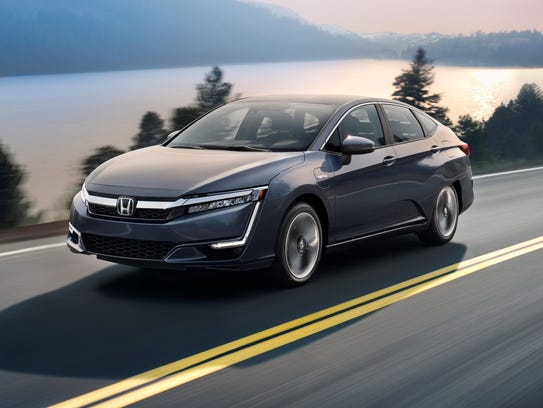
With the popular favorite out of the way, the Clarity beat out a field made up entirely of mainstream competitors — including sibling Honda Accord hybrid. Other contenders were the Toyota Camry hybrid, Nissan Leaf EV and Hyundai Ioniq which nearly matched the Clarity’s versatility with hybrid, plug-in and electric-only models.
“The Clarity is the car that really looks to the future,” said Ron Cogan, editor and publisher of Green Car Journal which sponsors the award. “It offers a plug-in hybrid today that anyone can drive conveniently — but it also offers a hydrogen element that is visionary. With the Clarity platform, Honda can shift production easily depending on which technology is in demand — and if a hydrogen infrastructure gets built out.
The Clarity’s national rollout to dealers demonstrates the challenges automakers face as governments from California to France push automakers toward a gasoline-free future. The plug-in, which can travel 47 miles on a full charge, is available nationwide where owners can fill up on gas when the battery runs out of juice. But the electric and hydrogen versions have been limited to California, the only state that has seen significant acceptance of alternate-fuel tech.
Led by a green consumer culture and big government incentives, battery-powered car sales — hybrid, electric and hydrogen — are 9 percent of sales here. Pure EVs alone account for about 2.5 percent.
In the U.S. as a whole, however, sales of battery vehicles struggle to get over 3 percent, while EV sales are just 1 percent.
Cogan says government regulation and manufacturer offerings have pushed the market to an electric “tipping point,” especially as speedy models like Tesla have proved “electrification has an inherent ability to increase performance.”
But he noted that consumer skepticism still abounds and that electrification is still heavily dependent on government incentives. “The White House is proposing tax reform that would eliminate federal tax incentives (to buy EVs),” he said. “Proof that what happens in D.C. has an impact on vehicles everywhere.”
With gas prices low, consumers have defied industry predictions for two decades that hybrid-electrics would catch fire here. Indeed, as automakers rolled out government-compliant EVs here, they have also showed gas-powered SUVs that are popular with buyers. BMW and Subaru, for example, both rolled out their first-ever, three-row SUVs at the LA Show.
Electrifying large vehicles is difficult because their weight taxes battery range. The full-size Clarity sedan, like Tesla’s large Model S sedan and Model X ute, is the exception to the rule that most EVs have been compacts, including last year’s Green Car winner, the Chevy Bolt EV.
“I think we won because of our strategy to give customers choice,” said Steven Center, vice president of connected and environmental business at American Honda. “They have different driving and commute requirements and we manage to produce three great choices in one real, five-passenger sedan.”
He picked up the bauble at in the LA Show’s Technology Pavilion. Green Car of the Year is sponsored by Green Car Journal and judged by a jury including celebrity car-guy Jay Leno,
“The Clarity is our halo for right now,” said Center as the Honda brand moves to offer electric offers in two-thirds of its lineup worldwide by 2020.
Rugged Toyota concept challenges Jeep’s Wrangler
Posted by hpayne on December 1, 2017

Los Angeles – Jeep isn’t the only manufacturer that wants to take you to the Outback. Toyota wants a piece of the action, too.
Just a day after Jeep’s all-new rock-climbing Wrangler rocked the Los Angeles Auto Show, Japan’s biggest automaker rolled out a four-door Wrangler clone called the FT-AC (short for “Future Toyota Adventure Concept”).
The FT-AC’s off-road playbook reads like Wrangler 101: fore and aft skidplates, knobby tires, detachable fog lights, all-wheel drive, lockable four-wheel drive … a proposed hybrid drivetrain like the Wrangler’s first-ever, 2.0-liter hybrid turbo-4.
It’s easy to understand Toyota’s interest. The Wrangler has sold some 5 million copies worldwide in its lifetime and established Jeep as the alternative for a youthful, outdoors-conscious demographic. In a ute-crazed world, the Wrangler icon attracts buyers to the SUV brand as first-time buyers, then feeds them up the product pipeline to more expensive offerings like the Cherokee and Grand Cherokee as they age.
Toyota isn’t alone in Wrangler envy. Ford wowed the Detroit auto show earlier this year with news that it would bring back the rugged Bronco as a 2020 model.
Like Ford’s iconic Bronco, Toyota hopes to resurrect brand heritage. The FJ Cruiser (its FJ reminiscent of the Jeep CJ that inspired the Wrangler) was a truck-based, off-road rhino built by Toyota from 2006-2014. The well-received FJ enjoyed peak sales of more than 50,000 units a year before getting chewed up in the Great Recession.
“FT-AC reminds adventurers of all skill levels how remarkable the trip — not just the destination — can be,” goes the pitch from the Toyota publicity machine. “Going for a paddle on the river. Climbing a favorite rock face. Hitting a trail on a mountain bike. FT-AC is experience-centric. It compels.”
The FT wraps its Wrangler-esque ambitions in a Toyota wardrobe. The bold face is similar to the Toyota Tacoma that has dominated mid-size pickup sales for the last decade. The concept’s off-pavement capabilities suggest it might also be built on the Ridgeline’s body-on-frame skeleton.
The Adventure Concept packs versatility with LED fog lights that can be plucked from their pods and used as portable lights — or on a bicycle for night rides. Infrared cameras in the side mirrors can also be used to film vehicle — or personal — adventures. The beast sits high above 20-inch wheels, its body clad in extra armor for canyon adventures. Above is a safari-style roof rack to haul baggage and below are twin hooks if the driver gets too deep into treacherous terrain. Like any proper 21stcentury machine, the FT comes with GPS-location and WiFi.
Although Toyota calls it a concept vehicle, it likely will go into production.
“It’s no coincidence then that FT-AC makes its debut at the Los Angeles Auto Show, in a city where much of the population escapes to the hills, deserts, or beaches for their much-needed weekend recharges after a long week of work,” Toyota said.
It’s also no coincidence the Toyota boasts of its alternative powertrain here, too. California is the most heavily regulated state for battery-powered vehicles and Toyota teases that the FT could have a “no compromise,” next-generation hybrid powertrain that blends fuel efficiency with rugged all-wheel-drive grunt.
Payne: Lincoln Navigator, luxury suite on wheels
Posted by hpayne on December 1, 2017

The Lincoln Navigator is a rolling condo. Big enough to comfortably seat six and sleep four, with lush interior trimmings, Wi-Fi connectivity and 30-way seats that make BarcaLoungers feel like lawn chairs, it shames most second homes.
I have one criticism: Where’s the fridge?
An icebox is about the only feature that is missing from this 181/2-foot long, 61/2-foot-high, $95,000 masterpiece of luxury. It needs to be. As Lincoln charts its premium comeback, it needs home runs like the Navigator to navigate the treacherous shores of six-figure luxury. An impressive navy of hulking battle ships sail these waters, including the Cadillac Escalade, Land Rover HSR, Mercedes GLS and Infiniti QX80.
Lincoln does not shy from the fight. It brings the big guns:
1. Big power from the same twin-turbo, 3.5-liter V-6 engine that beats at the heart of the Ford F-150 Raptor, the baddest truck ever built. Stomp the Navi’s gas, and its roars like King Kong at dinner time. Call it the Lincoln Raptor.
2. Biggest towing capacity (8,700 pounds) in its class, courtesy of the same bones as the F-series, the most capable pickup hauler on the planet.
3. Biggest heads-up display.
4. Biggest seating capacity.
5. Biggest moonroof.
6. Biggest fuel economy numbers thanks to that turbocharged six — and Lincoln’s first application of a 10-speed tranny (co-engineered with Ford and GM) that drives other rear-wheel drive performance powerhouses like the Camaro ZL1 and Raptor.
But if you think all this brawn makes the Navigator look like a sumo wrestler on steroids, you’d be wrong. Because the remarkable thing about this land yacht is how elegant it is from stem to stern.
The grille is 10 stories high, but modeled after the same Jaguar-esque sculpture that first graced the Lincoln Continental and MKZ sedans. It’s a piece of art (replacing the split-wing grille that always looked awkward on big utes — like wings on a rhino) with little Lincoln logos knitted into a honeycomb pattern. Anchored by a centered, giant Lincoln logo, the grille begins a theatrical welcome — “Embrace,” it’s called — when you approach the big ute.
The logo glows, lighting a path from the LEDs in the headlights, to the lighted door handles, and finally, Lincoln’s signature, horizontal rear lights. Big, illuminated running boards unfold from beneath the car to meet you. To complete the introduction, the mirrors sport LED lights that project the Lincoln logo on the pavement — think of it as a welcome mat. It’s a dazzling display that stopped passersby in their tracks one night in the lot where I parked.
It’s the best show this side of the Tesla Model X’s automatic-driver system and falcon-wing doors. I pined for the original Navigator concept that dropped jaws at the 2016 New York Auto Show with its own gull-wing doors and cascading, fold-out, three-tier steps.
Given that Tesla’s complicated falcon doors delayed production almost two years, it’s probably best that Navigator left the gull-wings in the attic.
The “turbine wheels” on my top-trim, Black Label $96,570 Navigator tester (hey, condos ain’t cheap) are worth the added price. These pinwheels are a nice complement to the ute’s long, horizontal lines. The English accent is unmistakable — from the Jag grille to the Range Rover floating roof and blacked-out C pillar.
But the exterior gift wrap is for the real treat inside. Lincoln has been resolute in following its own premium path. While other luxury brands chase Teutonic athleticism (Caddy, Alfa and Acura), Lincoln claims “quiet luxury.”
You won’t find YouTube videos of camo-wrapped Lincoln’s chasing Nurburgring lap records or jetting down drag strips posting ludicrous zero-60 times. Instead, Lincoln wants to sink you into a recliner, turn up the stereo and deliver you to your destination on a flying carpet. It works.
Easing into the Lincoln’s interior is less like driving and more like settling into a wealthy pal’s basement infotainment man cave. The 30-way thrones are exquisite with automatic, door-mounted adjustments for the head, upper and lower back — even each thigh. Only an ottoman is missing, though the Navigator’s pedal adjusters are close enough. After you’ve tweaked everything to your liking, the console screen will create a “Personal Profile” that recognizes you (and two other drivers) each time you arrive at the club — er, SUV — and adjusts the cabin accordingly.
The front “floating console” should be on display at Art Van. My tester console was laser-cut out of a maroon khaya wood; the mahogany’s continuous grain runs across the cupholder and smartphone (recharging) compartments courtesy of Yamaha piano makers’ laser-etching technique. I’m not making this up. Speaking of piano keys, Lincoln’s push-button, electronic tranny has been replaced by more workable “piano keys” — an elegant touch, though I find GMC’s similar “trigger” transmission even better.
In the middle of acres of stitched, wooded dashboard, an elegant, silver-rimmed tablet rises above the console — though the Lincoln’s superb, steering wheel/voice control-operated, digital instrument display meant I rarely had to take my eyes off the road to poke at its touch screen. Even the console-mounted drive modes — Conserve, Normal, Normal 4×4, Slippery, Sport, Ocean Liner (making that last one up) — are introduced with colorful, digital graphics that might have come out of Lucas Studios.
Speaking of technology, the Navigator can park itself. Using hands-free, self-driving software pioneered on Ford’s Escape, this ocean liner will parallel-park and perpendicular-park into the tightest of spaces. All you have to do is control the brake. Meanwhile, second- and third-row passengers can kick back in living-room comfort. Like the F-150, Navigator saves 600 pounds with an aluminum skin — but the Navigator has plowed its weight-savings into interior quiet and independent rear suspension for effortless motoring.
Both rows get USB ports and Wi-Fi connectivity (up to eight devices). Second-row passengers can also control the radio. Or occupants can just flatten the rear rows, go horizontal (at 6-foot-5 I fit easily), under the biggest moonroof in autodom, and stargaze. Mrs. Payne and I did.
Navigator chief program engineer Andrew Kernahan is a British ex-pat and says he’d like to see Queen Elizabeth park her Land Rovers and try a Lincoln Navigator for a change.
If she did it would be a national scandal. But she would also be treating herself to an SUV worthy of the crown.
Henry Payne is auto critic for The Detroit News. Find him at hpayne@detroitnews.com or Twitter @HenryEPayne. Catch “Car Radio with Henry Payne” from noon-1 p.m. Saturdays on 910 AM Superstation.
2018 Lincoln Navigator
|
VEHICLE TYPE |
FRONT-ENGINE, REAR- OR ALL-WHEEL DRIVE, SEVEN- OR EIGHT-PASSENGER SUV |
|
Powerplant |
3.5-liter twin-turbocharged V-6 |
|
Transmission |
10-speed automatic |
|
Weight |
5,685-6,056 pounds (5,855 Navigator AWD as tested) |
|
Price |
$73,250 base ($96,570 — Black Label as tested) |
|
Power |
450 horsepower, 510 pound-feet torque |
|
Performance |
0-60 mph, 5.2 sec. (Car and Driver est.); 8,700-pound towing capacity |
|
Fuel economy |
EPA mpg est. 16 city/23 hwy/19 mpg combined (4×2); EPA mpg est. 16 city/21 hwy/18 mpg combined (4×4) |
Report card ★★★
|
HIGHS |
STYLISH CONDO ON WHEELS; SELF-PARK FEATURE |
|
Lows |
Can a Lincoln command $90K?; piano shifter even better if it used “trigger” keys |
Overall: ★★★★
Grading scale
GM’s Mark Reuss is revved about the new Corvette ZR1
Posted by hpayne on December 1, 2017

Los Angeles – Two weeks before the Chevy Corvette ZR1 supercar was to debut at the Los Angeles Auto Show, General Motors product chief Mark Reuss had hip surgery.
Yet. when the 755-horsepower ’Vette debuted before a packed house Tuesday night, there was Reuss, standing on stage and leading the ceremonies.
“If that doesn’t get your heart racing, then nothing will,” he said as coupe and convertible versions of the ZR1 revved onstage through a cloud of smoke and pulsating music.
Reuss wouldn’t want to be anywhere else.
A Corvette owner himself, the 34-year GM veteran has put his heart into the seventh-generation Corvette’s development. Rare among top executives, Reuss not only presides over product development, he rigorously tests every vehicle GM makes, frequently joining engineers at the company’s Milford Proving Grounds to put vehicles through the paces on and off the track.
His passion, along with the aggressive leadership of fellow top execs Mary Barra and Dan Amman, is considered a key reason that GM is leading a Detroit product renaissance that has put the General at the forefront of everything from super sports cars to electrified, autonomous vehicles.
Determined to make vehicles like the Corvette and Camaro coupe world-class performance cars, Reuss is a Nurburgring-licensed driver who can take the 212-mph ZR1, for example, to the world-famous 140-turn race track and push the car’s envelope alongside the program’s hired hot-shoes.
It’s no coincidence that Reuss’ twin hip replacements allow him to more easily fold into low-slung sports cars.
“Whether it’s a Chevy Traverse SUV or a Corvette, I want to drive the car and see where the limits are,” said Reuss in an interview just feet from the ZR1 that he has put countless laps on.
“But it’s also important to drive them 4-5 hours off-property on roads that aren’t perfect. To be able to that, you have to be able to read a car. And reading a car means having to drive a car to its capability.”
Chevy last made a ZR1 in 2008, on the old C6 Corvette platform. A lot has changed since then as GM has emerged from the Great Recession and painful bankruptcy.
This is not only a new-generation Corvette, it’s a company for the next generation. Key to the change is how much Chevy’s bandwidth has grown. This is no longer a truck and horsepower brand. It is a technology brand reaching new buyers.
“You can see the agility of the company. Today we’re talking about a 755-horsepower Corvette, tomorrow I’m going to talk about autonomous vehicles and electrification in San Francisco with Mary (Barra) and Dan (Amman) to investors,” Reuss says.
“Look at the demographic of people who are buying our electrified vehicles, and 85 percent of people coming into our brands and our EVs — Volt and Bolt — haven’t shopped GM before. Return buyers of Volt are just about higher than anywhere else. There’s a real good pattern there.”
This month, GM will sell more EVs than any other automaker in California, a startling metric metric for a Detroit automaker that once struggled to make in-roads on the coast.
Kelley Blue Book analyst Karl Brauer credits GM’s product turnaround to a Barra-Amman-Reuss executive team “more aligned in their vision than ever before in GM.”
He applauds Reuss’ ability to be a passionate car guy and a prudent businessman at the same time.
“Reuss is the Bob Lutz of a new generation,” says Brauer, referencing the Detroit legend responsible for the Dodge Viper and Volt. “They are both car guys who have an intrinsic passion that they can translate into successful business models. Reuss can get a ZR1 supercar built but also see the future for Bolt electrification.”
As a result of its more diverse product lineup, “Like Toyota, GM is prepared no matter what the cultural moment,” says Brauer. “No matter what is ‘in,’ GM has an answer.”
He says the Corvette will continue to push the limits because it offers a halo for the brand but also inspires GM team members. “A lot of what you see on (the ZR1) — the materials, the drivetrains — will make their way into our other cars and trucks. It’s a source of pride (in) the company.”
Looking at the Hulk-like ZR1 — its muscular tires and V-8 supercharger straining the limits of its front-engine wardrobe — Reuss is asked whether this is the ZR1’s last hurrah before Chevy introduces a mid-engine Corvette to keep up with other mid-engine hybrid-electric competitors. Mid-engine Corvette mules have been seen in camouflage around Metro Detroit.
“This is the fastest C7 you will see,” he says, taking a seat to rest his healing hip. “That’s all I can say.”
NACTOY finalists announced at LA Auto Show
Posted by hpayne on December 1, 2017

Los Angeles — Finalists for the 2018 North American Car, Truck and Utility of the Year were announced at the Los Angeles Auto Show on Wednesday. Car and SUV nominees pit new and old faces against one another, while Detroit automakers have a lock on Truck of the Year.
Battling for Car of the Year will be the mid-size sedan titans Honda Accord and Toyota Camry. Seeking to knock these perennial best-sellers off their perch will be the upstart Kia Stinger, the Korean brand’s new performance halo sedan. For the first time in the award’s history, no Detroit cars were eligible.
American is over the moon for utes, and three strong entrants will vie for the crown: the Alfa Stelvio, the first luxury SUV from the Italian brand, resurgent Volvo’s XC60 and the Honda Odyssey minivan.
Detroit iron dominates the Truck of the Year category. Finalists are the Chevrolet Colorado ZR2, Ford Expedition and Lincoln Navigator. The latter plus-size SUVs are eligible because they are based on truck platforms.
The NACTOY winners will be announced at the Detroit auto show in January.
LA Show: Super ’Vette ZR1 goes topless
Posted by hpayne on December 1, 2017

Los Angeles – The Corvette ZR1 blew the roof off the Los Angeles Auto Show. Literally.
For the first time since it was introduced to the Corvette lineup in 1970, the top-trim, performance icon has gone topless. Shaking the stage with its 6.2-liter, supercharged V-8, the ZR1 convertible made its debut Tuesday night, emerging from a cloud of dry ice to take its place alongside the coupe -which was introduced to the world earlier this month in Dubai.
Designed from the ground up to be a drop-top, the ZR1 convertible is uncompromised from the coupe for chassis rigidity. The only structural changes made are for the folding top and repositioned seat-belt mounts. The power top can be operated remotely, or while driving up to 30 mph. Weaponized with the same features as the winged 755-horsepower, 715 pound-feet of torque, supercharged V-8 coupe, the convertible adds a mere 60 pounds — and $4,000 — over its stablemate.
With two available rear wings and 105 more horsepower than the already legendary Corvette Z06, the ZR1 coupe offers staggering performance numbers.
“I called the Z06 the ‘Big Nasty’ when it was introduced in 2014,” said GM product chief Mark Reuss on stage next to the blood orange ZR1 convertible. “So I call the ZR1 a VERY Big Nasty.”
With a base “low wing,” the coupe will top out at 212 mph. That beats the 205 mph registered by the last-generation ZR1 produced from 2009 to 2013. Put down another $2,995 for the ZTK performance package, and the ZR1 sprouts an adjustable “high wing” and carbon-fiber front splitter that sucks the ZR1 to the ground with a race car-like 950 pounds of down-force. Top speed will suffer a bit but still crest 200 mph.
“The new Corvette ZR1 convertible is a supercar in all respects,” said Reuss. “Few others can challenge the ZR1 convertible’s power and speed while offering the exhilaration of top-down motoring.
The ZR1 coupe will carry a suggested retail price of $119,995, while the convertible will start at $123,995.
The fearsome new Corvette is expected to be the end of an era: It marks the swan song of the front-engine icon as Chevrolet prepares to debut a mid-engine Corvette, perhaps as early as January’s Detroit auto show.
While GM company policy prohibits testing convertibles to their top speed, Chevy estimates the drop top’s numbers to vary little from the coupe that makes its North American debut here in Los Angeles.
That means convertible passengers can fully enjoy the ZR1’s unique, quad-piped stereo at absurd speeds. Corvette chief engineer Tadge Juechter and his team designed a special spring-loaded passive valve that acts as a sort of truck-exhaust flap in Track mode. At full throttle the system will roar like King Kong and shoot flames out the back. Don’t follow this beast too closely.
Car and Driver estimates that the ZR1 will be the fastest production car ever — eclipsing even the $900,000 Porsche 918 hybrid supercar — at its annual “Lightning Lap” competition around “America’s Nurburgring,” Virginia International Raceway.
As for the real Nurburgring, the fearsome 140-turn track in Germany, Juechter predicts the car could lap below the magic 7-minute mark, a time rarely achieved. The lap would be academic, however, as Chevrolet will not sell the ZR1 in Europe since its huge supercharger — 2.9 inches taller than the already tall supercharger on the Z06 — will not meet European pedestrian safety standards that specify minimum crush zones for the hood.
Other ZR1 bits will be familiar to Z06 buyers, including a sumptuous interior and available 7-speed manual and quick-shifting 8-speed automatic. Chevy estimates the automatic-equipped Supervette will hit 60 mph below 3 seconds, and the quarter-mile in the high 10-second range.
That should be a thrill for the ears with the top down. The ZL1 arrives in showrooms in the spring of 2018.
Carmakers look to future at LA Auto Show
Posted by hpayne on December 1, 2017
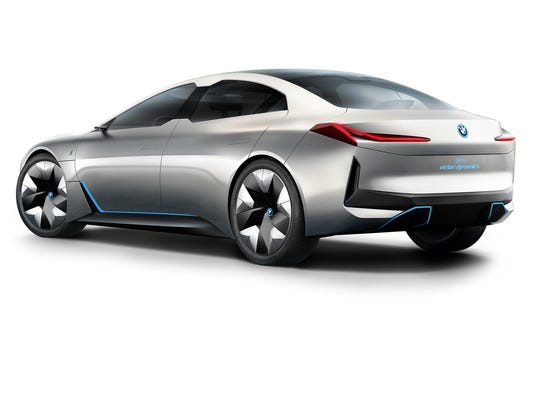
Los Angeles – The 21st-century U.S. auto industry is performing a skilled juggling act, and that performance is on stage this week at the Los Angeles Auto Show.
Automakers are serving multiple masters. They are investing billions in self-driving technologies that many predict are the future of ride-sharing services and daily commutes. Yet, they must also maintain full-line product portfolios for driving customers on course to buy 17 million new vehicles for the third year in a row. The vast majority of those vehicles will be powered by cheap gas, yet carmakers must also meet the demands of governments like California that are forcing carmakers into a regulated future of battery-powered vehicles.
This week, automakers will serve the future. Things get started Tuesday at the Los Angeles Convention Center with the AutoMobility LA conference that brings together automakers, designers, computer engineers, academics, investors and others to share their visions of an autonomous future.
Executives from Panasonic, BMW and Waymo will speak on topics like “Redefining Mobility in a Connected World” and “Roadside Ransomware: Fact or Fiction?”
Their visions are hardly hypothetical. Automakers are already building self-driving chariots. Uber has announced a partnership with Volvo to put 24,000 Uber-bots on the road starting in 2019. The agreement puts the company on a “path toward mass-produced self-driving vehicles at scale,” says Jeff Miller, Uber’s chief of auto alliances. Google-owned Waymo and Lyft have also entered into partnerships with Chrysler (the Pacifica minivan) and Chevrolet (Bolt EV).
On the convention center’s floor, automakers will roll out their visions for an electric-car future beginning Wednesday. Using California’s clout as the largest auto market in the U.S., regulators here have set hard EV sales quotas — and state politicians are soon expected to follow the lead of European governments including France and Britain to eliminate the gas engine within the next two decades.
Luxury automakers like BMW and Mercedes will display new, EV-focused product lines here — the i-line and EQ-line, respectively — as they try meeting government requirements and compete with California electric start-up Tesla. Even retro-brand Mini Cooper will debut an EV concept.
Yet, Tesla’s inability to make a profit despite an average transaction price of $100,000 on its Model S and Model X electrics speaks to the difficulty of the industry’s challenge.
In California, rich with EV incentives and a battery-friendly weather, hybrid-electric/plug-in electric/pure electric vehicles make up just 9 percent of the market. Automakers aren’t ignoring the other 91 percent of customers and the profit-generating vehicles they covet.
Beginning Friday, the doors will open to the automakers’ consumer masters and they will have plenty of good ol’, driver-focused, gas-guzzling toys to ogle.
Detroit automakers will roll out new versions of some of the most iconic vehicles ever made: the 755-horsepower ZR1 and off-road star Jeep Wrangler. Lincoln will showcase its Navigator land yacht on the LA stage for the first time.
And automakers will slake the appetite of ute-hungry America. The hulking, three-row BMW X7 concept and Subaru Ascent will be the largest vehicles their respective brands have ever introduced. Volvo, Hyundai, Land Rover and Lexus will unveil all-new SUVs. Even struggling Mitsubishi will try to resurrect itself in the US market with a new ute.
Sitting in the middle of this busy crossroads of technology, SUVs, and government mandates will be the Jaguar I-PACE eTrophy Prototype.
The Jag’s mission is as complex as its name. An electric SUV aimed squarely at the Tesla Model X, the I-PACE hopes to capitalize on both the demand for utes and premium EVs. Its eTrophy prototype sprouts a rear-mounted wing and announces an international, battery-powered SUV racing series with the hopes of electrifying the public to the idea of an EV future. Who knows, maybe it will be self-driving.
LA Auto Show: Barra, Alfa rule Motor Trend Awards
Posted by hpayne on December 1, 2017
Los Angeles — The annual Motor Trend awards kicked off the Los Angeles Auto Show Monday night and Detroit ruled the red carpet. General Motors CEO Mary Barra took home Person of the Year and Ford’s F-150 dominated Truck of the Year. But the headliner was the Alfa Romeo Giulia’s upset win for Car of the Year over the historic Tesla Model 3 electric vehicle and formidable Honda Accord. “The Giulia was the only vehicle whose essence enraptured the jury with its charm and unbridled zeal for driving,” wrote Motor Trend’s Mark Rechtin of the winning entry, Alfa’s first premium sedan in the U.S. market. Alfa is a premium brand in the Fiat Chrysler Automobiles group. Rechtin and his fellow Motor Trend jurists put the new cars, trucks and crossovers of 2018 through harsh testing. The field was ultimately winnowed to a select few finalists based on six criteria: design, engineering excellence, performance, efficiency, safety, and value. The magazine also honors the year’s most impactful player in the auto industry with Barra as the consensus choice. The awards were presented on Monday night in Los Angeles at the Petersen Automotive Museum, home to one of America’s premier car collections. The nimble Giulia’s victory was perhaps most unexpected because Motor Trend is the rare automotive award to have had extensive access to Tesla’s Model 3. Tesla, for example, chose not to enter the EV in the prestigious North American Car, Truck, and SUV of the Year award (which will announce its finalists later this week) as it focused on ramping up production. The Tesla has won raves for its bold design, minimal interior and as the first luxury EV to travel over 200 miles on a charge. Over 450,000 hungry customers have put down $1,000 in pre-orders. But Motor Trend found the Italian sedan more compelling for its personality, sexy styling, safety rating, and raw speed. “About three years ago, we set out to bring the best premium sedan in the world to market. And here tonight, by picking up the Motor Trend Car of the Year award, is proof positive we are on the right track,” said Alfa chief Reid Bigland, clutching the Motor Trend “Golden Calipers” trophy. Though its acclaimed 10th-generation Accord came up short for Car of the Year, Honda did not go home empty-handed. Its CR-V crossover won SUV of the Year, eking out another Alfa — the Stelvio (based on the same platform as Giulia) — as well as the reliable Subaru Crosstrek. The Ford F-150, refreshed for 2018 after debuting its all-aluminum body in 2015, ran away with the truck award with a powerful, technically-superior lineup of 4×4 trims that included the Raptor off-road beast. Runners-up were the Chevy Colorado ZR2 and GMC Sierra 3500 HD Denali. In picking Barra as Person of the Year, the jury rewarded not just GM’s first female CEO, it honored an executive who has brought bold changes to a recently bankrupt automaker. “We wanted to recognize the CEO that makes the hard decisions and positions their company for success,” said Motor Trend Editor-in-Chief Ed Loh afterward. “Mary has a program for everything from the connected car to the EV space. She shut down a couple of long-running brands in Australia and Europe that have been a drag on the company. And she’s tackled a lot of adversity — when you talk to people at GM they stand behind her.” Motor Trend’s Of the Year issue recognized 49 more auto executives for their talents including Tesla’s Elon Musk, Chrysler designer Ralph Gilles, and Ford global chief Joe Hinrichs. The issue hits newsstands in December. Look for the Golden Caliper trophy on the hoods of the winners at auto shows across the country. Posted by hpayne on November 23, 2017 For 2017, Chrysler set a new standard for minivanswith the Pacifica, a gorgeous tour de force that made vans cool again: Best-in-class styling. Best-in-class seating dexterity. Best-in-class comedian sponsor in Jim Gaffigan. Following Chrysler’s home run is little like following, well … Gaffigan on stage after a comedy routine. Better to stick to your best stuff. So applause goes to Honda, which has introduced an all-new Odyssey minivan for 2018 that plays to Honda’s strength of innovative, interior ergonomics. Based on the same platform as the excellent mid-size Honda Pilot, the Odyssey comes with the same attention to interior detail as its ute sister. I’m convinced Honda engineers move in with families to observe their daily routines and design their cars accordingly. The Pilot and Odyssey aren’t so much cars as they are domiciles. The front seats are mom heaven. Like the Pilot, a ribbed center-console shade rolls back revealing a bottomless compartment for big purse storage. Drop your bag in the bin and it’s at your elbow for rummaging whenever needed. No more tossing handbags out of reach on the passenger sat. Or on the passenger floor where you have to zip it up lest its contents jump out at the first hard-right turn. Got a small bag? It’ll fit nicely on top of the shade and will be held in place by console “curbs.” Moms are fussy about crumbs, of course, so Honda’s ribs ingeniously stretch in order to prevent debris from lodging between them. Listening to families, Honda hears what they don’t like, too. They don’t like Honda’s first-generation infotainment screen that was all touch and no knob. So the minivan gets a proper on-off knob with volume control. Like Chrysler, Honda has learned the joys of shift-by-wire transmissions. The Pacifica uses a rotary e-shifter; the Honda has a so-called “trigger” button-shifter. Just stick your index finger in the reverse trigger hole and pull, or thumb the drive button for easy maneuverability. The rotary and trigger have their advocates (I’m bipartisan), but they both free center-console storage and make lateral crossings from driver to passenger seat much easier (or am I the only one who does that?). That’s about the only thing Honda and Chrysler interiors share. Odyssey does not add a useful console drawer like Pacifica. Only Honda has Apple CarPlay app connectivity (a must for Mrs. Payne). Behind the front seats, Chrysler and Honda diverge dramatically. Chrysler’s legendary Stow ’n’ Go second-row seats offer Swiss army knife versatility. They can be flattened to act as Ottomans for third-row occupants. Or stored in the floor for third-row legroom. Or stored in the floor with the third-row seats for acres of cargo space (roll in bikes, go-karts, pets) — like a pickup bed without a roof. Honda is no slouch in the seat invention department. In fact, we’ve come to refer to their seat solutions as “Magic Seats,” from their subcompact Fit to the Odyssey. Interestingly, its Fit subcompact takes a similar second-row approach to the Pacifica. Its seats can be folded out of the way for bike storage — or flattened for cavernous cargo room. But in the Odyssey, Honda figures its family customers want a different kind of versatility. Say hello to the “Magic Slide” seats — seats that move horizontally across the cabin. Want to get into the third row? Just slide the second-row captain’s chair toward the middle. Need to comfort a baby behind you? Just slide their chair towards you for easy access from the driver’s seat. I have arms as long as an orangutan to reach child seat-anchored kids (mine are all grown up now), but the sliding-seat option is undoubtedly more convenient for normal-sized folks. And the third-row access is best-in-the business (even better than accessing the Pacifica’s third row by simply walking between the captain’s chairs). I brought in my minivan expert — and neighbor — Chuck. Call him Chuck Gaffigan. A longtime SUV guy, he’s found happiness in his Pacifica and its cool vibe. The Honda interior impressed him. Not just the Magic Slide seats and deep console, but details that only a practicing father of wee ones would know intuitively. He marveled at the Honda’s well-positioned child seat anchors. And the backseat microphone that Odyssey options so that front-seat parents can communicate with third-row kids. Stepping back from the Odyssey and viewing the total package, he muttered: “But I love the Pacifica.” With its graceful exterior design and equally expressive interior lines, the high-tech Chrysler has transformed the unremarkable family minivan. The Odyssey still looks geeked-out. Honda has shored up some of the irregularities from the previous generation — the sliding door runner is now hidden, and the dashboard shifter doesn’t look like it came out of a panel truck. But where the Pacifica is a flowing sculpture, the Honda is a mess of contradictory lines. Honda doesn’t fear dynamic architecture. I’m a particular fan of the current, heavily-decorated Civic for example. After the brand’s familiar “flying wing” grille, the Odyssey keeps its signature “lightning bolt” shoulder line from the last generation — a jagged shoulder line that droops rearward, giving the impression that the minivan was broken over someone’s knee. A fashionable floating-roof design hovers — detached — over this spectacle. Driving performance for the smooth, quiet Odyssey and Pacifica are similar — nine-speed trannies powering competent, 280-something horsepower V-6 engines. Honda also offers a first-in-segment 10-speed tranny in upper trims like my Elite tester. The Pacifica’s comparable fuel economy and JD Power-leading reliability record negate a traditional advantage for Honda vehicles. Long a minivan pioneer, Pacifica adds to its firsts list the first hybrid minivan. For families with less than a 30-mile commute every day, that’s 30 miles on electrons alone. Long an innovator in hybrid cars, Honda finds itself playing catch-up to Chrysler. Reports are that Honda may electrify its minivan with the same battery package found in Honda’s luxury-brand Acura MDX hybrid. When folks ask me what cars I recommend, I say there are no bad vehicles made today — only vehicles that execute better. Among compacts, Honda leads the way with superior Civics, Accords and CR-V utes. In the minivan segment, its Odyssey is the best, most innovative Honda yet. But Chrysler, as the kids in the backseats might say, is da bomb. Henry Payne is auto critic for The Detroit News. Find him at hpayne@detroitnews.com or Twitter @HenryEPayne. Catch “Car Radio with Henry Payne” from noon-1 p.m. Saturdays on 910 AM Superstation. 2018 Honda Odyssey VEHICLE TYPE FRONT-ENGINE, REAR-WHEEL DRIVE, FOUR-PASSENGER COUPE Powerplant 3.5-liter V-6 Transmission 9-speed automatic; 10-speed automatic (as tested) Weight 4,354 pounds base (4,564 Touring trim as tested) Price $30,930 base ($47,610 Elite model as tested) Power 280 horsepower, 262 pound-feet torque; towing, 3,500 pounds Performance 0-60 mph, 6.5 sec. (Car and Driver est.) Fuel economy EPA mpg est. 19 city/28 highway/22 combined (9 and 10-speed boxes) Report card HIGHS PARENT-FRIENDLY MIDDLE SEATS; BEST-IN-CLASS CONSOLE STORAGE Lows Geeky styling; trails rival Pacifica plugin, styling wow factor Overall:★★★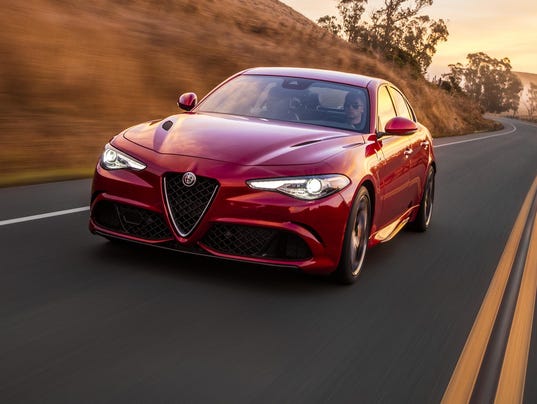
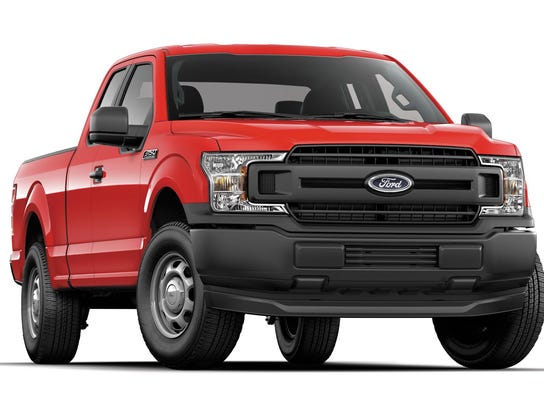

Payne: Can Honda Odyssey out-van King Pacifica?
